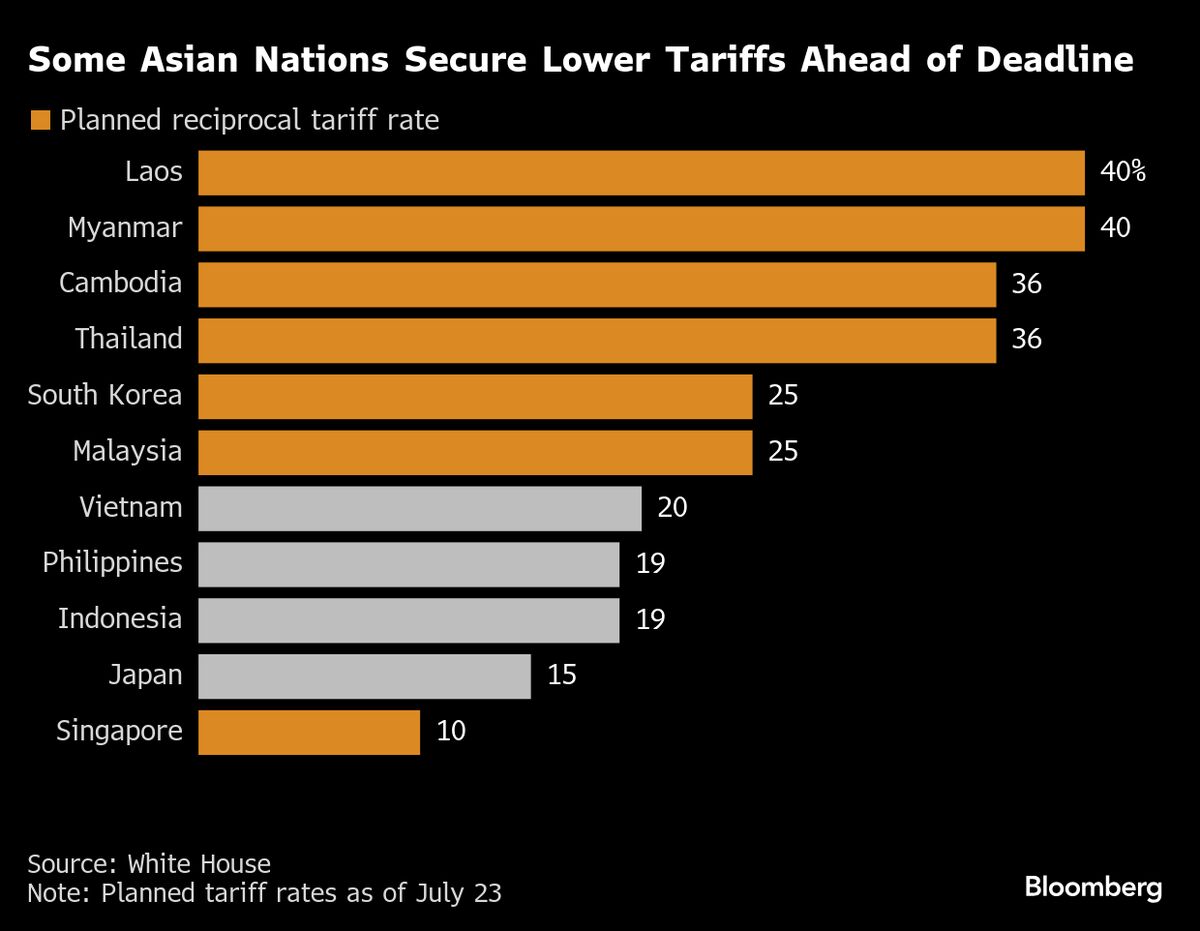
President Trump's recent tariff agreements are defining a new trade landscape in Asia, with a 15% tariff imposed on Japanese imports, including autos, to address a significant trade deficit. Concurrently, a 19% tariff rate was set for the Philippines, mirroring Indonesia's agreement and signaling that similar tariff structures are probable for other Southeast Asian nations, such as Vietnam's 20% baseline.
The Trump administration is methodically constructing a new trade landscape in Asia through a series of bilateral agreements, establishing a clear but tiered tariff structure. The deal with Japan, setting a 15% tariff on imports including automobiles, directly targets the largest component of the US trade deficit with that nation. Simultaneously, a pattern is emerging for Southeast Asia, with the Philippines securing a 19% tariff rate, mirroring Indonesia's agreement and sitting just below Vietnam's 20% baseline. This signals a strategic, country-by-country approach to trade policy, replacing broader multilateral frameworks with a web of specific agreements. The establishment of these defined tariff levels, while creating new trade barriers, introduces a degree of predictability for companies operating within these specific corridors, though it also increases complexity for firms with pan-Asian supply chains.
AI-powered research, real-time alerts, and portfolio analytics for institutional investors.
Request DemoOverall Sentiment
neutral
Sentiment Score
0.00
