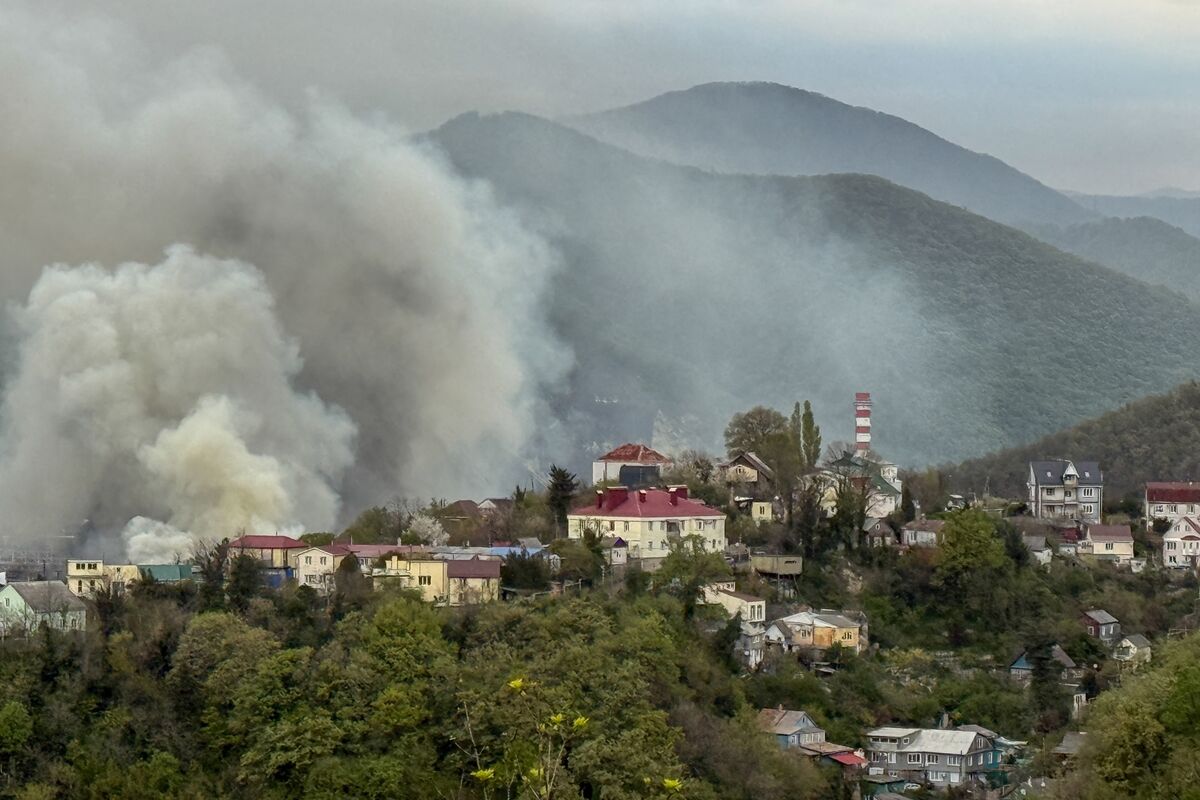
A fire broke out at a terminal in Russia’s Black Sea port of Tuapse after a Ukrainian drone attack, marking the fourth strike in just over two weeks. Local authorities said 128 personnel and 41 pieces of equipment were deployed to contain the blaze, and no casualties were reported. The incident underscores ongoing wartime disruption to Russian port and energy infrastructure, though immediate market impact appears limited.
The key market effect is not the headline damage itself, but the implied change in operational risk for Russian export and domestic fuel logistics around the Black Sea. Repeated drone pressure raises the probability of intermittent throughput disruptions, higher insurance/handling costs, and precautionary routing that can tighten product availability even when volumes are not fully shut in. That tends to show up first in refined products and freight, then in regional differentials rather than in headline crude. The second-order winners are non-Russian supply chains that can backfill marginal barrels or cargoes into the Mediterranean and Black Sea basin, especially if buyers start paying a reliability premium. Near term, that can be supportive for Atlantic Basin refiners and select tanker exposure if cargoes are re-routed or held longer on water. The losers are Russian exporters and any counterparties dependent on just-in-time port operations; the more important risk is that repeated incidents force a broader security premium into energy logistics over the next 2-6 weeks. This is a risk-off catalyst, but the move may be underappreciated if the market is still treating each strike as isolated. The contrarian view is that unless the attacks escalate into sustained outage or fire damage to critical assets, the impact may remain a series of small operational frictions rather than a step-change in supply. The tradeable signal is therefore volatility in freight and product spreads, not a directional crude spike unless there is evidence of longer-duration export interruption.
AI-powered research, real-time alerts, and portfolio analytics for institutional investors.
Request DemoOverall Sentiment
moderately negative
Sentiment Score
-0.25
