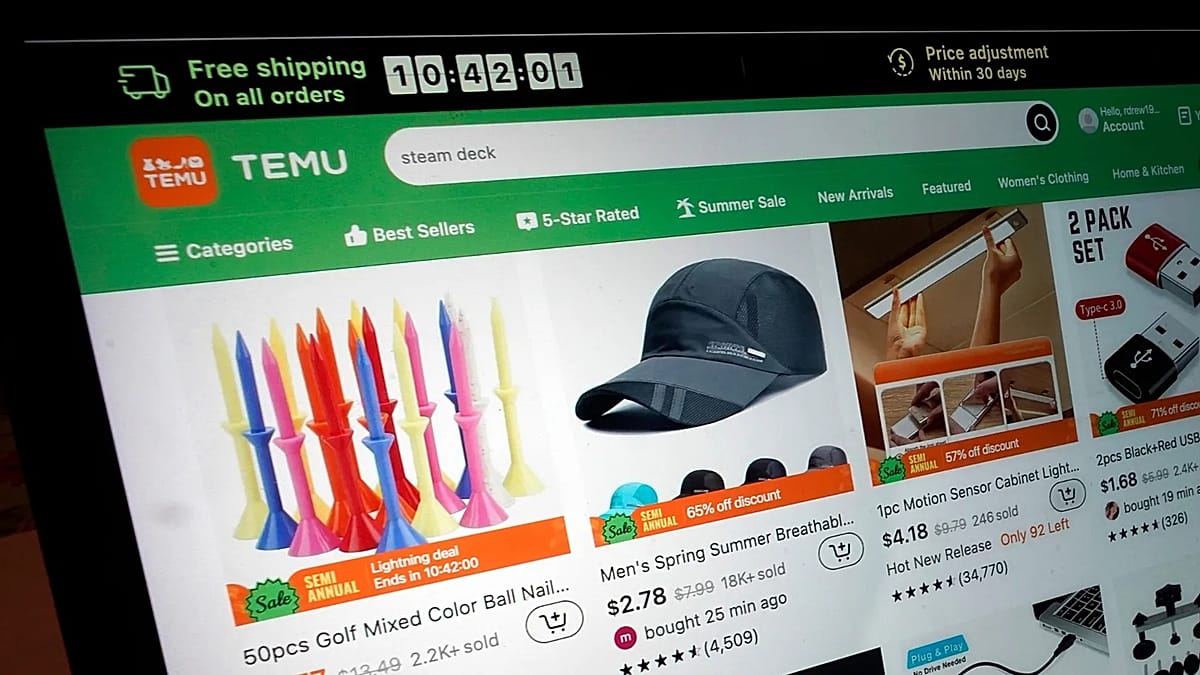
From 1 July 2026 the EU will impose a €3 charge on all incoming parcels valued under €150 to curb the surge in low‑cost Chinese e‑commerce imports, explicitly targeting platforms such as Temu and Shein; the levy is applied per parcel (so consolidated shipments pay €3 once, while split deliveries incur the fee for each parcel). The move follows a sharp rise in low‑value imports — €4.6bn in 2024, about 12 million parcels per day, up from €2.3bn in 2023 — and abolishes the previous sub‑€150 exemption on a temporary basis while the EU develops a permanent solution to the duty‑relief threshold.
The EU has agreed to levy a €3 charge on all incoming parcels valued under €150 effective 1 July 2026, explicitly targeting the surge in low-cost Chinese e‑commerce imports and platforms such as Temu and Shein; the fee is applied per parcel rather than per item, so consolidated shipments pay €3 once while split deliveries incur multiple charges. EU Trade Commissioner Maroš Šefčovič framed the measure as necessary to ensure fair competition at the border.
Scale and recent trend data underline the policy rationale: low‑value imports under €150 totaled €4.6bn in 2024—about 12 million parcels per day—up from €2.3bn in 2023 and €1.4bn in 2022, and the prior exemption for parcels below €150 has been abolished temporarily while a permanent solution is sought. The decision is explicitly temporary until the EU defines a long‑term threshold.
The €3 levy will modestly raise landed costs per parcel, likely reducing the price advantage of ultra‑low‑cost offerings and creating incentives for platforms to consolidate shipments, absorb fees, increase EU warehousing, or raise prices. Logistics and local fulfillment providers are potential beneficiaries if sellers shift toward EU‑based inventory to avoid recurring per‑parcel charges.
Enforcement complexity, administrative costs, and consumer behavior create uncertainty about the ultimate impact; given the small absolute fee relative to product price the sentiment is mildly negative with a market_impact_score of 0.35, indicating limited but nontrivial disruption. Investors should watch implementation rules and industry responses for signs of material margin pressure or a structural shift in cross‑border logistics.
AI-powered research, real-time alerts, and portfolio analytics for institutional investors.
Request DemoOverall Sentiment
mildly negative
Sentiment Score
-0.30
