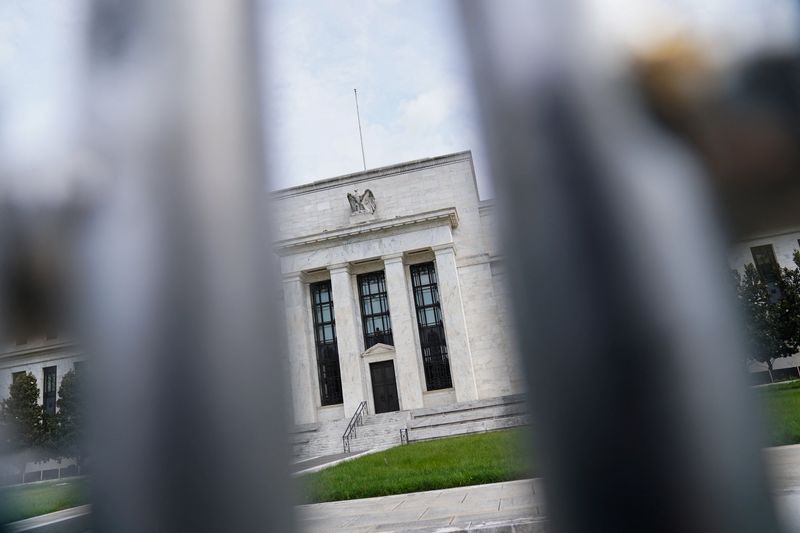
The Federal Reserve recently cut interest rates by 25 basis points to 4.00%-4.25%, prioritizing employment risks despite persistent inflation, a decision Morgan Stanley analysts describe as a 'no risk-free' choice given adverse trends in both labor and inflation. While the latest 'dot plot' projects an additional 50 basis points in cuts by end-2025 to 3.5%-3.75%, significant internal dissent suggests ongoing policy debate, with inflation not expected to reach the 2% target until 2028. This approach risks prolonged higher inflation, particularly if firms absorb tariff-related input costs, potentially compressing margins and impacting the labor market, leaving policymakers in a challenging position.
The Federal Reserve has executed a 25-basis-point rate cut, bringing the target range to 4.0%-4.25%, a move framed as a 'risk management' strategy to mitigate downside risks to a softening labor market. This decision indicates a policy pivot prioritizing employment over a recent uptick in inflation, which the Fed views as potentially temporary and tariff-driven. According to Morgan Stanley analysts, this places the central bank in a 'no risk-free' position, as both inflation and employment metrics are trending unfavorably. The Fed's own 'dot plot' now projects an additional 50 basis points of cuts by the end of 2025, targeting a 3.5%-3.75% range, which is lower than the June forecast. However, significant internal dissent exists, with seven of nineteen officials seeing fewer cuts, signaling contentious policy debates ahead. Despite this, market pricing via CME's FedWatch Tool shows a high probability of further cuts in October (92%) and December (80%). The Fed's updated economic projections include a revised-up 1.6% GDP growth for the year but a forecast for 3.1% underlying inflation, with the 2% target not expected to be reached until 2028. This creates a core dilemma: further cuts to support employment risk entrenching inflation, while a hawkish turn could accelerate job losses if corporate margins are compressed by input costs, leaving policymakers 'between a rock and a hard place'.
AI-powered research, real-time alerts, and portfolio analytics for institutional investors.
Overall Sentiment
moderately negative
Sentiment Score
-0.50
Ticker Sentiment
