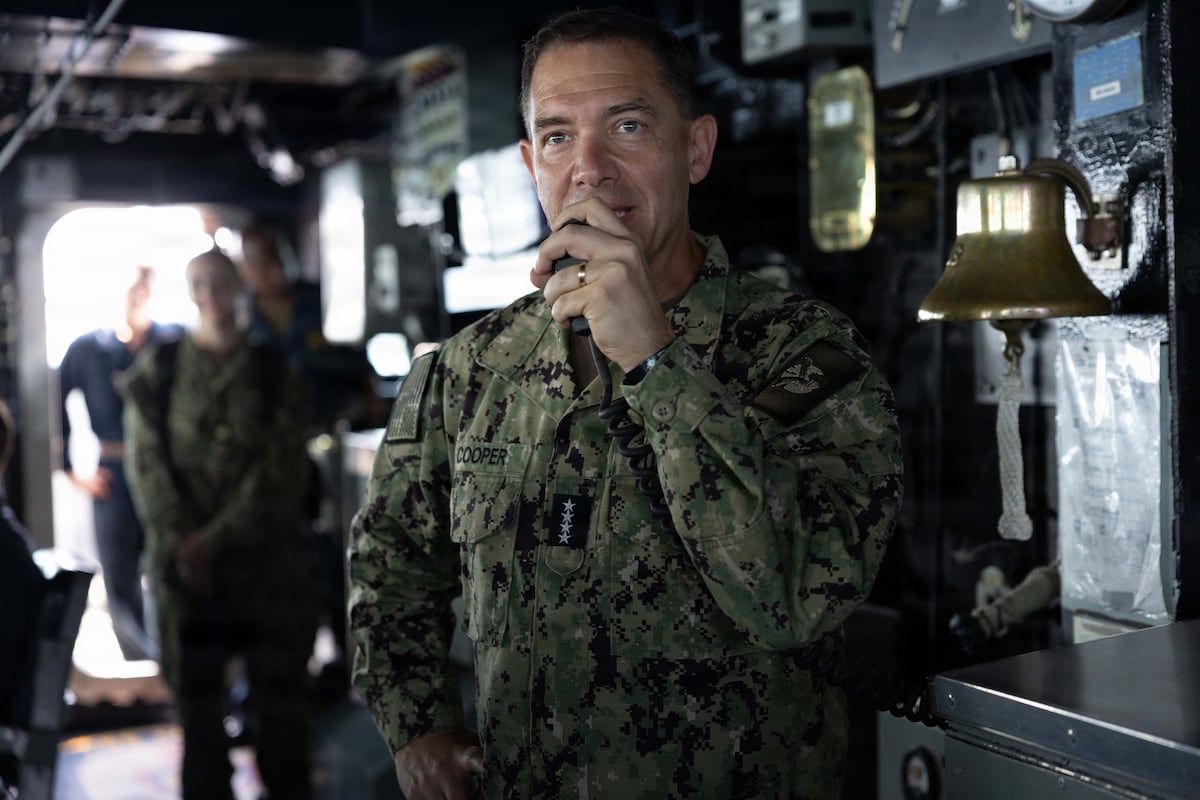
The U.S. is weighing military escalation against Iran while maintaining a blockade on vessels entering or leaving Iranian ports, having already redirected 88 commercial vessels and disabled four boats. Trump said he was “an hour away” from authorizing a major strike before regional leaders urged delay, and Iran warned it is prepared to confront any military aggression. With the Strait of Hormuz effectively closed and representing about one-fifth of global oil supply, the risk of a broader energy and geopolitical shock remains elevated.
This is less a binary war headline than a rolling maritime risk premium that can reprice faster than any actual kinetic escalation. The immediate winners are upstream energy, U.S. defense primes, and any name with optionality on higher freight or insurance rates; the losers are refiners, airlines, chemicals, and import-heavy cyclicals with little pricing power. The most important second-order effect is not crude availability alone, but the compounding friction from rerouted tankers, higher marine insurance, slower port turnover, and working-capital drag across Asia and Europe.
The blockade posture implies a supply shock that can persist even without a formal strike, which is the more dangerous setup for markets because it keeps headline risk elevated while normalizing operational disruption. If the Strait remains functionally constrained, the market will eventually have to price not just spot oil but inventory depletion, refinery run cuts, and margin compression in downstream transport. That creates a broader inflation impulse that can pressure rate-sensitive equities even if the Fed is otherwise on hold.
The consensus risk is underestimating how quickly this can reverse if diplomacy reopens the corridor; geopolitical risk premia tend to decay violently once a single off-ramp appears. That argues for staying tactical rather than structurally max-long energy here: the better trade is expressing asymmetry through options or relative value, not chasing beta. Conversely, if the next 72 hours bring no de-escalation, the market may be forced to price a higher-probability disruption path than current curves imply, especially in freight and refined products.
For non-energy portfolios, the cleanest read-through is a short-duration hit to transport, airlines, and industrials with Middle East exposure, while defense and cybersecurity should hold a bid on elevated readiness language and procurement expectations. The real mistake would be treating this as only an oil story; the larger portfolio issue is that a sustained shipping choke point can function like a hidden tax on global growth within weeks, not months.
AI-powered research, real-time alerts, and portfolio analytics for institutional investors.
Request DemoOverall Sentiment
strongly negative
Sentiment Score
-0.72
