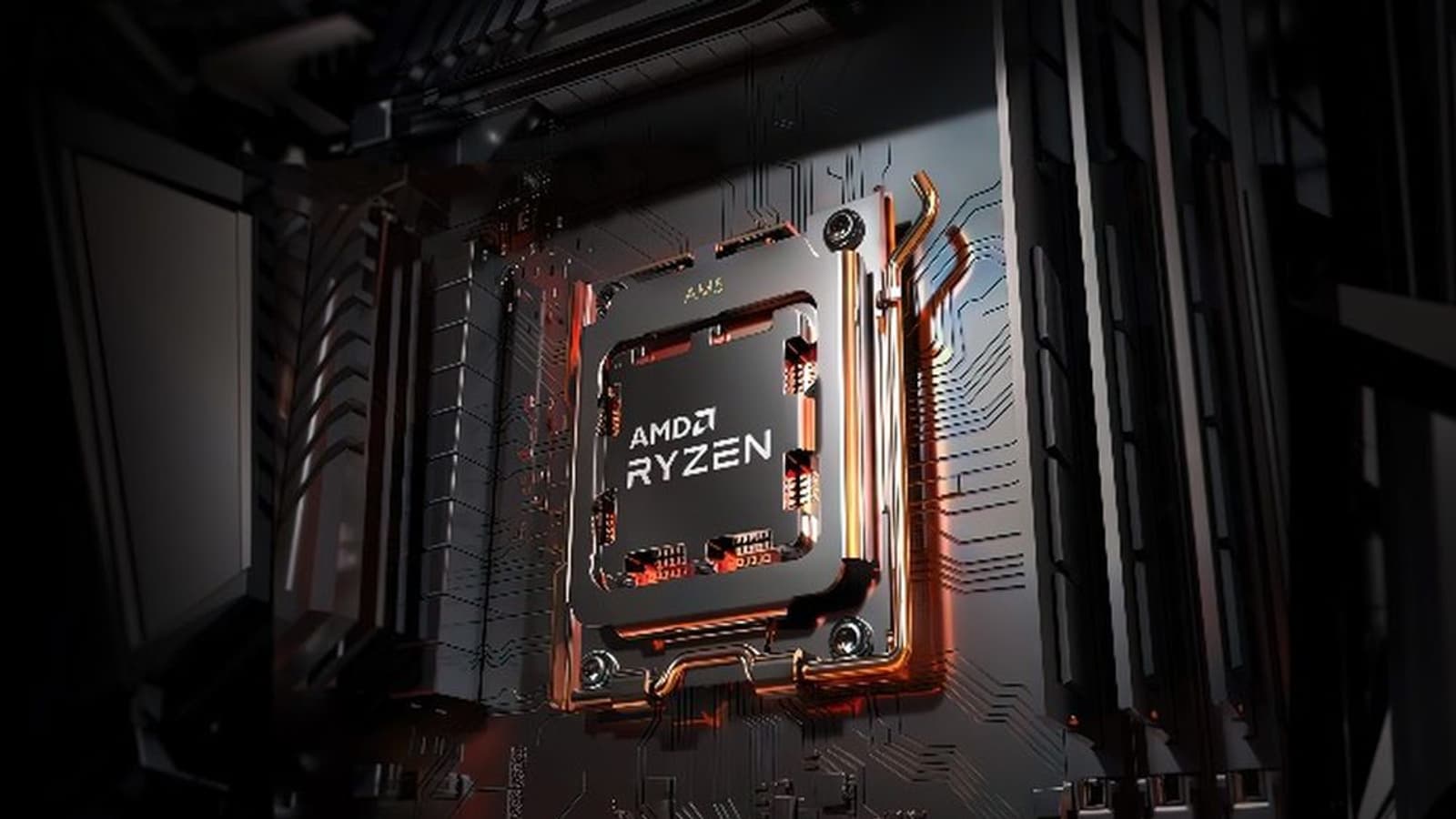
German retailer Mindfactory data show AMD commanding over 91% of recent processor sales versus under 9% for Intel, with the Ryzen 7 9800X3D the top seller and the i7-14700KF moving just 20 units. In the last week of the year AM4 platforms accounted for 34% of sales (715 units) while AM5 was 57.45% (1,210 units); AMD’s average CPU price fell to €259 versus Intel’s €248 (180 units sold, 8.55%). Rising DDR5/RAM prices are driving buyers toward older AM4/DDR4 platforms (strong sales also for the 7800X3D and 5700X), signaling continued retail strength and price/performance advantage for AMD and potential headwinds for Intel and DDR5 adoption.
Market structure: Retail data showing >90% AMD share at a German seller signals outsized consumer preference for AMD’s price/performance and X3D SKU premiuming; this strengthens AMD’s retail pricing power but also compresses Intel’s volume mix, squeezing INTC margins near-term. DDR5 scarcity raising DDR4 demand creates a bifurcated ecosystem: AM4/DDR4 resale and OEM channel activity will stay elevated for 3–6 months, while DDR5 suppliers (Micron) can sustain higher realizations until new capacity comes online.
Risk assessment: Key tail risks are regulatory scrutiny of AMD if dominance extends to server OEMs, an aggressive Intel price-and-bundle response that could re-capture ≥10–15% share within 6–9 months, or a sudden >20% month-on-month decline in DRAM spot prices as capacity ramps. Hidden dependency: Mindfactory is a single-country retail snapshot — global OEM/server share may diverge materially; treat this as a leading indicator, not a definitive global read.
Trade implications: Tactical alpha available via a relative-value pair: long AMD (AMD) vs short Intel (INTC) — sizes 2–3%/1–2% of equity portfolio respectively — with a 3–6 month horizon targeting outperformance if DDR5 stays constrained. Use options to skew risk: buy AMD 3-month call spreads to cap cost, and buy INTC 6-month 15% OTM puts sized to 0.5–1% portfolio risk; add selective long exposure to MU for DRAM pricing tailwinds (1–2%).
Contrarian angles: Consensus may over-extrapolate German retail share to enterprise/server cycles — AMD’s ASP compression (noted drop to ~€259) hints at commoditization risk that could limit upside past current share gains. Monitor OEM server wins, DDR5 spot moves, and any AMD antitrust inquiries; if AMD’s implied volatility falls <20% while macro/DRAM signals still bullish, consider adding convex long exposure (calls) for asymmetric payoff.
AI-powered research, real-time alerts, and portfolio analytics for institutional investors.
Request DemoOverall Sentiment
moderately positive
Sentiment Score
0.35
Ticker Sentiment
