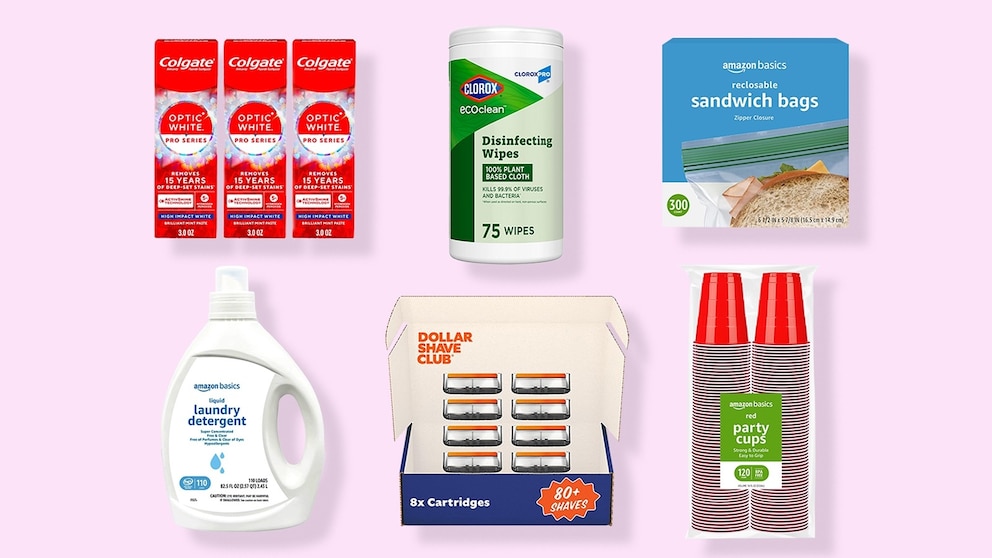
Major retailers — Amazon (Big Spring Sale), Target (Target Circle Week), Walmart (flash deals) and Wayfair (72-hour clear out) — are promoting discounts on household and personal essentials, with sample price ranges listed (e.g., Amazon Basics forks $4.73–$5.58, sandwich bags $5.63–$7.63, batteries $14.19–$16.70; Aquaphor kit $21.16–$31.34; Tom's toothpaste $9.98–$11.98). These are routine seasonal promotions likely to modestly boost near-term consumer spending on staples but are unlikely to materially move retailer stock prices; note the publisher receives affiliate commissions for purchases through linked retailers.
Promotional intensity across large retailers is a tactical lever that redistributes margin and customer lifetime value rather than simply transferring share. Amazon and Target can monetize promotions through higher-margin digital services (ads, subscriptions, fulfillment) and private-label penetration, meaning headline gross-margin pressure for CPG brands can be offset at the platform level by 100–300bps of incremental advertising mix over the next 1–2 quarters.
Second-order supply-side effects will show up in vendor contract dynamics: suppliers with weak bargaining power face lower realized ASPs and higher co-op/advertising spend, which can force heavier use of inventory financing or channel-specific discounts. That elevates bankruptcy/reshuffling risk among small CPGs in the next 6–12 months and creates M&A arbitrage for scale players or private-label manufacturers.
Key catalysts to watch in the near term (days–quarters) are weekly sales cadence vs. comps, month-over-month ad RPMs for AMZN, inventory-to-sales ratios in retailer 10-Qs, and CPI/retail sales prints that would materially swing discretionary vs. staples demand. A sustained uptick in ad RPMs or improving basket attach within 1–2 quarters would be a positive structural signal for platform owners; conversely, promo-led margin compression beyond ~200bps on retail gross margins would likely compress consensus EPS estimates for exposed branded CPGs.
Contrarian angle: the market tends to treat broad discounting as a pure-demand problem, but targeted, data-driven promotions can accelerate high-LTV customer acquisition and lift mid-term monetization (ads + subscriptions) by more than the immediate markdown cost. If that sequencing holds, platform equities may materially outperform branded CPGs through the next two earnings cycles even if near-term retail gross margins look weak.
AI-powered research, real-time alerts, and portfolio analytics for institutional investors.
Request DemoOverall Sentiment
neutral
Sentiment Score
0.00
Ticker Sentiment
