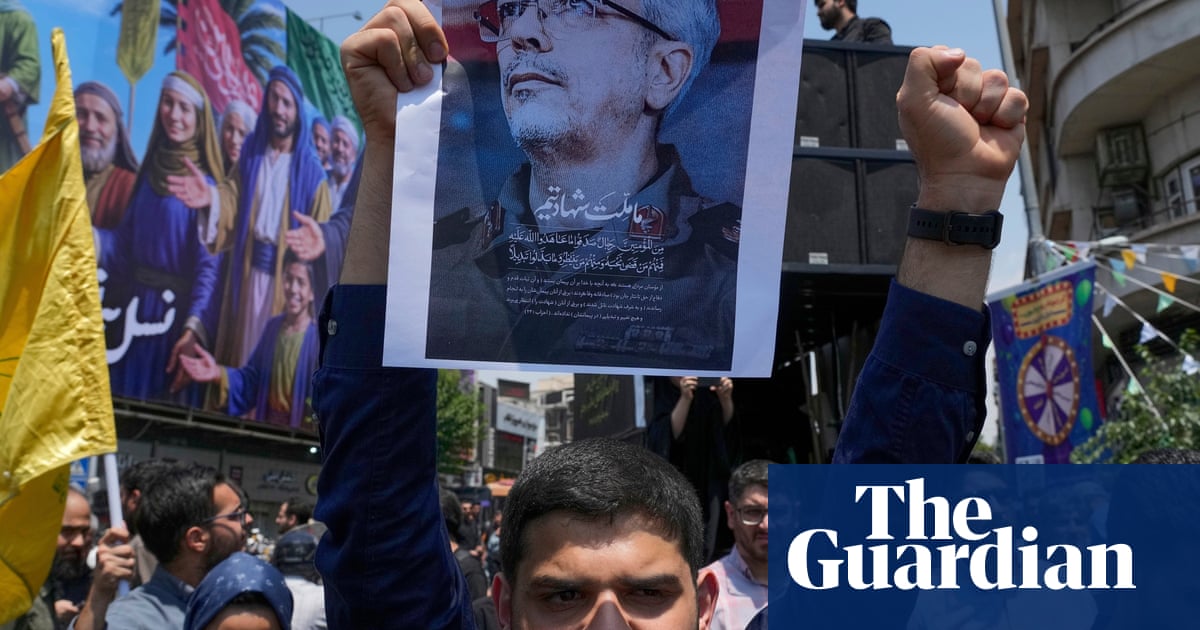
Israeli forces conducted extensive air strikes against Iranian targets, including the Natanz nuclear facility and multiple missile development sites, reportedly killing at least six nuclear scientists and senior military officials, including Mohammad Bagheri, chief of staff of Iran's armed forces, and Hossein Salami, commander of the Islamic Revolutionary Guard Corps. While the IAEA confirmed strikes at Natanz, it stated there were no reports of nuclear contamination, and other key sites like Fordow and Bushehr were reportedly not hit; the attacks signal a significant escalation in regional tensions and a potential disruption to Iran's nuclear program.
Extensive Israeli air operations, reportedly involving over 200 jets in five waves, have targeted at least 100 sites within Iran, including the key Natanz nuclear enrichment facility and ballistic missile development locations. These strikes resulted in the confirmed deaths of at least six senior Iranian nuclear scientists, such as Mohammad Mehdi Tehranchi and Fereydoun Abbasi, and prominent military figures including Mohammad Bagheri, Chief of Staff of Iran's armed forces, and Hossein Salami, commander of the Islamic Revolutionary Guard Corps (IRGC), alongside other officials like Gholamali Rashid and Ali Shamkhani. The International Atomic Energy Agency (IAEA) confirmed impacts at Natanz, Iran's most significant nuclear enrichment site, though it stated there were no reports of nuclear contamination, and noted that other key nuclear facilities like Fordow, Isfahan, and the Bushehr power plant were reportedly not hit. Early reports also indicate strikes on Bid Kaneh, a missile development and production hub. This military action, described as going beyond preventing nuclear weapon acquisition and potentially aiming for a broader 'decapitation' to weaken the Iranian regime, signifies a severe escalation in regional hostilities. The general sentiment surrounding this event is strongly negative, with a volatile tone and a high market impact score of 0.9, reflecting the gravity of the situation and its potential to disrupt Iran's nuclear program and destabilize its leadership structure.
AI-powered research, real-time alerts, and portfolio analytics for institutional investors.
Request DemoOverall Sentiment
strongly negative
Sentiment Score
-0.85
Ticker Sentiment
