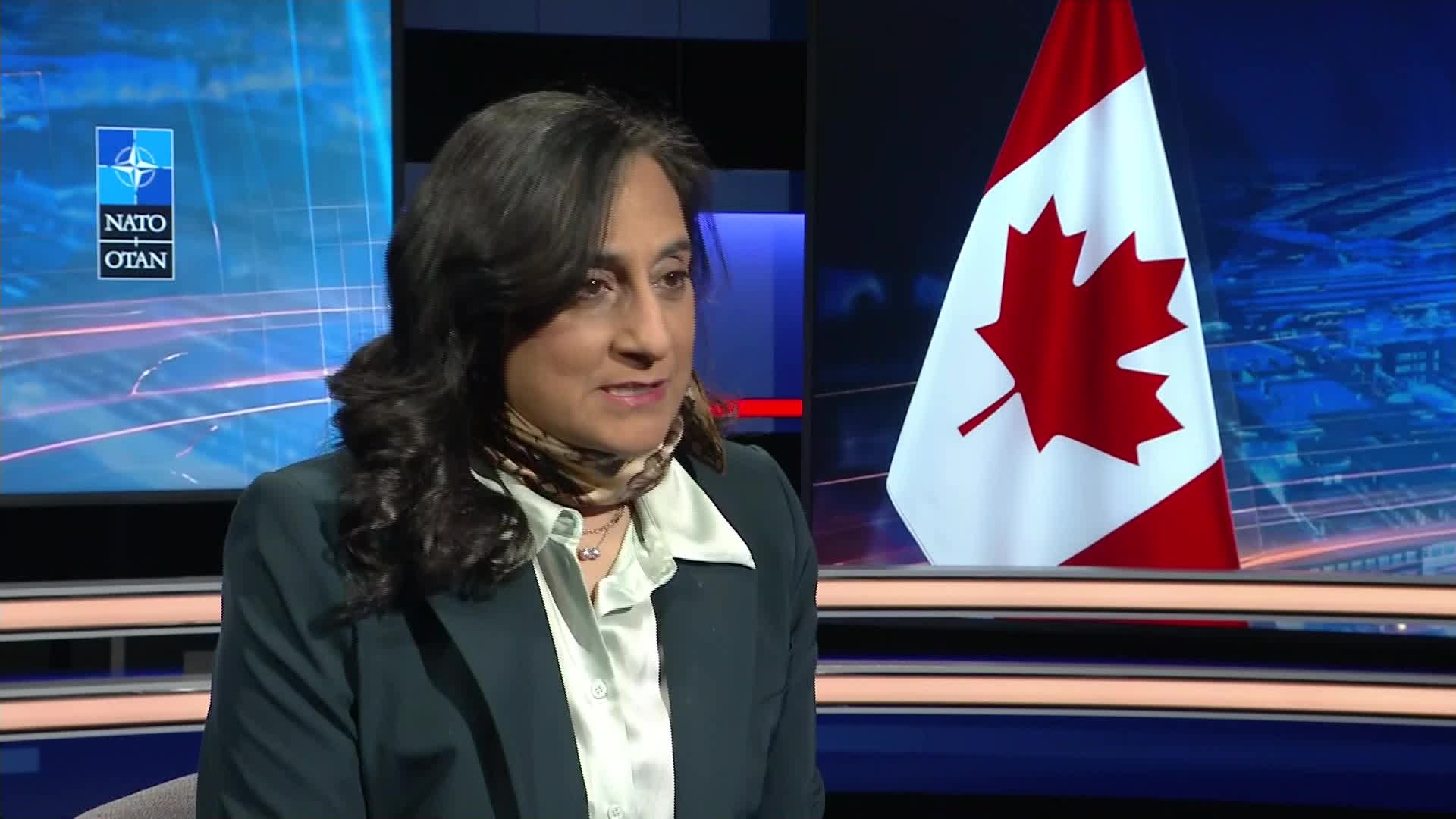
Canada reaffirmed strong support for Ukrainian sovereignty amid ongoing ceasefire and peace-plan negotiations, stressing that territories such as Luhansk, Donetsk and Crimea remain core Ukrainian concerns and should not be ceded. Ottawa highlighted its early contribution to the Pearl program and unveiled Budget 2025 commitments including an $80 billion defence industry package aimed at reaching 2% of GDP in defence spending this year and 5% by 2035. The government also signalled a trade strategy to double non-U.S. trade over the next decade, underscoring supply‑chain diversification as a priority while noting uncertainty in transatlantic politics and NATO deliberations.
Market structure: Canada’s explicit shift to higher defence spending (2% of GDP now, rising to 5% by 2035) and active support for Ukraine re-centers demand toward aerospace & defence primes, specialty suppliers (avionics, composites), rail/logistics for freight to new trade lanes, and raw materials (steel, nickel, aluminum). Winners: large primes (Lockheed LMT, Northrop NOC, General Dynamics GD) and Canadian suppliers (CAE.TO/CAE) plus rail/ports (CPKC, CNI); losers: Russian exporters and sectors exposed to higher sovereign deficits (long-duration Canadian bonds, some consumer sectors). Expect procurement-driven pricing power for suppliers and 2-5% incremental commodity demand versus baseline over the next 2–5 years.
Risk assessment: Tail risks include a renewed major escalation (oil +$10+/bbl, metals spike >10%) or a failed ceasefire that triggers sanctions and supply-chain shocks; regulatory/procurement delays are medium-probability but can push contract timelines 12–36 months. Immediate (days) market moves will be headline-driven; short-term (3–12 months) sees contract re-rating and FX/curve repricing; long-term (1–10 years) is structural industrial policy driving supplier consolidation. Hidden dependencies: microelectronics and export controls (US/Canada) that could bottleneck delivery and margin recovery.
Trade implications: Tactical: overweight defence & cyber (12–18 month horizon), overweight Canadian/continental rail/logistics for non-U.S. trade flow (6–24 months), underweight long-duration Canadian gov bonds. Use directional positions and options to express convexity: buy 9–15 month call spreads on LMT/NOC and 12-month LEAPS on CAE.TO; size initial positions 1–3% AUM each and trim on 20–40% upside. Hedge FX by going long USD/CAD via 3-month forward if CAD falls >2% or if budget execution increases fiscal deficit signals (watch 10y CAD yields +20–40bps).
Contrarian angles: Consensus underestimates the multi-year benefit to tier-2/SME suppliers and miners; small-cap specialty suppliers and metal miners are likely under-owned and can outperform as contracts cascade (histor parallel: post‑2014 re-rating +30–40% across defence suppliers over 24 months). Reaction could be underdone in cyber stocks (FTNT, PANW) which combine defence budgets with recurring revenue — buy on dips. Unintended consequence: large fiscal shift may crowd out domestic capex/consumption, pressuring Canadian retail and regional banks — consider tactical short exposure if yields keep rising.
AI-powered research, real-time alerts, and portfolio analytics for institutional investors.
Request DemoOverall Sentiment
neutral
Sentiment Score
0.05
