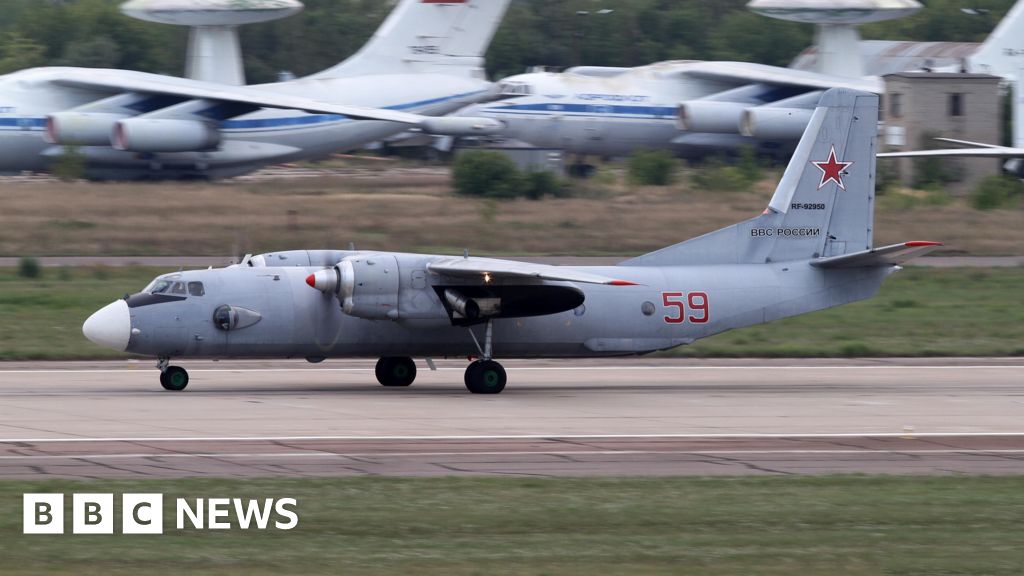
29 people were killed when a Russian An-26 military transport crashed in Crimea after losing contact on a routine flight; authorities report technical failure and no evidence of external damage. The incident occurred in Russian-annexed Crimea amid ongoing hostilities, highlighting operational risks to military logistics but with no immediate attribution to Ukrainian strikes. Market implications are limited but could prompt short-lived risk-off sentiment in defense names and regional assets; monitor for any escalation or official investigation outcomes.
Attrition of aging tactical airframes has outsized operational leverage: each lost platform forces commanders to reassign higher-capacity transports or shift to ground convoys, increasing transit times and exposure to stand-off fires. Expect measurable supply-chain friction inside weeks as planners prefer fewer, larger shipments with more escorts and pre-clearance, raising per-ton logistical costs by mid-single-digit percentages for contested theaters.
Second-order demand will favor hardening, electronic warfare and niche MRO services rather than headline fighter/bomber buys. Procurement cycles for vehicle armor, counter-UAS systems and depot-level repairs typically show order flow within 1–6 months and delivery/disbursement over 6–18 months; primes with modular C4ISR and vehicle-upgrade capabilities capture margin upside fastest.
Market pricing will likely underreact in the near term — defense equities are already elevated, but the marginal tail of tactical lift attrition compounds budget pressure and shifts capex mix toward sustainment. Conversely, logistics and regional transport incumbents face higher operational risk and insurance/charter costs; watch procurement announcements and sanction-enforcement filings over the next quarter as catalysts that could re-rate winners and losers.
AI-powered research, real-time alerts, and portfolio analytics for institutional investors.
Request DemoOverall Sentiment
moderately negative
Sentiment Score
-0.60
