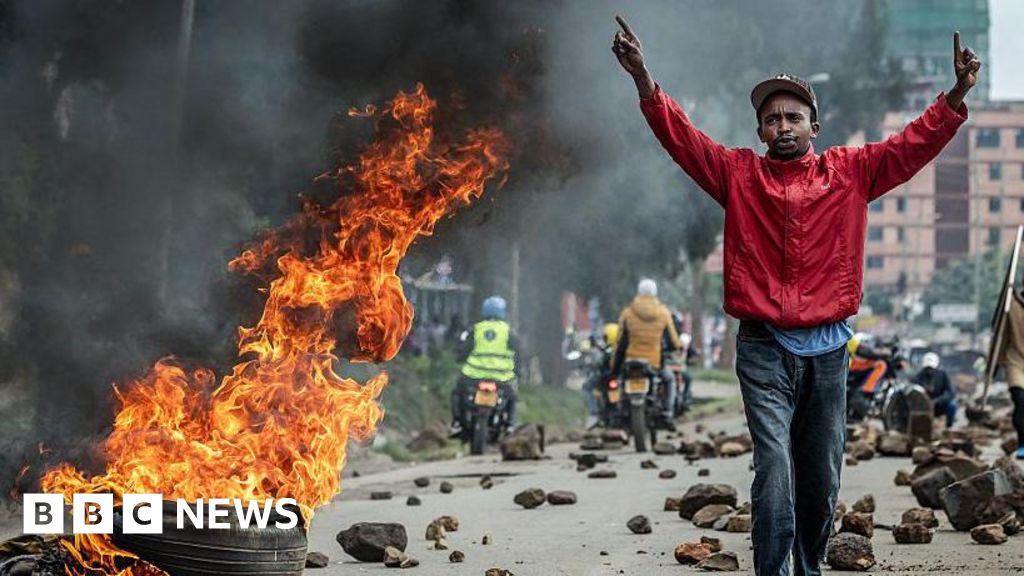
Kenya's fuel prices were raised to record levels, with diesel and petrol reaching 242 shillings per litre and costs rising by more than 20%, triggering nationwide transport strikes. The protests left commuters stranded, shut roads in Nairobi, and resulted in 4 deaths, at least 30 injuries, and 348 arrests, while police reported damage to vehicles and tear gas deployments. The article highlights broader inflationary pressure, transport disruption, and political backlash over the government's response to higher global fuel costs.
This is a classic inflation-to-protest transmission that matters less as a one-day street event than as a margin squeeze on the real economy. Transport is Kenya’s fastest pass-through channel for imported fuel shocks, so the second-order effect is not just higher fares but a broader delay in goods turnover, inventory replenishment, and informal-sector cash cycles; that tends to hit consumer discretionary, small-cap lenders, and domestically oriented retailers first. The fact that the disruption is concentrated around the capital also raises the odds of a near-term hit to services activity and tax collection, while leaving export-linked names relatively insulated. The bigger macro read-through is policy credibility risk. Once authorities start using VAT cuts or ad hoc relief to cap fuel, the market begins pricing a weaker fiscal anchor and a higher probability of currency pressure, because the relief either widens the deficit or is financed by borrowing. In an import-dependent economy, that can become self-reinforcing: weaker shilling expectations lift implied local fuel costs, which then feed back into inflation and further public pressure, extending the unrest beyond the current strike window. Consensus may be underestimating duration. Transport unions can sustain leverage for days to weeks because the cost of non-participation is immediate and visible, while the government’s response tools are slower and politically constrained. If global oil cools, the rally can reverse quickly, but absent a sharp pullback in Brent or a meaningful tax intervention, the more likely path is rolling disruptions rather than a clean resolution. The contrarian angle is that the market may already be too focused on the headline protest risk and not enough on who gains share in an inflationary transport environment. Larger, better-capitalized logistics and consumer staples distributors can actually take volume from smaller informal operators if they can maintain service continuity and route density; the shakeout can be structurally positive for the strongest incumbents once the dust settles.
AI-powered research, real-time alerts, and portfolio analytics for institutional investors.
Request DemoOverall Sentiment
strongly negative
Sentiment Score
-0.62
