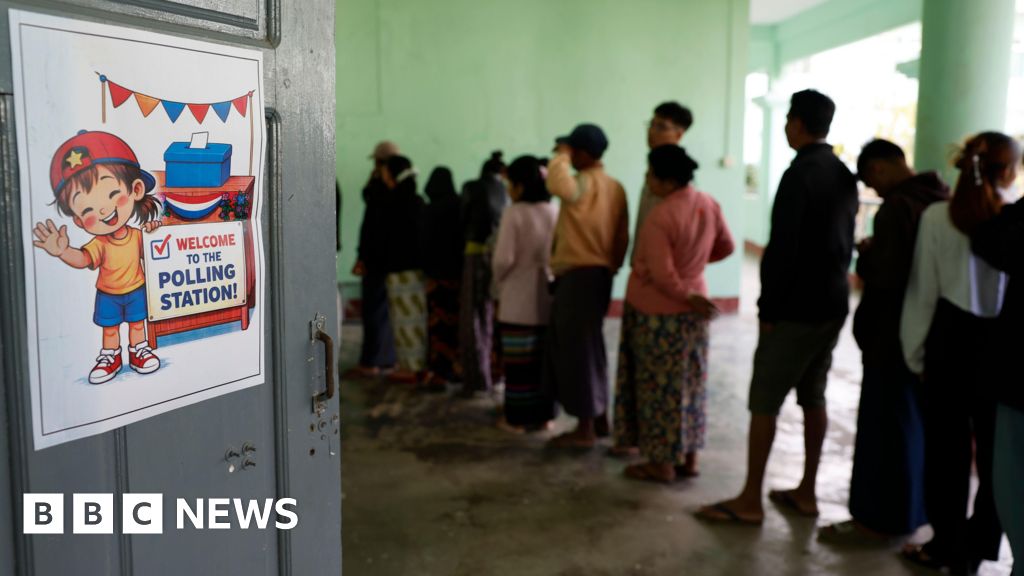
The UN rights office reports at least 170 civilians killed and 408 military aerial attacks during Myanmar's election period from the start of campaigning in December 2025 through the final voting round in late January. The military-backed Union and Solidarity Party claimed an overwhelming victory in a vote widely denounced as staged that barred the National League for Democracy, reinforcing ongoing civil conflict and raising political, operational and sanction-related risks for investors with exposure to Myanmar or regional supply chains.
Market structure: The immediate winners are defense and risk-mitigation providers (contractors, insurers) and safe-haven assets; losers are Myanmar sovereign and frontier-EM credit, local extractive/export projects, and contractors tied to BRI-type infrastructure. Expect EM risk premia to rise—spreads on small frontier sovereigns likely widen 150–400bp over weeks—and regional investment flows to re-route to larger EMs and DM safe havens.
Risk assessment: Tail risks include US/EU sanctions and secondary sanctions on Chinese firms, a refugee/contagion shock to neighboring ASEAN economies, or expanded conflict drawing in external actors; low-probability but high-impact and could push regional FX and CDS into multi-standard deviation moves. Time horizons: days—risk-off flows and FX volatility spikes; weeks–months—widening credit spreads and project delays; quarters—long-term reallocation of Chinese capital if instability persists.
Trade implications: Near-term cross-asset moves will favor USD, gold (GLD), and defense exposure (ITA, LMT, RTX) while penalizing frontier ETFs (FM) and Myanmar-linked credit; implied vol in frontier EM puts will rise—use option structures to hedge. Insurance/reinsurance premium normalization and higher claims could benefit select reinsurers but watch loss visibility and sanction risk.
Contrarian angles: Consensus will likely overpay the “defense hedge” while overselling all Asia exposure; look for selective long opportunities in Asian exporters with no Myanmar exposure and banks with strong franchise metrics trading <0.8x book. Risk: a rapid diplomatic de-escalation or military consolidation (giving apparent “predictability”) could produce sharp mean reversion in frontier assets within 3–6 months.
AI-powered research, real-time alerts, and portfolio analytics for institutional investors.
Request DemoOverall Sentiment
strongly negative
Sentiment Score
-0.80
