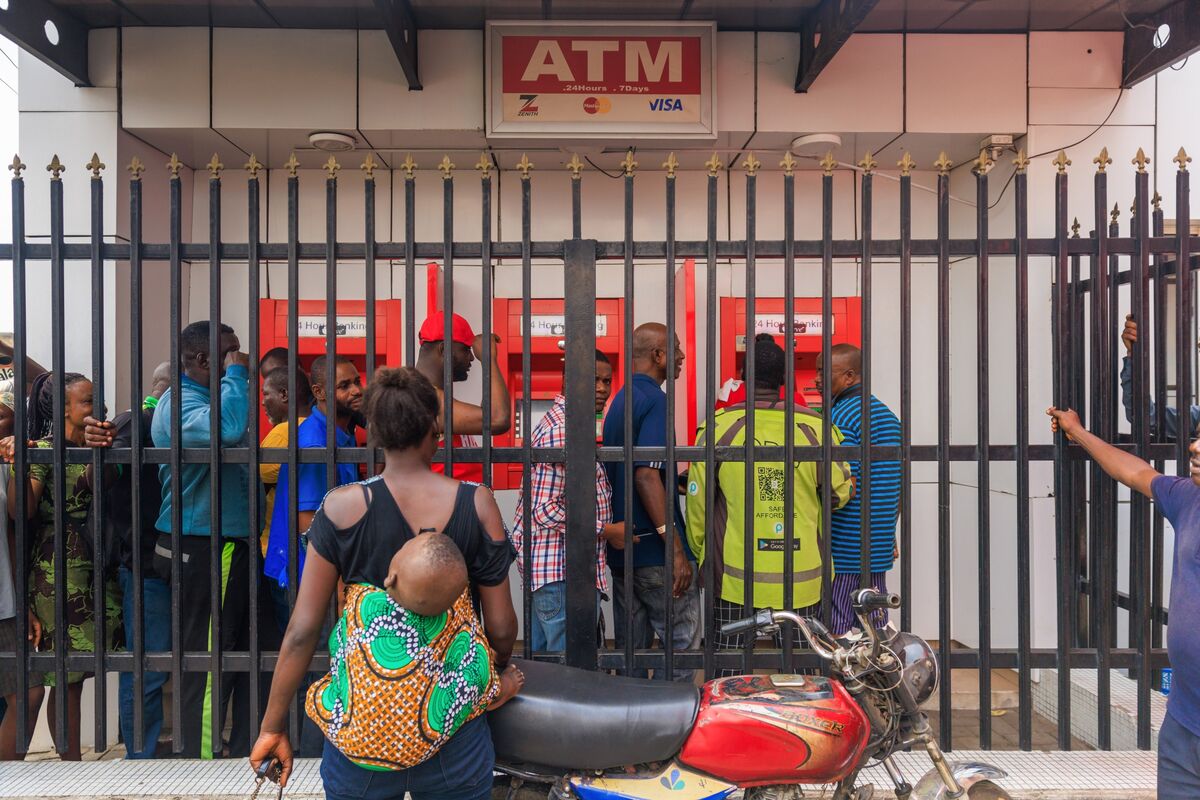
Nigerian bank stocks declined after the central bank ordered some lenders to increase cash reserves and suspend dividend payouts; the index of the 10 largest banks fell 4%, reaching its lowest level since June 2, while the broader Nigerian stock index decreased by 0.2%. The directive's impact on specific banks and the duration of the dividend halt remain unclear, creating uncertainty for investors.
Nigerian bank stocks experienced a significant downturn following a central bank directive mandating certain unspecified lenders to suspend dividend payments and augment their cash reserves. The index tracking the country's ten largest and most liquid bank stocks declined by 4% in Lagos trading, after an initial intraday drop exceeding 7%, marking its lowest point since June 2. This regulatory action, leading to a broader Nigerian stock index decrease of 0.2%, introduces considerable uncertainty into the banking sector, reflected by a moderately negative sentiment score (-0.6) and a bearish tone. The lack of specificity regarding which banks are affected and the duration of the dividend suspension creates a challenging environment for assessing individual bank stability and future capital return prospects, a key concern for investors focused on capital returns and company fundamentals in emerging markets.
AI-powered research, real-time alerts, and portfolio analytics for institutional investors.
Request DemoOverall Sentiment
moderately negative
Sentiment Score
-0.60
