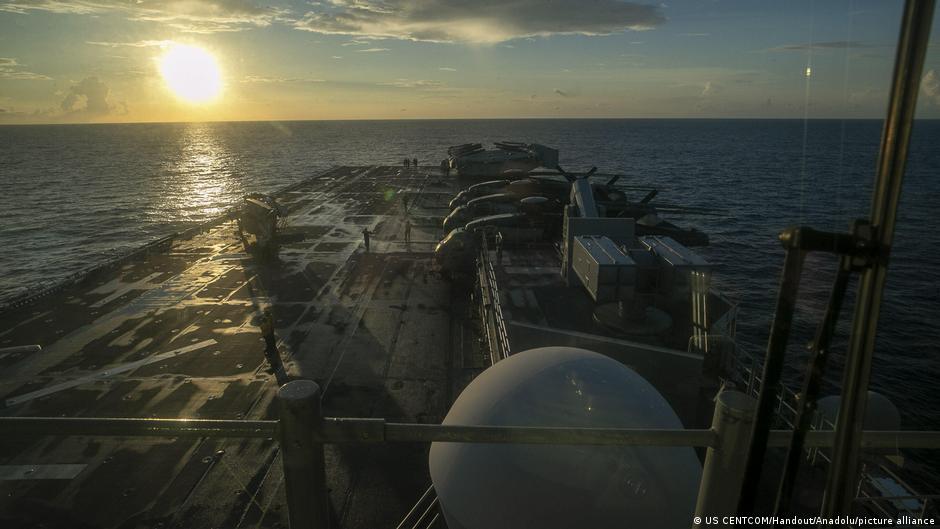
Pentagon reportedly preparing for a possible ground offensive in Iran while ~2,500 US Marines have arrived and reports cite up to 10,000 additional infantry plus thousands from the 82nd Airborne being readied. Kharg Island — the conduit for ~90% of Iran's crude exports — is identified as a potential target, and the IRGC has threatened strikes on US university campuses in the region unless Washington condemns strikes by noon Mar 30, sharply raising escalation risk. Expect pronounced risk-off market moves: potential oil-price spikes, widened regional risk premia, heightened volatility for energy and defense equities, and increased safe-haven flows.
The most immediate market channel is freight/insurance and the consequent price-of-transport shock for seaborne hydrocarbons: a meaningful, sustained risk to chokepoints or recurring limited strikes pushes incremental VLCC voyage costs and time-on-route by double-digit percentages within days, which historically translates to $3–12/bbl spot premium pressure on Brent in the first 2–6 weeks as traders front-run potential supply slowdowns.
Supply-side buffer mechanics matter: with limited incremental export capacity outside the Gulf and modest OECD spare crude stocks, shocks under 3 months are amplified in spot markets; shocks that persist beyond a quarter tend to price in substitution (draw on SPR, incremental shipments from Atlantic suppliers) and compress backwardation, reducing tail volatility. That means tactical hedges should be short-dated and directional, while strategic rebalances should assume a 3–12 month window for either de-escalation or entrenchment.
Defense and maritime-equipment chains will see lumpy revenue recognition and reorder cycles over 12–24 months, benefiting prime contractors and specialist shipowners but also creating second-order winners in cybersecurity, ISR analytics, and parts suppliers with long lead-times. Conversely, discretionary travel and regional trade-finance exposures will rerate almost immediately; credit stress spreads in regional trade banks and securitized cargo receivables are an under-watched second-order risk that can widen rapidly if insurance backstops or corridor-clearance costs spike.
The tradeable asymmetry is that short tactical disruptions create outsized price moves but are mean-reverting on successful diplomacy; large-scale sustained conflict is low-probability but high-impact. Position sizing should therefore prioritize convex payoffs (options, owners of freight capacity) and explicit tail hedges rather than naked directional equity bets without time-limited protection.
AI-powered research, real-time alerts, and portfolio analytics for institutional investors.
Request DemoOverall Sentiment
strongly negative
Sentiment Score
-0.80
