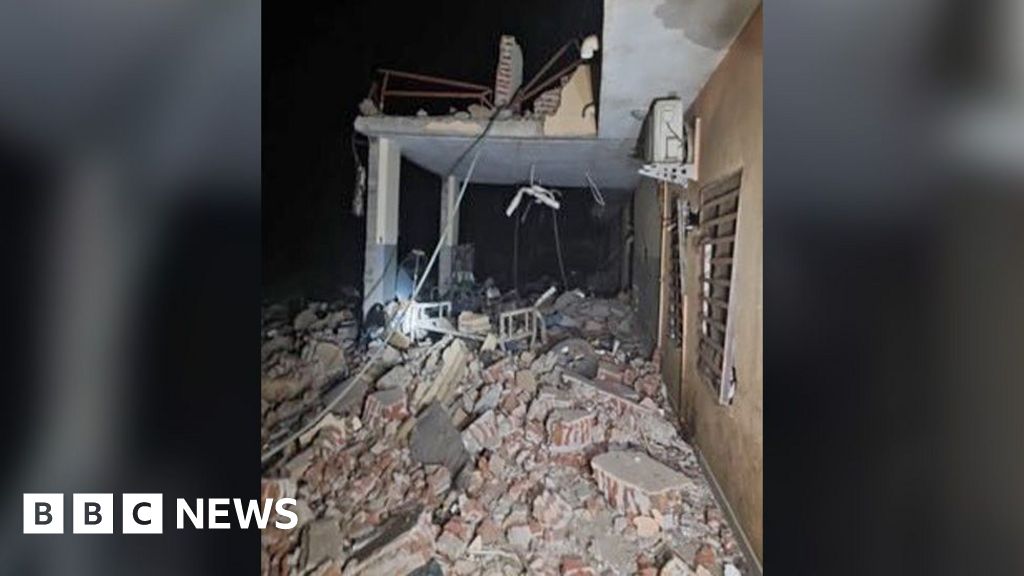
64 people were killed — including 13 children, two nurses and a doctor — when a strike hit el-Daein Teaching Hospital in East Darfur; WHO says the hospital is no longer functional and reported 2,036 deaths in 213 attacks on health care during the nearly three-year conflict. The RSF says an army drone struck the hospital; the Sudanese military denies responsibility, and local rights groups and Emergency Lawyers are calling for an independent investigation. The conflict has killed more than 150,000 people and displaced about 12 million (≈1/3 of the population), sustaining elevated regional security risk and a continued risk-off environment for Sudanese and neighboring markets.
This incident magnifies an already elevated tail-risk vector for North African/Middle Eastern instability that investors have been treating as idiosyncratic; the market reaction will be risk-off in the near term (days–weeks) driven by portfolio de-risking and cash flows out of frontier/EM allocations rather than a sudden commodity shock. Refugee flows and disrupted logistics across Darfur–Kordofan corridors materially raise short-term fiscal and humanitarian burdens on neighboring states—expect bilateral aid and donor funding announcements within 7–30 days that temporarily reroute cash and goods away from private spending in the region.
Defense and ISR demand is the clearest corporate-side second-order effect: militaries accelerate procurement of drones, counter‑drone systems, and ISR analytics when battlefield urban-civilian incidents rise, which supports incremental revenues for large primes on a 6–18 month cadence as budgets are reprioritized. Small drone-component vendors see order volatility and counterparty concentration risk; larger primes with diversified backlogs (and classified program exposure) are the natural beneficiaries of reallocated spend.
Health-system and logistics spending create a multi-year reconstruction pipeline: surgical replacement of hospitals, field medical assets, cold-chain and NGO logistics spike procurement for med-tech and engineering firms over 1–3 years. However, payment risk (donor cash flow delays, sanctions complexity) means execution risk will be high and margins compressed compared with a commercial backlog.
Key catalysts to monitor: any credible international peace framework or heavy-lift humanitarian corridor (would compress defense and reconstruction upside) vs. rapid escalation into neighboring states or targeting of ports/airfields (would amplify safe-haven flows and defense re-rating). Investor timeframes diverge — days for hedges and cash management, 6–18 months for defense re-rating, and 1–3 years for reconstruction capture and legal/litigation tail-risk resolution.
AI-powered research, real-time alerts, and portfolio analytics for institutional investors.
Request DemoOverall Sentiment
strongly negative
Sentiment Score
-0.85
