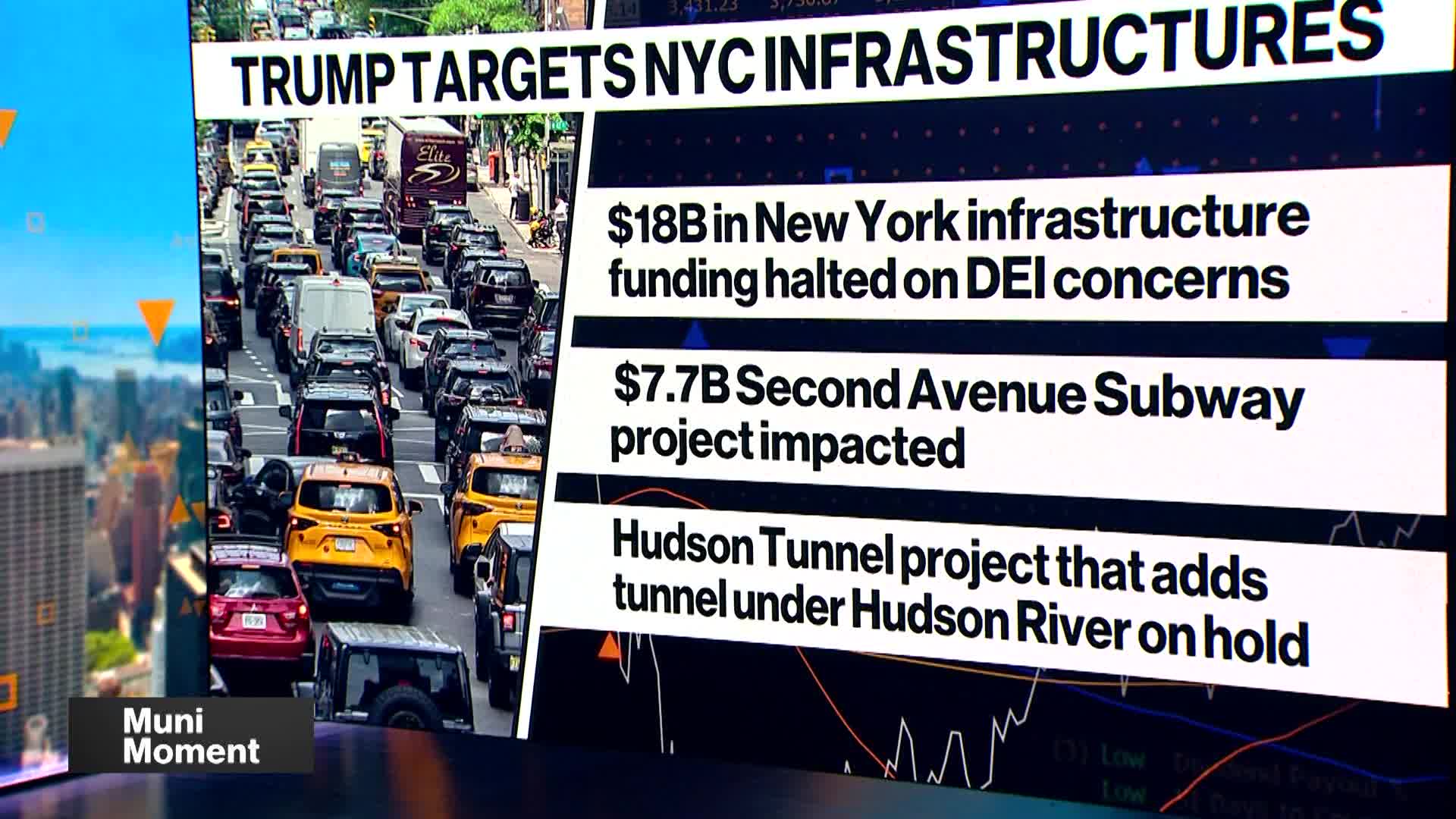
The White House has frozen $18 billion in infrastructure funding allocated for New York City, impacting critical projects including the Hudson River Tunnel and the Second Avenue Subway expansion, amidst broader government shutdown concerns.
The White House's decision to freeze $18 billion in infrastructure funding for New York represents a material setback for two critical regional megaprojects: the Hudson River Tunnel and the Second Avenue Subway expansion. This action, occurring amid a government shutdown, injects significant uncertainty into project timelines and highlights the vulnerability of large-scale, federally-supported initiatives to political and fiscal impasses. The halt in funding directly impacts the outlook for the engineering, construction, and materials sectors that would service these projects, potentially delaying revenue streams and disrupting long-term planning. Given the strongly negative sentiment score (-0.75) and moderate market impact (0.65), the market perceives this not as a minor procedural delay but as a significant event with potential economic repercussions for the New York metropolitan area and a negative signal for the broader US infrastructure investment landscape.
AI-powered research, real-time alerts, and portfolio analytics for institutional investors.
Request DemoOverall Sentiment
strongly negative
Sentiment Score
-0.75
