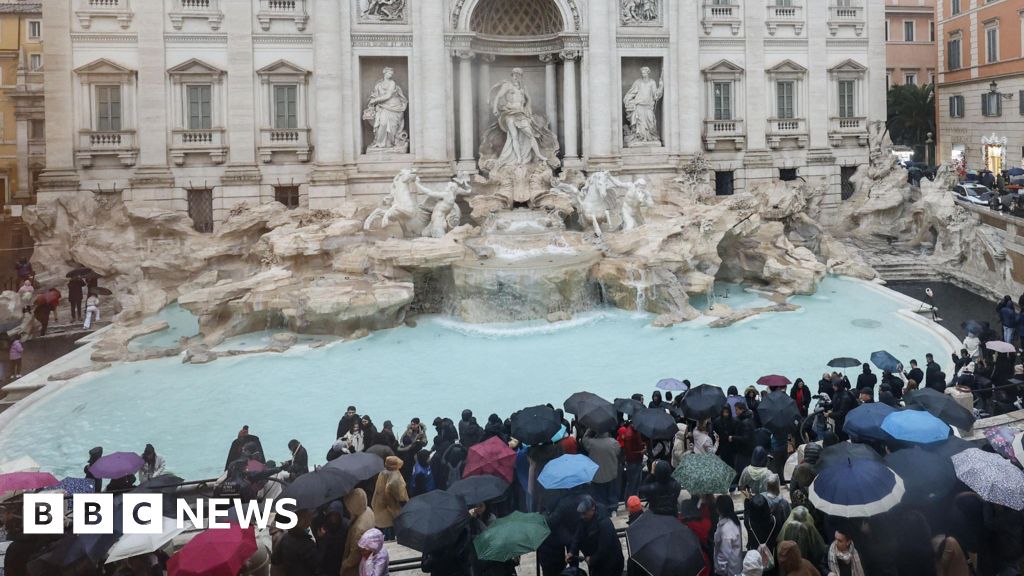
Rome will introduce a €2 per-person fee for close-up access to the Trevi Fountain from 1 February 2026 as part of a broader tariff system for museums and monuments; the city projects the levy will generate around €6.5m annually. The site currently averages ~30,000 visitors per day but is capped at 400 simultaneous entrants; tourists and non-residents will pay for access to the Trevi and five other attractions while certain sites become free for residents, and exemptions apply for children under five and disabled visitors.
Market structure: The €2 Trevi levy (effective Feb 1, 2026) formalizes price discrimination: residents free, non-resident tourists pay, and Rome projects €6.5m/year — implying ~3.25m paid admissions (≈30% conversion on ~10.95m annual visitors). Direct winners are platforms/tour operators and premium hotels/retail that can bundle or upsell “close-up” access; losers are low-margin souvenir vendors and ad-hoc street guides if footfall near the monument falls by >10%. The small ticket size limits macro impact but reallocates tourist spending within the local ecosystem.
Risk assessment: Immediate operational risks include enforcement costs and queues (cap 400 simultaneously) and potential protests or litigation that could delay rollout by quarters; a sustained >15% drop in Trevi proximate visitors would be a high-impact tail event for local merchants. Short-term (months) volatility will track summer 2026 seasonality; long-term (multi-year) risk is policy contagion if other cities replicate monetization, compressing free tourism markets. Hidden dependencies include integration of tickets into booking platforms and local transport capacity to absorb re-routed flows.
Trade implications: Expect modest winners — OTAs and payment processors that can distribute bundled access (Booking BKNG, Expedia EXPE) and premium hotel chains (Accor AC.PA, Marriott MAR) within Europe — and losers among mass-tour operators (TUI.DE) and listed retail tied to impulse foot traffic. Implementation catalysts: partnership announcements between Rome and OTAs, or city data showing paid conversion >30%, would accelerate re-rating. Options can express low-cost upside to OTAs ahead of 2026 bundling adoption.
Contrarian angle: The market may underappreciate that monetizing access can increase per-visitor spend (estimate +3–7%) by improving experience and reducing congestion — a positive for luxury hotels/brands (LVMH MC.PA, MONC.MI). Historical parallel: Venice entry fees reduced low-value footfall but raised ticket revenues and merchant ARPU. Unintended consequences include secondary markets/resale and DIY viewing from periphery; monitor resale listings and queueing metrics as leading indicators of enforcement friction.
AI-powered research, real-time alerts, and portfolio analytics for institutional investors.
Request DemoOverall Sentiment
neutral
Sentiment Score
0.05
