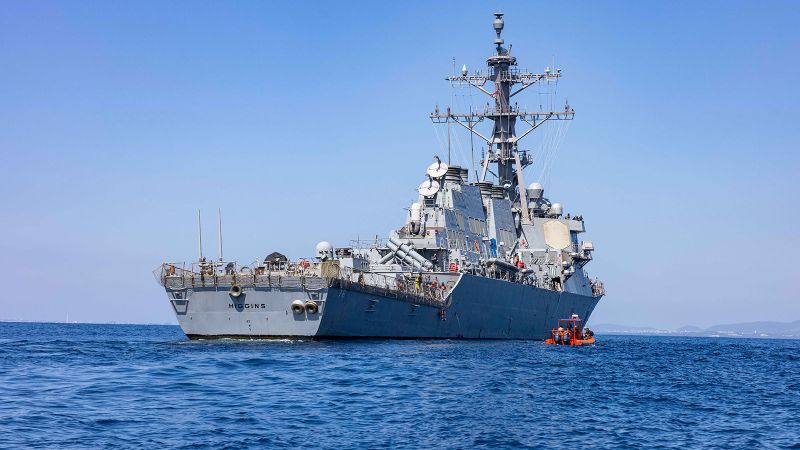
The USS Higgins, an Arleigh Burke-class guided-missile destroyer with a crew of about 300, lost power and propulsion for several hours in the Indo-Pacific after an electrical malfunction. No injuries were reported, and power has since been restored, but the incident temporarily left the ship unable to move or operate its radar and combat systems. The cause is under investigation, underscoring operational risk in a sensitive defense theater.
The immediate market implication is not about one destroyer; it is about the reliability premium embedded in US Indo-Pacific force posture. A multi-hour loss of propulsion on a frontline asset raises the perceived probability of non-combat downtime across the surface fleet, which matters most when presence is the deterrent. That can translate into a modest but real premium for contractors tied to maintenance, electrical systems, combat systems modernization, and spares, because the fix is likely to be a fleet-wide reliability review rather than a one-off repair. The second-order effect is operational: any visible degradation in sortie reliability increases the value of redundancy and distributed basing, which is supportive for firms exposed to naval infrastructure, ship repair, and hardened logistics. It is also mildly negative for the narrative around legacy surface combatants as “always available” assets; over months, repeated incidents would increase pressure to accelerate service-life extensions, depot maintenance, and sensor/power upgrades, shifting budget share away from new starts and toward sustainment. That mix is usually better for primes with deep after-market and MRO exposure than for pure-play new build names. The contrarian point is that this is not necessarily a demand destruction event for defense spending; if anything, it may be budget-positive because operational mishaps are politically easier to fund than hypothetical future threats. The market may underappreciate how quickly the Navy could reallocate dollars toward electrical resilience, auxiliary power, and shipboard digital hardening if this becomes a pattern. The real tail risk is not the single casualty, but a cluster of similar events over 1-2 quarters, which would force a broader readiness audit and could temporarily reduce forward-deployed availability in the Pacific.
AI-powered research, real-time alerts, and portfolio analytics for institutional investors.
Request DemoOverall Sentiment
mildly negative
Sentiment Score
-0.20
