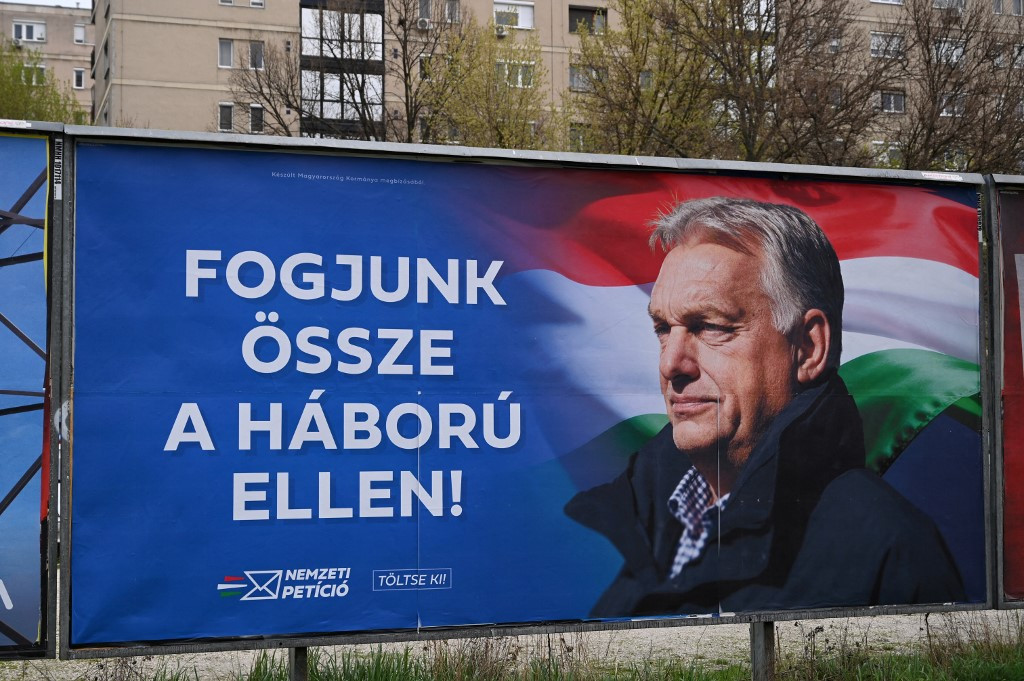
Key event: Hungary's parliamentary election on April 12 may not materially improve Budapest's relations with the EU or Ukraine. Opposition leader Péter Magyar largely mirrors Viktor Orbán on Ukraine—opposing fast‑tracking EU accession in favor of a referendum, rejecting military aid, and voting against a €90 billion ($104 billion) EU loan package for Ukraine. Any policy shift is likely to be constrained by entrenched domestic anti‑Ukrainian sentiment and Budapest's closer energy ties with Moscow, leaving Kyiv cautiously optimistic but only expecting limited flexibility.
The market is pricing a binary political event (election) as a potential reset for Hungary’s EU/Ukraine relations, but the more likely outcome is policy continuity constrained by domestic politics — not a rapid realignment. That means the principal transmission channels to markets are fiscal conditionality and reputational risk rather than an abrupt change in trade or energy flows; withholding of EU transfers or slow approval of cohesion funds would effectively remove a 1.5–3% of GDP fiscal buffer within 3–12 months, pressuring HUF and sovereign spreads.
Second-order effects concentrate in three areas: banking funding and asset quality (local FX liabilities and wholesale funding become pricier if spreads widen), energy counterparties (continued preferential Russian gas/contracts preserve MOL’s upstream optionality but increase sanction tail risk), and defence/arms logistics (if Budapest remains an outlier, procurement and routing to Ukraine will shift to Poland/Romania, raising revenues for regional defense suppliers). These shifts compress domestic credit margins and create asymmetric exposure for cross‑border EU funds recipients over a 6–18 month horizon.
Catalysts that would reverse the stress are discrete: a clear EU political agreement to release funds (weeks), a credible shift in Hungarian pledges on military aid (months), or market-driven HUF rallies following ECB/IMF accommodation. Tail risks include an escalation to secondary sanctions or coordinated EU punitive measures — asymmetric, low probability but high impact events that could widen HU 5y CDS by 100–300bps in under three months and knock 20–40% off domestic bank market caps.
AI-powered research, real-time alerts, and portfolio analytics for institutional investors.
Request DemoOverall Sentiment
neutral
Sentiment Score
0.00
