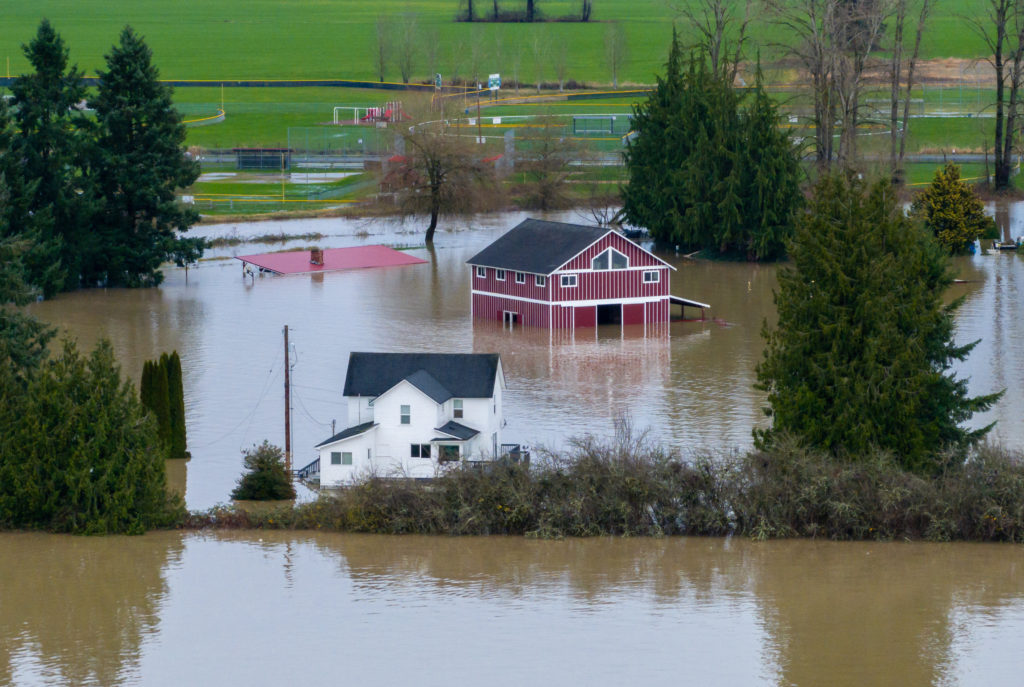
Days of torrential rain have produced historic flooding across Washington state, prompting a state of emergency, evacuation orders for about 78,000 residents in the Skagit River floodplain, multiple rooftop rescues and at least two homes washed from their foundations as the Skagit and Snohomish rivers crested at or above record levels. The floods have inundated bridges and major roads (including large sections of state Route 410 and a landslide-blocked stretch of I‑90), closed the Sumas U.S.–Canada border crossing and suspended Amtrak service to Vancouver, B.C., threatening a major agricultural region north of Seattle and broadening transport and logistics dislocations. With another storm expected this weekend, the event raises immediate emergency-response and infrastructure-repair costs, potential near-term agricultural and supply-chain impacts, and a sustained recovery burden for insurers, local governments and utilities.
Days of torrential rain in Washington produced historic flooding that prompted a state of emergency, evacuation orders for about 78,000 residents in the Skagit River floodplain and multiple rooftop rescues as the Skagit and Snohomish rivers crested at or above record levels (Snohomish nearly a foot/30 cm above its record; Skagit just above its record). Emergency services reported two families rescued from roofs in Sumas after roughly 15 feet (4.6 m) of water inundated parts of the city and the city’s fire station had about 3 feet (0.9 m) of water; at least two houses collapsed into the Nooksack River from erosion.
Flooding has produced major transport and logistics disruptions: several bridges and large sections of state Route 410 were inundated or washed out, a landslide blocked I-90 east of Seattle, the Sumas U.S.–Canada crossing was closed and Amtrak suspended service to Vancouver, B.C., threatening a key agricultural region north of Seattle. With another storm system expected starting Sunday, officials warned of potentially catastrophic additional flooding.
Near-term financial implications include increased emergency-response and infrastructure-repair spending, immediate disruptions to regional agriculture and freight flows, and elevated claims pressure for local insurers and municipal services. Sentiment indicators from the signals show strongly negative public tone (sentiment score -0.7) with limited broader market transmission so far (market impact score 0.3), but localized credit and operating risks for transportation, utilities, insurers and regional governments remain elevated while forecasts and crests are updated.
AI-powered research, real-time alerts, and portfolio analytics for institutional investors.
Request DemoOverall Sentiment
strongly negative
Sentiment Score
-0.70
