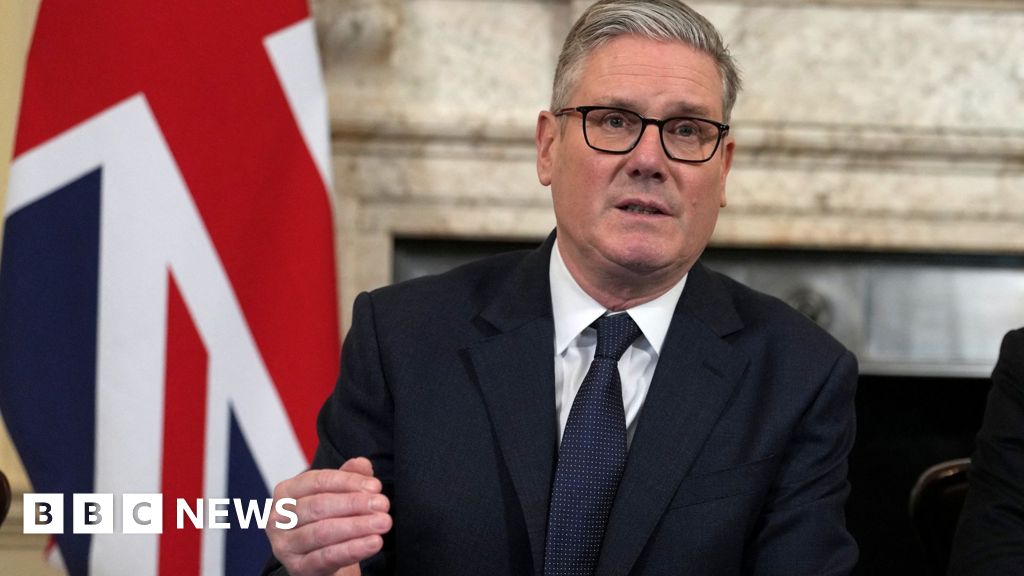
Sir Keir Starmer is facing an open cabinet and Labour revolt, with ministers split on whether he should stay and MPs publicly withdrawing confidence in his leadership. The article says a leadership contest would create a highly questionable mandate and deepen instability inside the Labour movement. This is politically negative for UK governance sentiment, but the immediate market impact is likely limited.
This is less a UK political headline than a near-term volatility regime shift. When a governing coalition starts openly price-discovering leadership succession, the market typically moves first through sterling, gilts, and domestic cyclicals rather than equities broadly; the first-order impact is a higher policy-risk premium, but the second-order effect is that investors demand a discount for any asset whose valuation depends on stable fiscal execution over the next 6-18 months. That usually favors global earners and defensives over UK domestic names, and it can persist even if the prime minister survives this week because the damage is to the credibility of future decision-making, not just to one officeholder.
The biggest underappreciated risk is a forced leadership transition during a period when the market is already sensitive to sovereign-fiscal credibility. A contested change would likely widen UK gilt spreads at the long end and steepen the curve as investors price more policy drift and weaker control over spending commitments. That would pressure banks, homebuilders, and retailers through a higher discount rate and weaker consumer confidence, while multinationals with non-UK revenues become relative safe havens. If the leadership crisis lingers for weeks, the economic cost compounds via delayed capital allocation and a quieter M&A market.
Contrarian-wise, a resignation or timetable may initially look stabilizing if it removes uncertainty, but the more important variable is who inherits the role and whether that person can command the party while reassuring bond markets. A quick successor with a clean mandate could partially reverse the move, but the base case is that the market pays closer attention to governability than personality. The current reaction may still be underpriced if investors are treating this as just another Westminster churn event rather than a governance reset with implications for fiscal policy credibility and domestic demand.
For positioning, the cleanest expression is to fade UK domestic beta and own global UK exposure. The opportunity is not in betting on the headline outcome, but on the persistence of the risk premium after the headline passes.
AI-powered research, real-time alerts, and portfolio analytics for institutional investors.
Request DemoOverall Sentiment
strongly negative
Sentiment Score
-0.55
