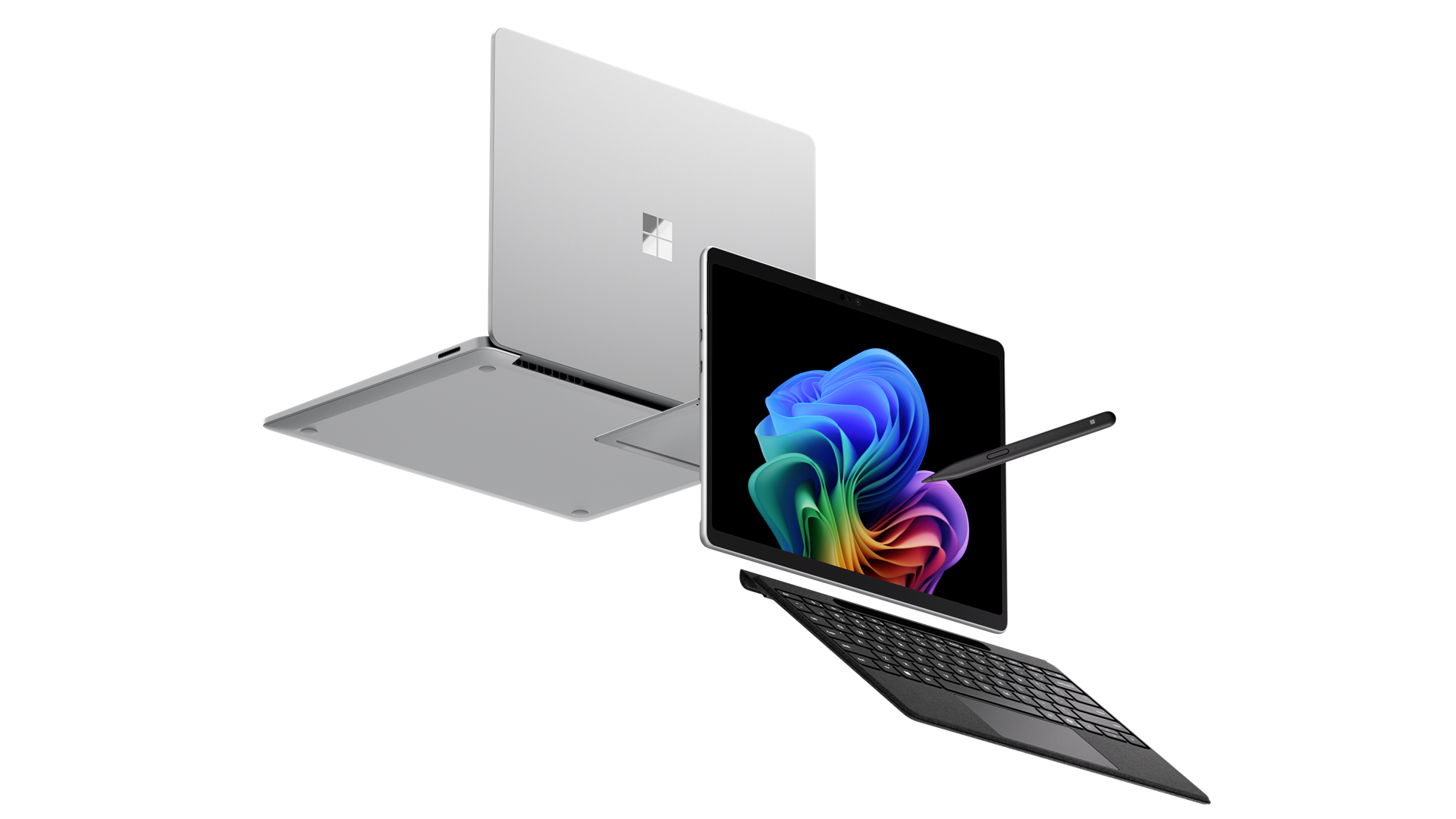
Microsoft announced new Surface for Business devices, including the Surface Pro for Business and Surface Laptop for Business with Intel Core Ultra Series 3 processors available today in select markets. The lineup emphasizes on-device AI, security, and enterprise manageability, with up to 35% better graphics performance versus MacBook Air with M5 on select configurations and pricing starting at $1,299.99 for the 13-inch Laptop and $1,949.99 for the 13.8-inch Laptop and Surface Pro. Microsoft also said Snapdragon X2-based models will arrive later this year with up to 80% faster local AI inferencing.
The incremental takeaway is not that Surface is ‘another PC refresh,’ but that Microsoft is using hardware to defend two strategic moats at once: Copilot/AI attach and enterprise security standardization. That matters because the real economic value is likely to accrue in the ecosystem layer, not just unit sales — every successful Surface deployment increases the probability that Intune, Autopilot, M365, and Windows AI APIs become the default operating system for enterprise workflows. In other words, the device launch is a conversion engine for higher-margin software and management revenue, with the PC itself serving as the loss-leader-ish wedge. Intel looks like the more immediate beneficiary on a near-term channel-check basis, but the stock’s upside is bounded unless this announcement translates into sustained design wins beyond Microsoft’s own branded hardware. The more important second-order effect is competitive pressure on premium Windows OEMs: Microsoft is signaling that the top of the market will increasingly be defined by security-by-design, local AI, and managed repairability, which raises the bar for Dell/HP/Lenovo and could force them to spend more on silicon qualification and device management integration. That typically compresses OEM differentiation while strengthening the ecosystem leader. The contrarian angle is that the AI-PC narrative may still be ahead of actual enterprise budget conversion. CIOs like the story, but refresh cycles in large fleets are slow, and many buyers will wait for a clear productivity payback before paying up for premium configs; that creates a 2-4 quarter lag risk between marketing momentum and revenue realization. There is also a subtle risk that on-device AI, while useful, reduces some near-term cloud inference spend, which could slightly dilute the urgency of premium cloud attach if customers view local processing as ‘good enough.’ Tail risk is execution: if the new line launches cleanly, this supports a multi-quarter halo effect for Microsoft; if demand is confined to replacement cycles, the market may fade the news after the initial AI-PC enthusiasm. The best setup is to own Microsoft as the durable monetization layer and treat Intel as a shorter-duration tactical beneficiary rather than a structural compounder from this specific event.
AI-powered research, real-time alerts, and portfolio analytics for institutional investors.
Request DemoOverall Sentiment
moderately positive
Sentiment Score
0.55
Ticker Sentiment
