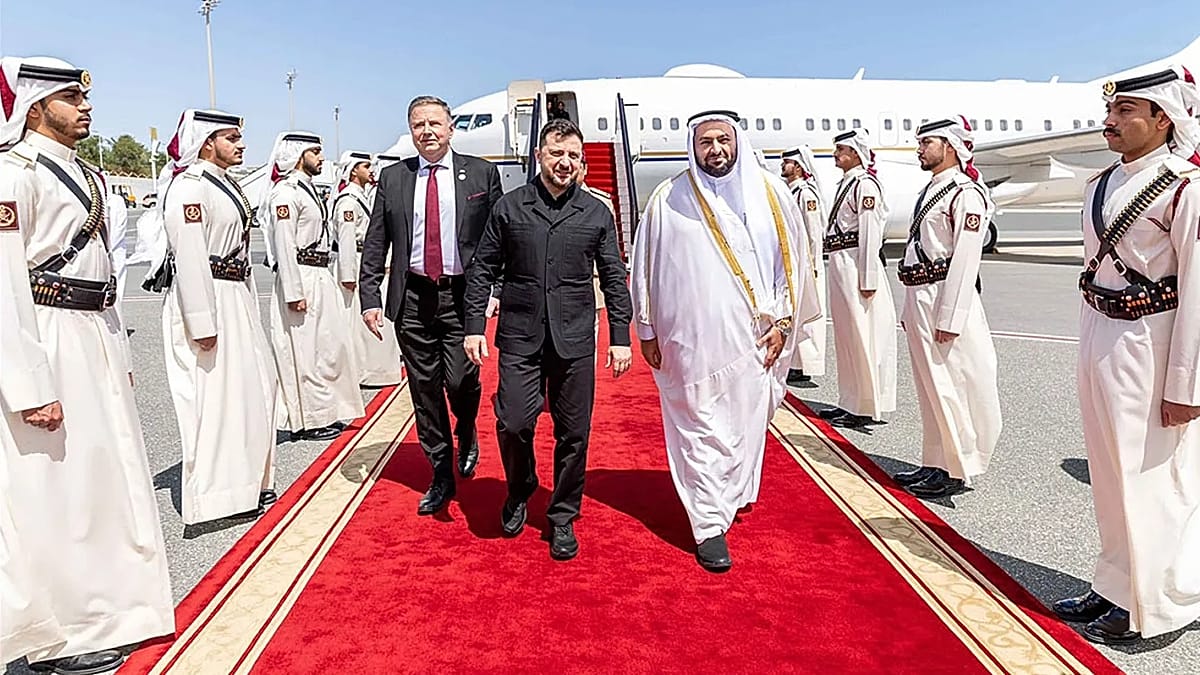
Ukraine reports a 97% interception rate in the latest Russian drone attack and has deployed over 200 drone‑countering specialists to the Gulf (with ~30 more headed to Jordan and Kuwait). President Zelenskyy’s visits to Saudi Arabia, the UAE and Qatar produced a signed defence cooperation document with Saudi Arabia and official requests from multiple Gulf states to explore Ukrainian counter‑drone expertise. This increases the probability of Gulf procurement of Ukrainian air‑defence solutions and strengthens Kyiv’s diplomatic leverage, but no large multilateral arms contracts beyond the Saudi announcement were confirmed.
This trip crystallizes a near-term procurement vector that is more services- and integration-heavy than headline weapon-sales — Gulf states will first buy expertise, sensors, counter-UAS kits and integration projects that can be fielded in weeks-to-months rather than interceptors that take years. Expect incremental contractual spend of roughly $3–10bn across the region on hardware + recurring C2/maintenance over the next 12–24 months, concentrated in radars, EO/IR sensors, EW nodes, and turnkey integration services where delivery speed and interoperability matter more than platform scale.
Second-order winners are the system integrators and niche RF/semiconductor suppliers that supply GaN RF front-ends, command-and-control software, and turnkey training contracts — these capture higher margin recurring revenues and post-installation service fees, tightening long-term vendor lock-in. Conversely, large platform OEMs face execution risk: long lead times, export clearances and political hedging by GCC buyers will favor modular suppliers and Western partners with local presence, compressing win rates for purely hardware-centric vendors in the 6–18 month window.
Key risks: (1) geopolitical escalation (Iran/Russia counter-moves or shipping disruptions) could reallocate budgets to kinetic deterrence or delay procurement; (2) export controls and US/EU political cycles could slow deliveries, stretching revenue recognition by 9–18 months; (3) the market may initially prefer training/MoUs over headline-buy orders, creating a two-stage revenue realization. Monitor contract award cadence and delivery milestones — the fastest alpha will come from reported service agreements and short-term integration contracts rather than announced multi-year hardware programs.
AI-powered research, real-time alerts, and portfolio analytics for institutional investors.
Request DemoOverall Sentiment
mildly positive
Sentiment Score
0.20
