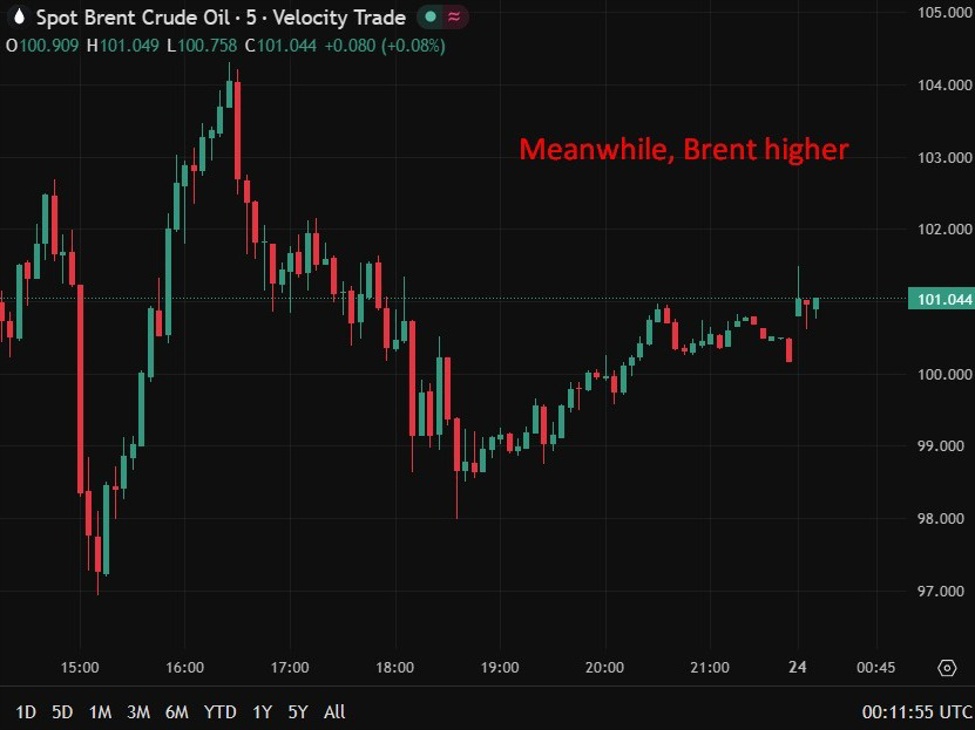
Strikes on Iran's gas infrastructure reportedly struck a pipeline feeding the Khorramshahr power station and gas facilities (including a pressure reduction station and company offices) in Isfahan, with reports attributing attacks to US‑Israeli activity. The incidents raise the risk of domestic power-generation and regional gas-flow disruptions and are likely to add a risk premium and near-term volatility to oil and gas markets until the extent of damage and any escalation are confirmed.
A localized increase in uncertainty around Persian-Gulf node availability will force markets to price a short-term risk premium into both crude and regional gas benchmarks; historically, a 1–3% decrement in throughput in the corridor equates to a $2–4/bbl move in Brent within 2–6 weeks as traders front-run potential outages. The mechanics that amplify that move are clear: war-risk insurance for tankers and elevated time-charter rates (VLCC/Suezmax TCEs) raise delivered cost curves and widen inland refining spreads, effectively acting like a temporary supply cut even if physical exports remain largely intact.
Second-order supply effects matter more than headline oil volumes. Intermittent domestic gas disruptions tend to throttle petrochemical feedstock and condensate availability first, compressing regional LPG and naphtha exports and shifting incremental demand to spot LNG — a shift that can boost JKM/TTF out to seasonal peaks if outages persist beyond 30–90 days. Repair timelines are not linear: damaged pressure equipment and pipelines can be repaired in weeks for small breaches, but targeted damage to distribution nodes creates asymmetric risk of protracted industrial curtailment that only shows up in quarterly industrial output data.
Beneficiaries are uneven: integrated majors and idled-tight US shale capture margin upside quickly (fast production response), while downstream and transport-heavy industries (airlines, chemical producers with long feedstock contracts) face margin squeeze. Defence and security services (ISR, hardened-infrastructure capex) get a multi-quarter tailwind if risk perception remains elevated, but that upside is capped if diplomatic de-escalation or rapid repairs normalize flows within 30–60 days.
Key catalysts to watch are: (1) on-the-ground repair evidence or satellite imagery indicating restoration timelines (days–weeks); (2) insurance premium moves and tanker rerouting data (immediate); and (3) concrete shifts in regional LPG/LNG cargo nominations (2–8 weeks). A rapid diplomatic de-escalation or confirmation that outages are shallow would unwind most of the price move; conversely, a pattern of repeat incidents would reprice structural risk into multi-quarter capex and insurance cycles.
AI-powered research, real-time alerts, and portfolio analytics for institutional investors.
Request DemoOverall Sentiment
mildly negative
Sentiment Score
-0.35
