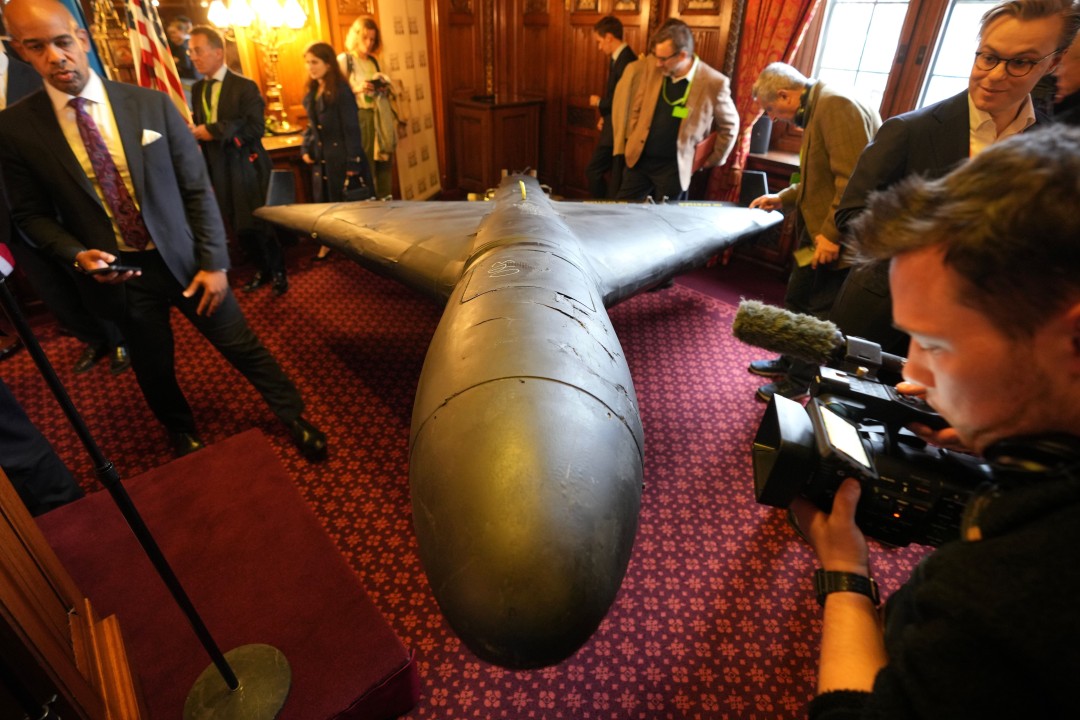
Iran is reportedly still launching roughly 70–90 Shahed drones per day (down from peaks >400), while each Shahed‑136 costs an estimated $35,000 versus interceptors that cost "millions apiece"; Russia may be producing up to 1,000 drones daily to help sustain supply. The low unit cost and distributed, commercial‑parts production model mean sustained attrition that strains Gulf air defenses, threatens Strait of Hormuz traffic, and raises downside risk to energy shipping, insurance costs, and defense spending trajectories.
The tactical environment is creating a sustainable reallocation of procurement budgets away from single-shot, high-cost interceptors toward layered, high-volume detection, electronic warfare, and low-cost kinetic solutions. Expect governments to favor solutions that scale unit economics (sensors, jammers, small interceptors, autonomous loitering munitions) — a shift that reallocates CAPEX/opex across multiyear defense plans and shortens supplier qualification cycles to months, not years.
Supply-chain friction will be bifurcated: commoditized mechanical and commercial-off-the-shelf electronic components become dual-use choke points subject to targeted export controls, while specialized sensor/AI stacks and RF components consolidate into a smaller set of vetted suppliers. That creates a two-tier procurement market where mid-cap specialists with IP on algorithms and RF electronics can win outsized share and pricing power within 6–18 months even as primes capture system-integration work.
Market consensus is pricing an undifferentiated “defense rally” that benefits large primes; the actual winners are likely firms selling modular, upgradeable C‑UAS building blocks and logistics/insurance products that monetize persistent transit risk. Near-term catalysts: publicized Gulf procurement awards, regulatory export-control announcements, and visible effectiveness of integrated C‑UAS deployments — any of which can re-rate small/medium-cap vendors quickly, while de-escalation would disproportionately hurt those names that have already re-rated on war-premium assumptions.
AI-powered research, real-time alerts, and portfolio analytics for institutional investors.
Overall Sentiment
moderately negative
Sentiment Score
-0.55
Ticker Sentiment
