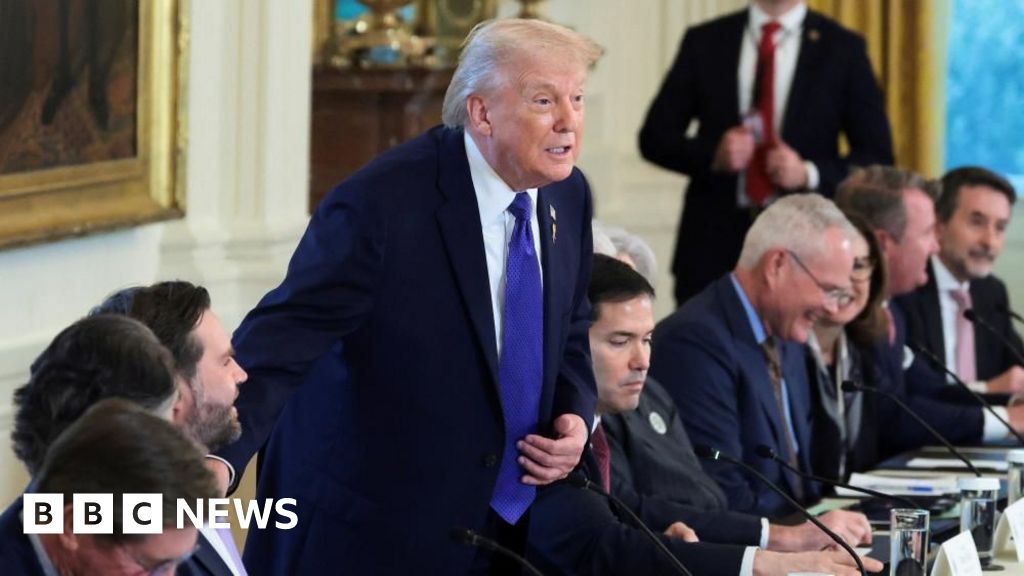
President Trump hosted major oil executives to press for investment in Venezuela, floating a headline $100bn target, but attendees made no firm financial commitments and Exxon labelled the country "un-investable" after past asset seizures. Venezuela currently produces roughly 1 million barrels per day (<1% of global supply); Chevron says it will bolster output from its existing presence, Repsol produces ~45,000 bpd and sees a path to triple under the right conditions, and Rystad estimates $8–9bn/year would be required to triple production by 2040. The US has seized Venezuelan assets and tankers, is signaling selective sanction rollbacks while seeking control over sales proceeds, and companies say they need legal certainty, security and fiscal clarity before committing significant capital.
Market structure: Short-term winners are firms with an existing, securable footprint in Venezuela (Chevron/CVX) and smaller service contractors able to deploy <$100m quickly; losers are companies with unresolved nationalisation claims (Conoco/COP) and majors facing political/legal friction (Shell/SHEL). Venezuela’s current ~1.0 mbpd baseline means near-term global supply impact is negligible, but a sustained capital inflow (Rystad: $8–9bn/yr to materially lift output) would exert downward pressure on Brent over years, not weeks. Cross-assets: expect higher oil forward-curve convexity, elevated tanker rates and marine-insurance premia while sovereign/EM credit spreads and USD-EM flows remain sensitive to US policy moves.
Risk assessment: Tail risks include sudden re-nationalisation, renewed US sanctions or violent disruption — each could wipe out committed capital (>$1bn) and spike oil volatility; conversely a transparent US-controlled sales mechanism could quickly mobilise modest flows. Immediate horizon (days): headline-driven volatility; short (1–6 months): negotiation/legal outcomes and selective sanctions easing matter most; long (1–5 years): real production gains contingent on ~$8–9bn/yr plus fiscal/insurance frameworks. Hidden dependencies: insurance, supply-chain access (tubulars, power), and local security guarantees are binding constraints often invisible in headlines. Key catalysts: formal US sales process, multi-party legal settlements >$2bn, or public Chevron production targets (>=100kbd incremental).
Trade implications: Tactical: overweight CVX (operational advantage) and underweight COP (litigation uncertainty) via a 3–6 month pair; consider sized options to express asymmetric upside. Use 6–12 month CVX call spreads funded by selling higher strikes to limit capital while capturing upside if sanctions roll back within 90 days. Avoid allocating large capex bets into Venezuela equities until signals: (1) US publishes sales mechanism; (2) a fiscal terms paper; (3) insurers re-price hull/P&I -- any one should occur within 60–120 days to justify scale-up.
Contrarian angles: Consensus assumes majors will flood capital — unlikely without subsidies/guarantees; the mispricing is in small-cap service providers and tanker/shipping equities which can capture early activity with <$50–200m deployments. Historical parallels (post-conflict Iraq/Libya) show multi-year, stepwise production recoveries with frequent reversals; therefore one should prefer staged exposure (options/call spreads, small initial equity stakes) over outright large positions. Unintended consequence: US-controlled proceeds could centralise political leverage, increasing legal claims and creating long tails for litigation — price that into shorter-duration trades, not buy-and-hold allocations.
AI-powered research, real-time alerts, and portfolio analytics for institutional investors.
Request DemoOverall Sentiment
moderately negative
Sentiment Score
-0.35
Ticker Sentiment
