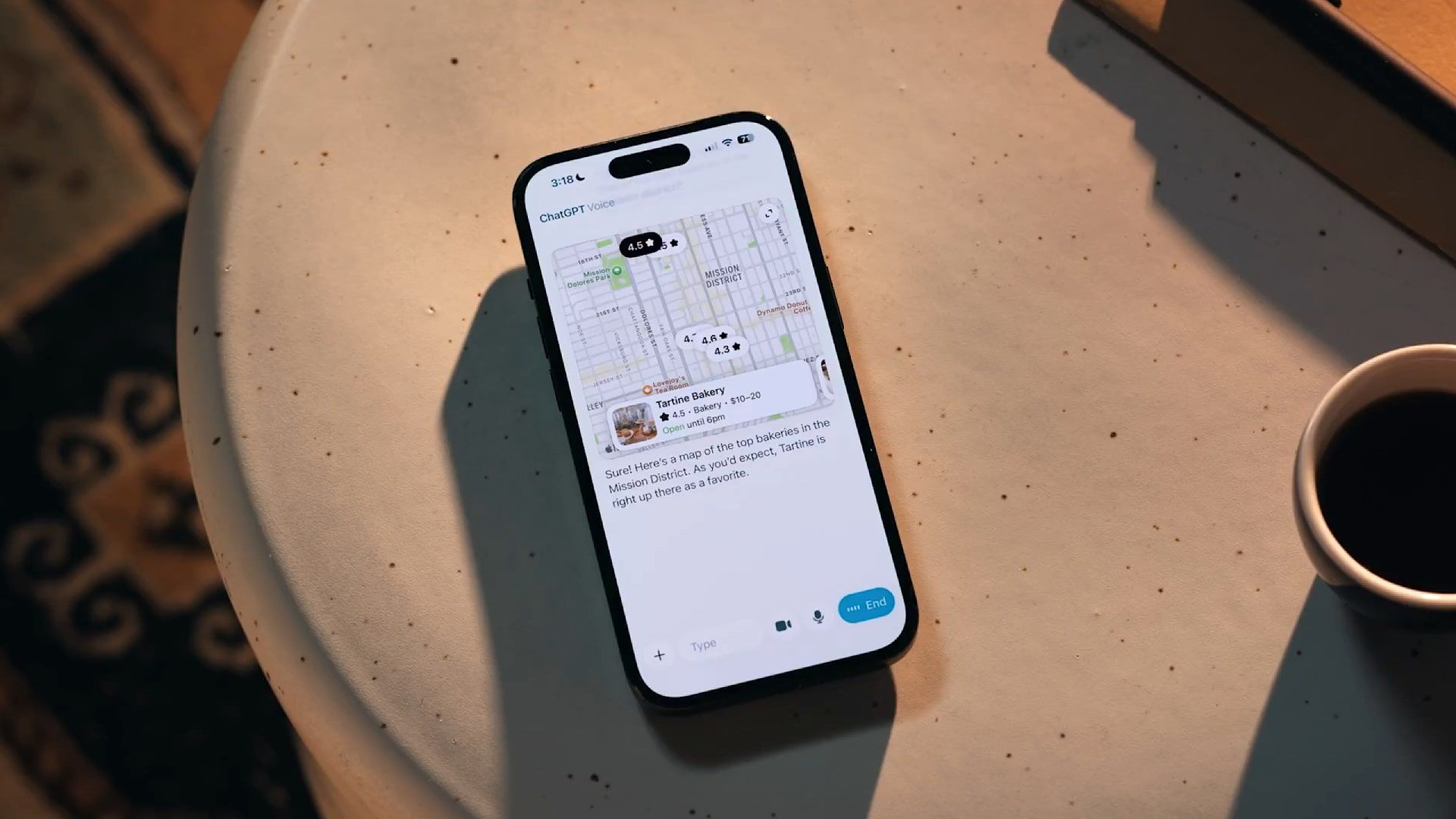
OpenAI has integrated ChatGPT’s voice mode directly into the main chat interface, adding live transcripts, visual widgets (maps, weather) and the ability to toggle back to the legacy separate voice mode; the rollout is available on mobile and web with an app update. Voice sessions on paid plans default to GPT-4o (then GPT-4o mini after minutes are used), while free users start on GPT-4o mini, preserving a quality differential from text chats powered by GPT-5.1; the change simplifies UX and could modestly boost engagement and subscription value while leaving model-based product segmentation intact.
Market structure: This update lowers friction for voice interactions and should lift engagement and paid-conversion for OpenAI-like services, benefiting cloud GPU and inference-stack suppliers (NVIDIA/NVDA, AMD) and large cloud partners (MSFT/Azure). Apple (AAPL) is a modest indirect beneficiary because mobile-first delivery increases iOS app engagement and potential services revenue, while standalone transcription and legacy voice vendors (AMZN Alexa, small voice-SaaS) face margin pressure. Expect a 3–12 month rotation into infrastructure/AI compute names and higher short-term demand for data-center capacity.
Risk assessment: Tail risks include privacy/regulatory action (EU/US) and voice-deepfake liability that could trigger fines or usage restrictions; model-choice (GPT-4o vs GPT-5.1) creates operational risk of worse UX and churn. Immediate risks (days–weeks) are low; short-term (1–6 months) hinge on subscriber conversion metrics and any API pricing changes; long-term (6–24 months) depend on monetization and regulation. Hidden dependency: OpenAI’s reliance on specific GPU supply and cloud partners could concentrate counterparty risk.
Trade implications: Favor long NVDA (3–6 month horizon) and MSFT (6–12 months) to capture compute and cloud monetization; small tactical long AAPL into holiday season for services uplift. Use option spreads to control cost and size positions 0.5–3% of portfolio per idea; hedge with small puts on consumer/voice incumbents (AMZN) sized 0.25–0.75%.
Contrarian angle: The market may overrate UX improvements—voice still runs on an older model (GPT-4o), so conversion may be underwhelming near-term; if conversion <1% after 60 days, infrastructure names will be repriced lower. Conversely, a 2–4% uplift in paid conversion within 3 months would re-rate cloud/AI names sharply, providing defined entry/scale points.
AI-powered research, real-time alerts, and portfolio analytics for institutional investors.
Request DemoOverall Sentiment
mildly positive
Sentiment Score
0.30
Ticker Sentiment
