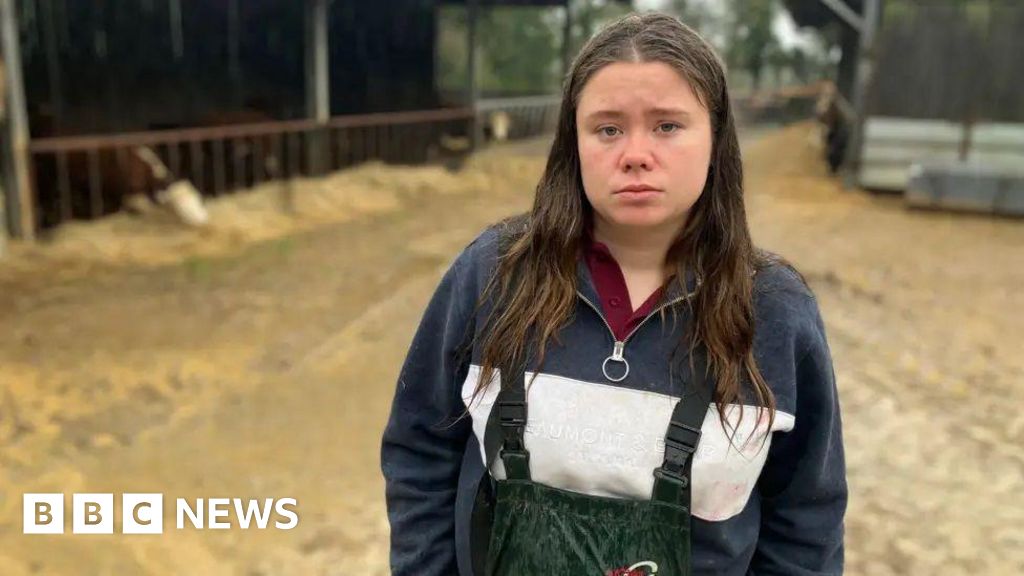
The UK government has raised the inheritance tax relief threshold for farmers from £1.0m to £2.5m for the 20% tax band announced in April, ahead of the end of 100% relief on inherited agricultural assets due to start in April. Farmers and local MPs welcomed the partial reprieve but warn the increase still leaves many family farms—particularly those valued in the £5m–£10m range—exposed and at risk of forced sales, and widespread Cornwall protests have pressured the U-turn. The change reduces near-term political risk for smaller farms but leaves significant fiscal and structural uncertainty for larger family-owned agricultural estates.
Market structure: The immediate winners are family farms with estates below the new £2.5m threshold and buyers/developers who may access an increased pool of saleable rural land; losers are mid-to-large estates (particularly £5m–£10m) that still face IHT and may be forced sellers. Expect a modest rise in listed housebuilders' land acquisition opportunities and incremental demand for scale-enhancing services (machinery, contractors) over 6–18 months; pricing power shifts modestly toward consolidators and away from small independent owners.
Risk assessment: Tail risks include a further government U‑turn (either strengthening relief or enforcing harsher taxation), a wave of distressed farm auctions causing >10–20% rural land price declines in some counties, or regional bank credit stress from farm mortgage defaults. Immediate (days) effects are political volatility and local land-auction watch; short term (weeks–months) is transactional activity and balance-sheet adjustments; long term (quarters–years) is structural consolidation of UK agriculture and lower rural land multiples.
Trade implications: Concrete plays include long UK housebuilders (Persimmon PSN.L, Taylor Wimpey TW.L) sized 2–3% each with 6–12 month horizons to capture land purchases; long ag equipment/scale beneficiaries Deere (DE) or AGCO (AGCO) 1–2% positions to play consolidation-driven capex. Use protective collars or buy‑call spreads if you need leverage: e.g., DE 12–18 month call spread to cap premium; underweight/selectively hedge UK rural-credit exposure in regional banks (LLOY.L, BARC.L) by 1–2% until loan‑loss trends are clear.
Contrarian angles: Consensus underestimates the probability (>30%) that this partial relief accelerates consolidation rather than preserving family farms, so long large-cap agribusiness and housebuilders may be underpriced versus small owners. Historical parallels (post‑IHT changes in 1980s) show land market dislocations persist for 2–4 years, so look for mispricings in regional land‑adjacent names and consider timing trades to land‑auction cadence rather than immediate headlines.
AI-powered research, real-time alerts, and portfolio analytics for institutional investors.
Request DemoOverall Sentiment
moderately negative
Sentiment Score
-0.30
