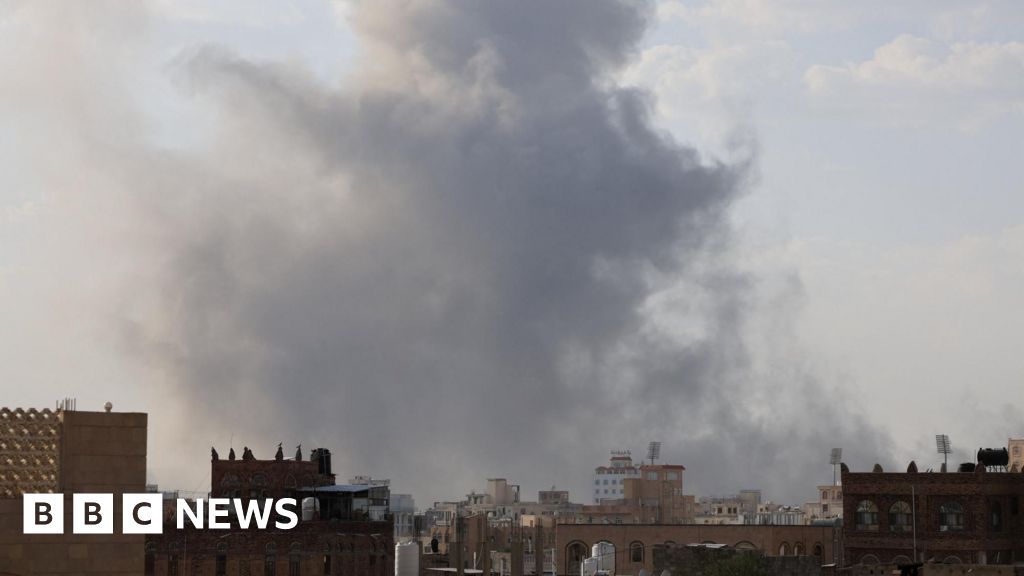
Israel launched its "most powerful strike" against Houthi military and intelligence targets in Sanaa, Yemen, reportedly killing eight and injuring 142, in direct retaliation for repeated Houthi drone and missile attacks on Israel, including a recent strike on Eilat that injured 22. This significant escalation of direct conflict between Israel and the Houthis amplifies geopolitical instability in the Middle East, posing increased risks to Red Sea shipping and potentially influencing energy markets and defense sector valuations.
The Israeli military's self-described "most powerful strike" on Houthi targets in Sanaa, Yemen, marks a significant escalation in direct conflict between the two entities. This action, which the IDF states targeted military and intelligence headquarters, was a direct retaliation for persistent Houthi attacks, including a recent drone strike in Eilat that injured 22 people and revealed a temporary, though reportedly corrected, failure in the Iron Dome's interception capability. The high market impact score of 0.75 and strongly negative sentiment are driven by this intensification, as Israel has explicitly stated its intent to conduct "additional offensive operations." This cycle of attack and retaliation, rooted in the broader Israel-Hamas war, directly impacts global stability by threatening international shipping in the Red Sea and Gulf of Aden. The conflict's expansion beyond a proxy war to direct state-level strikes elevates geopolitical risk, with direct implications for the defense sector, given the use of advanced weaponry, and the transportation and logistics sectors, which are vulnerable to supply chain disruptions in this critical maritime corridor.
AI-powered research, real-time alerts, and portfolio analytics for institutional investors.
Overall Sentiment
strongly negative
Sentiment Score
-0.80
