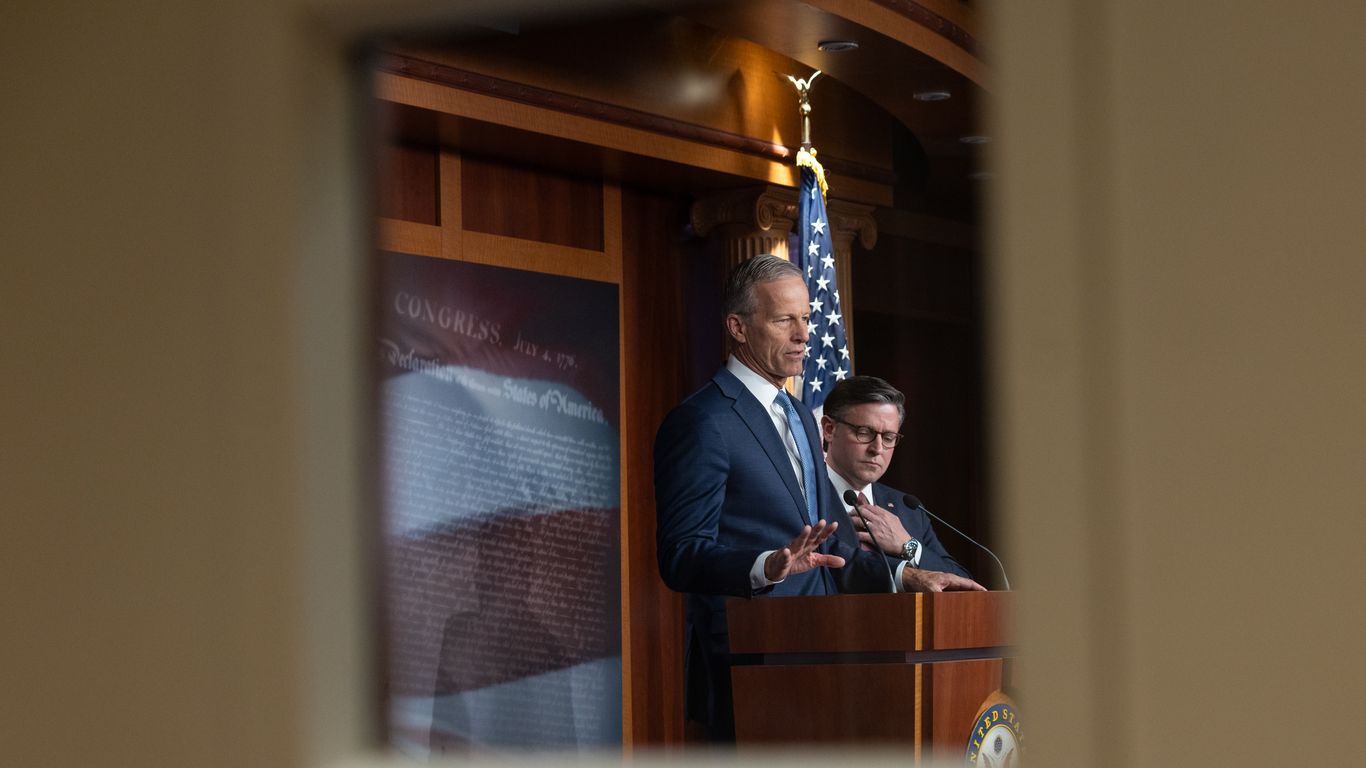
President Trump's threat to 'wipe out' Iranian civilization over a closed Strait of Hormuz materially elevates geopolitical risk. Congressional Republicans have mostly remained silent while Democrats are discussing impeachment and the 25th Amendment, increasing political and policy uncertainty. Markets should treat this as a risk-off event for energy and emerging-market assets and monitor for escalation that could disrupt shipping or trigger sanctions responses.
This episode raises the calibrated probability of a short-duration, high-impact disruption to Strait of Hormuz traffic — we would assign a 10–25% chance of meaningful closure or near-closure in the next 30 days, which historically translates into a 15–30% spike in Brent within days due to the chokepoint's outsized share of sea-borne crude. That magnitude of move would immediately transmit through tanker freight rates and war-risk insurance: expect LR2/VLCC time-charter-equivalent (TCE) rates to double and P&I/war-risk premia to rise 50–150% within 1–6 weeks, creating outsized near-term earnings for owners and near-term cashflow and margin stress for insured shippers.
Second-order winners are capitalization-constrained tanker owners and defense primes with backlog that can be accelerated into multiyear templates; second-order losers include airlines (operational reroutes + fuel hedges), EM sovereign credit and regional banks with Gulf exposure, and integrated refiners facing input volatility. Over 3–12 months, political risk can reprice defense budgets and sanctions regimes, benefiting contractors and domestic energy capex while raising costs for global trade finance and commodity hedgers.
Key reversals are binary and time-bound: immediate de-escalation or diplomatic guarantees collapse the premium in days, while sustained tit-for-tat or formal targeting of shipping lanes embeds a multi-quarter higher-cost equilibrium. Market participants should treat current dislocations as option-like — low-probability, high-payoff events where convex exposures (options, charter rate tails, and idiosyncratic small-cap owners) dominate straight directional beta.
AI-powered research, real-time alerts, and portfolio analytics for institutional investors.
Overall Sentiment
mildly negative
Sentiment Score
-0.35
