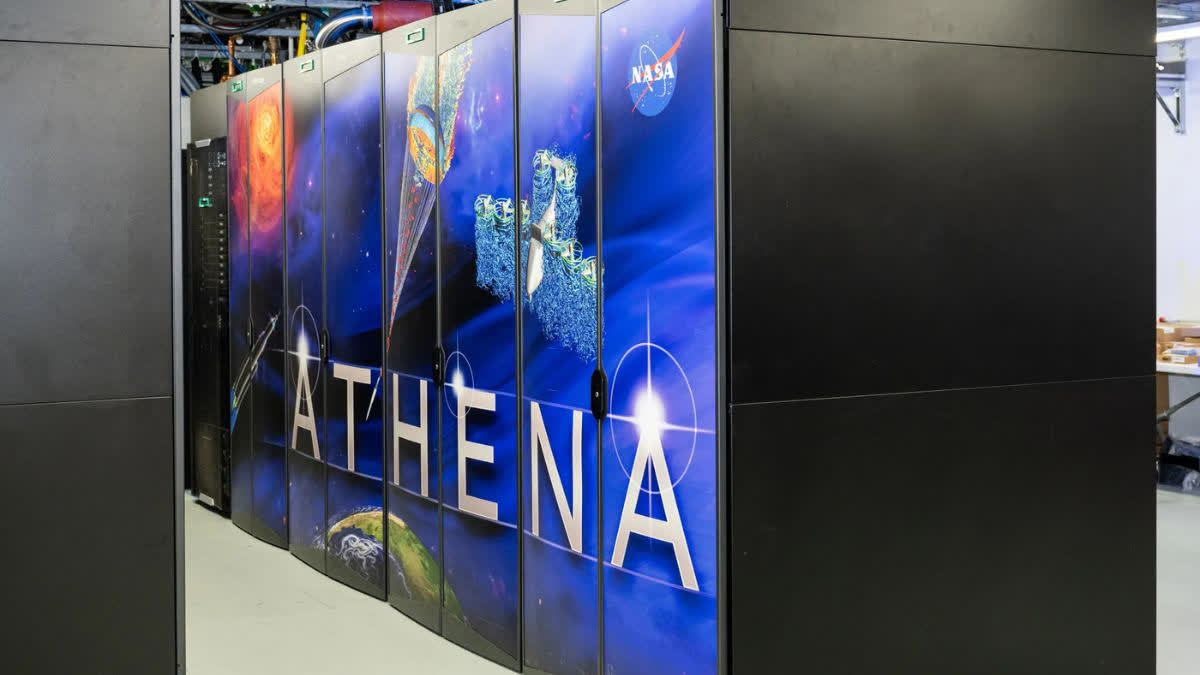
NASA has commissioned Athena, a HPE-built HPE Cray EX4000 petascale supercomputer at the Modular Supercomputing Facility (Ames), delivering 20.123 petaflops peak performance, 264,144 cores across 1,024 nodes (128-core EPYC 9745 processors at 2.4 GHz per node) and 786 TB of system memory with liquid-cooled cabinets. Designed to accelerate high-fidelity rocket and aircraft simulations and large-scale AI model training, Athena enhances HPE's high-performance computing credentials and underscores continued demand for AMD EPYC CPUs and advanced data-centre cooling platforms, though the deployment is primarily strategic for NASA and unlikely to drive broad market moves.
Market structure: HPE is the clear direct beneficiary (hardware + services) and should capture follow-on NASA and federal HPC deals; AMD gains CPU share (EPYC 9745) while Intel faces incremental share loss in HPC. Expect modest pricing power for HPE on turnkey liquid-cooled systems and tightened component demand (DDR5, NICs, liquid-cooling gear) over the next 6–18 months, supporting suppliers but not yet a broad data‑center capex boom.
Risk assessment: Tail risks include a high-impact operational failure, US export/regulatory constraints on certain AI workloads, or a federal budget pullback—each could erase expected revenue gains; probability low-medium but impact >30% on near-term backlog. Immediate market moves (days) will be muted; watch HPE order/backlog commentary over the next 1–3 quarters for validation of sustained demand.
Trade implications: Tactical long HPE (small size) and long AMD reflect direct exposure to system wins and CPU content; consider pair-trade long AMD / short INTC to play CPU share shift. Use defined-risk options (6–12 month call spreads on HPE; 9–12 month LEAP calls on AMD ~10% OTM) to express upside while limiting drawdown; target realized upside 8–20% within 3–12 months.
Contrarian angles: Consensus overstresses AI training demand driving GPU wins—Athena is a CPU-centric, liquid-cooled showcase and may not translate into sustained GPU orders, so NVDA-type extrapolations are likely overdone. Monitor AMD supply cadence and HPE federal pipeline; if adoption or follow-on awards fail to materialize within 9 months, sentiment will reverse quickly.
AI-powered research, real-time alerts, and portfolio analytics for institutional investors.
Request DemoOverall Sentiment
mildly positive
Sentiment Score
0.30
Ticker Sentiment
