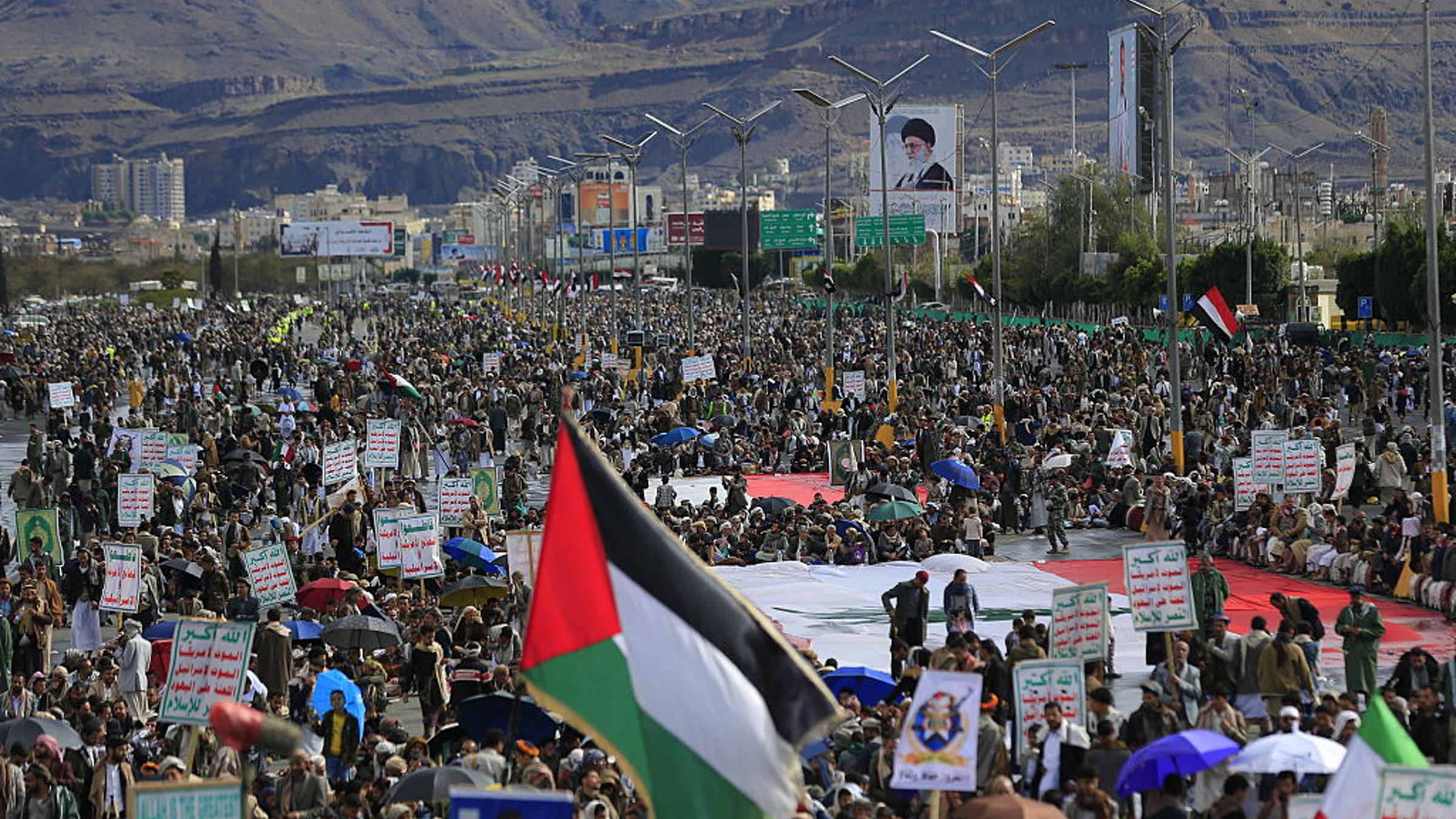
Event: Yemen’s Houthi movement fired ballistic missiles at southern Israel, signaling its entry into the Iran war and opening a new front. The group previously attacked over 100 merchant vessels; renewed Red Sea/Bab al-Mandab strikes risk disrupting Suez-transit routes (roughly 15% of global maritime trade and ~30% of container traffic), which would amplify oil and natural gas price spikes and widen supply-chain disruptions. Such disruptions could prolong economic impact beyond the conflict and increase political pressure domestically in the U.S., potentially affecting the November midterms and the Administration’s timeline for ending operations.
This escalation materially raises the probability of Red Sea/Bab al-Mandab disruption beyond noise — even limited periodic strikes shift freight economics by forcing reroutes that add ~10–14 extra sailing days for Asia-Europe voyages, raising bunker fuel burn and voyage costs by a low-single-digit percentage per TEU but concentrated on high-value schedulers. That mechanically increases short-term spot tanker and dry-bulk revenue (longer voyage durations = more days-in-charter) while compressing liner yield via higher opex, insurance surcharges, and schedule unreliability.
Energy markets will price a risk premium that is sticky even if kinetic activity recedes: insurance and hedging layers (war risk, P&I, hull) reset higher within weeks, lifting delivered costs and passthroughs for refiners and traders; a sustained 5–10% insurance premium increase on container and tanker routes can translate into $1–3/ bbl equivalent market impact on refined product arbitrage economics. Tactical oil upside is asymmetric over days–weeks; structural supply-chain frictions (port congestion, blank sailings) play out over months and can persist past any ceasefire.
Defense and security suppliers extract two different payoffs: immediate aftermarket (missile intercepts, munitions) and medium-term spending as regional governments accelerate programs. Insurers and shipowners face concentrated tail-risk; reinsurance capacity repricing or capacity withdrawal is a likely multi-month shock that could amplify freight spikes even if physical attacks plateau. Politically, economic pain from persistent shipping disruption is a durable lever and will lengthen market sensitivity into the autumn election cycle even if kinetic operations abate in weeks.
Key catalysts to watch are: (1) clear Houthi shift to systematic Red Sea interdiction (days–weeks), (2) visible insurance premium moves and blanked sailings (1–4 weeks), and (3) formal U.S./coalition naval convoying rules or corridor reopenings (2–8 weeks). Each binary meaningfully re-rates energy, shipping, defense, and insurance positions; the base case for markets should assume elevated volatility for months, not days.
AI-powered research, real-time alerts, and portfolio analytics for institutional investors.
Request DemoOverall Sentiment
strongly negative
Sentiment Score
-0.60
