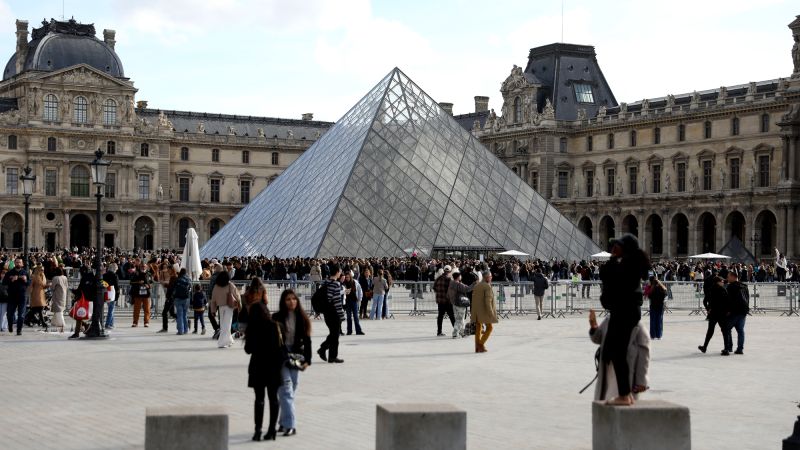
The Louvre will raise tickets for visitors from outside the European Economic Area by 45% from Jan. 14, 2026, to €32 for individual non‑EEA visitors and €28 for guided group members, a change expected to generate an additional €15–20 million annually earmarked for modernization and structural repairs. The museum, which hosted 8.7 million visitors last year (13% from the U.S.), faces capacity, security and governance issues highlighted by an October jewelry theft and a November Court of Accounts report that criticized leadership priorities.
Market structure: The Louvre’s 45% non‑EEA price hike (new ticket €32 implies prior ≈€22) will generate an incremental €15–20m/year and shifts ~near‑term pricing power to landmark owners and ticketing intermediaries. With 8.7m annual visitors, the move is more revenue‑positive than volume‑negative: using a conservative demand elasticity of −0.2 to −0.4 implies a 5–15% drop in non‑EEA visits concentrated in 2026, but net revenue likely rises for monuments and contractors financing upgrades.
Risk assessment: Tail risks include regulatory backlash (visitor caps, tourism taxes), another high‑profile theft damaging demand, and EUR/USD moves that amplify the effective price for US tourists (a 10% EUR appreciation raises USD ticket cost ~10%). Timeframe: immediate market noise is negligible; material effects crystallize Jan 14, 2026 when pricing takes effect; carry/renovation capex plays unfold over 12–36 months. Hidden dependencies: substitution to other EU attractions and growth in packaged tours (OTAs) that can blunt elasticities.
Trade implications: Direct beneficiaries are online travel agencies and contractors/security vendors — asymmetric opportunities: buy exposure to OTA revenue per booking (higher ancillary spend) and to large French infrastructure contractors that capture renovation work, while selectively shorting mid‑market Paris hotel operators if visitation data deteriorates. Use vanilla equity and directional call spreads for 9–24 month conviction trades sized 0.5–2% portfolio each; monitor monthly Paris inbound tourist stats and EUR moves as triggers.
Contrarian angles: Consensus treats this as a tourist determent; missing is that higher prices will improve visitor mix and per‑capita spend (restaurants, luxury retail) and accelerate outsourced ticketing/experience packaging (benefitting BKNG/EXPE/ABNB). Historical parallels (Uffizi/MoMA fee hikes) saw transient drops then recovery; unintended consequences include growth of grey‑market guide syndication and pressure on smaller attractions — an opportunity to short fragmented small tourist operators.
AI-powered research, real-time alerts, and portfolio analytics for institutional investors.
Request DemoOverall Sentiment
neutral
Sentiment Score
0.05
