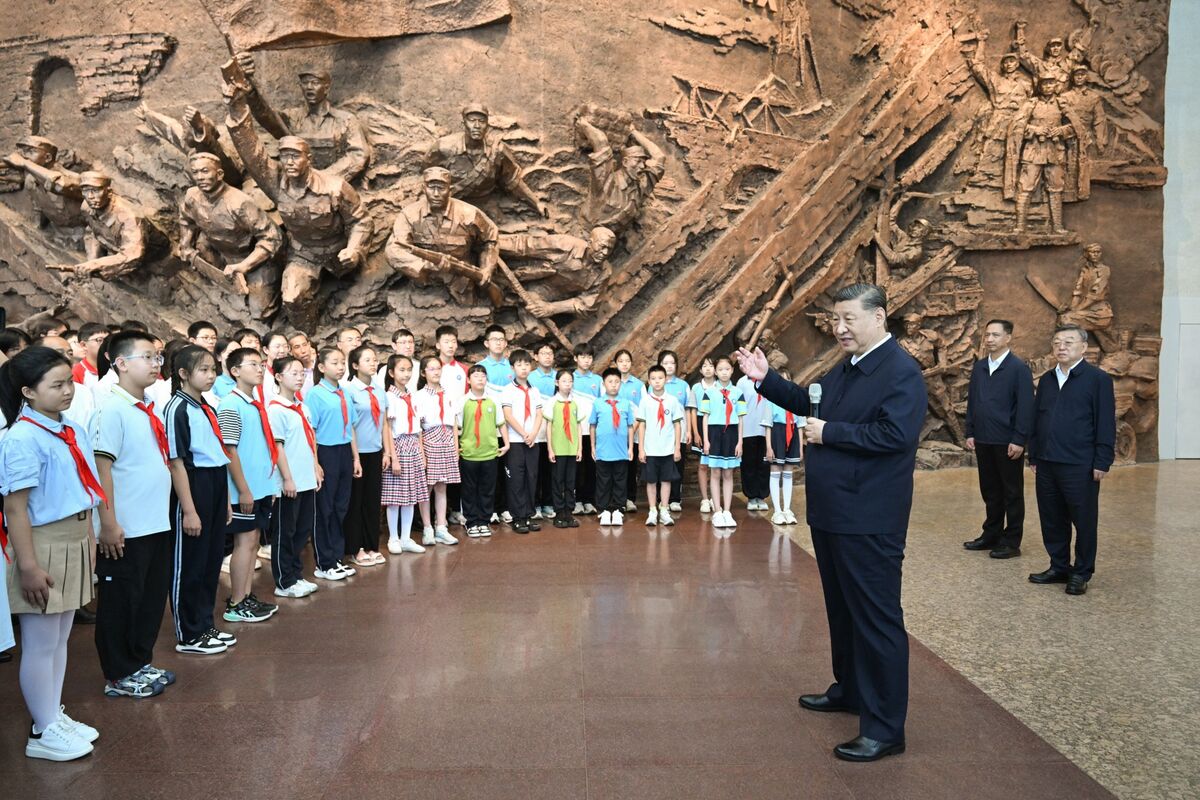
President Xi Jinping is actively waging a 'memory war' to rewrite World War II history, emphasizing the Communist Party of China's central role as the 'backbone' of the resistance against Japan. This historical revisionism, highlighted during a recent visit to a museum in Shanxi province, aims to bolster the CPC's legitimacy and is seen as having implications for China's current geopolitical objectives, particularly concerning Taiwan.
China's leadership, under President Xi Jinping, is actively engaged in a 'memory war' to reshape the historical narrative of World War II, specifically to amplify the role of the Communist Party of China (CPC). During a recent visit to a museum in Shanxi province commemorating a 1940 battle, Xi explicitly stated that the CPC was the 'backbone of the nation's war of resistance' against Japan. This state-directed historical revisionism is not merely an academic exercise; it serves to bolster the CPC's legitimacy and stoke nationalist sentiment. The article's context strongly suggests this campaign is linked to contemporary geopolitical objectives, with a direct implication for China's stance on Taiwan. The 'mildly negative' sentiment score of -0.3 reflects the underlying geopolitical tension this rhetoric creates, which, while having a low immediate market impact (score of 0.3), contributes to a long-term risk environment for the region.
AI-powered research, real-time alerts, and portfolio analytics for institutional investors.
Request DemoOverall Sentiment
mildly negative
Sentiment Score
-0.30
