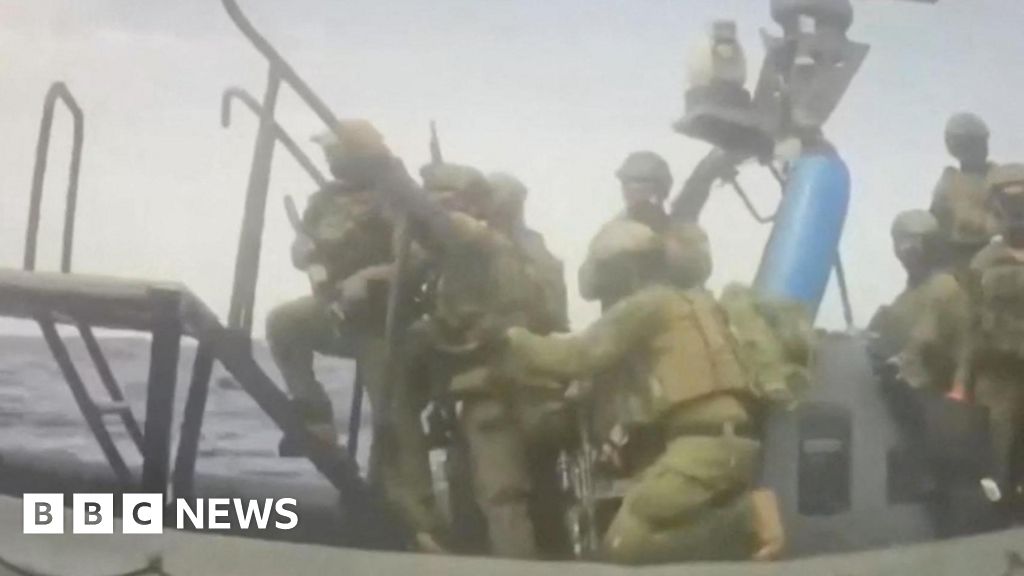
Israeli forces are reportedly intercepting more than 50 Gaza-bound aid boats in international waters west of Cyprus, about 250 nautical miles from Gaza, escalating tensions around the maritime blockade. The flotilla said armed commandos boarded several vessels, while Israel reiterated it would not permit a breach of the blockade and called the mission a provocation. The event adds geopolitical risk in an already volatile conflict environment and could affect regional risk sentiment.
This is less about the boats than about the persistence of a low-grade escalation premium around Eastern Med logistics. Repeated interdictions keep the market in a regime where shipping insurance, port handling, and rerouting costs can step up in discrete jumps, even if the military blockade itself remains unchanged. The immediate economic damage is likely small, but the repeated nature of the incidents increases the probability of a broader maritime compliance clampdown that can bleed into civilian commercial traffic, especially smaller regional operators with weaker bargaining power and less ability to absorb delays.
The second-order winner is the security stack: companies tied to naval surveillance, command-and-control, drones, perimeter systems, and port security tend to benefit from every cycle of visibility and interdiction. The loser is anything exposed to discretionary Mediterranean routing or politically sensitive humanitarian logistics, where schedule reliability degrades before volume does. Over the next days, the key catalyst is whether the event drives another wave of condemnation, sanctions chatter, or NGO/flag-state pressure; over months, the risk is incremental normalization of higher maritime risk pricing in the region.
The market may be underpricing how often these incidents can recur without a formal escalation. A blockade enforcement episode does not need to expand into a larger war to matter; it only needs to keep adding friction to shipping and raise the expected value of delay, detention, or cargo rejection. The contrarian angle is that most of the direct macro impact may be transient, so chasing broad defense beta after one headline is probably low edge; the better trade is around names with recurring procurement exposure or asymmetric sensitivity to risk-off transport sentiment.
AI-powered research, real-time alerts, and portfolio analytics for institutional investors.
Request DemoOverall Sentiment
moderately negative
Sentiment Score
-0.45
