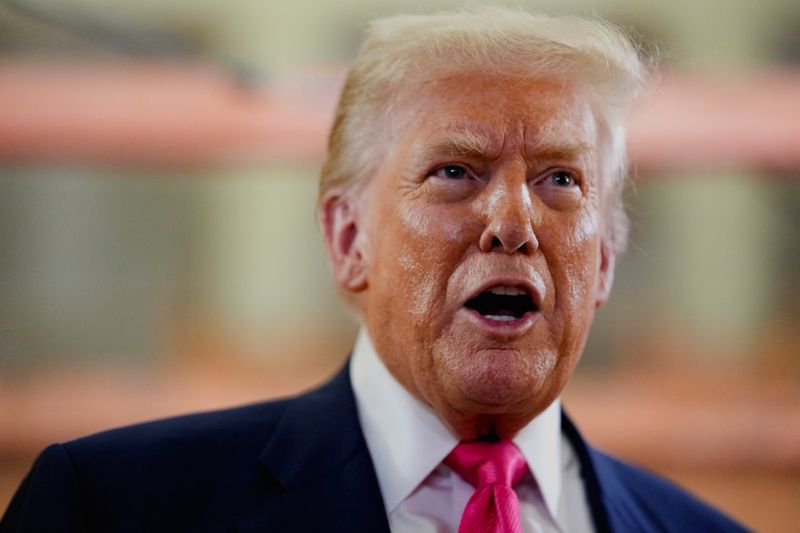
Former President Donald Trump intensified his criticism of Federal Reserve Chair Jerome Powell, demanding immediate interest rate cuts and asserting that if Powell continues to refuse, the Fed board should "assume control" to implement them. These comments, made on Truth Social, follow the Federal Reserve's recent 9-2 vote to maintain the federal funds rate within the 4.25% to 4.5% range, underscoring persistent political pressure on the central bank's monetary policy independence.
Former President Donald Trump has significantly intensified his public criticism of the Federal Reserve, directly challenging the independence of its monetary policy. His demand for immediate and substantial interest rate cuts, coupled with the assertion that the Fed's board should "assume control" if Chairman Jerome Powell does not comply, introduces a notable political risk factor into the market. This development follows a decisive 9-2 vote by the Federal Open Market Committee to maintain the federal funds rate within a 4.25% to 4.5% range, highlighting a stark divergence between political pressure and the central bank's current assessment. The strongly negative sentiment signal (-0.65) and uncertain tone captured in the data reflect market apprehension over such overt political interference, which can undermine confidence in the Fed's mandate and create unpredictability around future rate decisions.
AI-powered research, real-time alerts, and portfolio analytics for institutional investors.
Request DemoOverall Sentiment
strongly negative
Sentiment Score
-0.65
