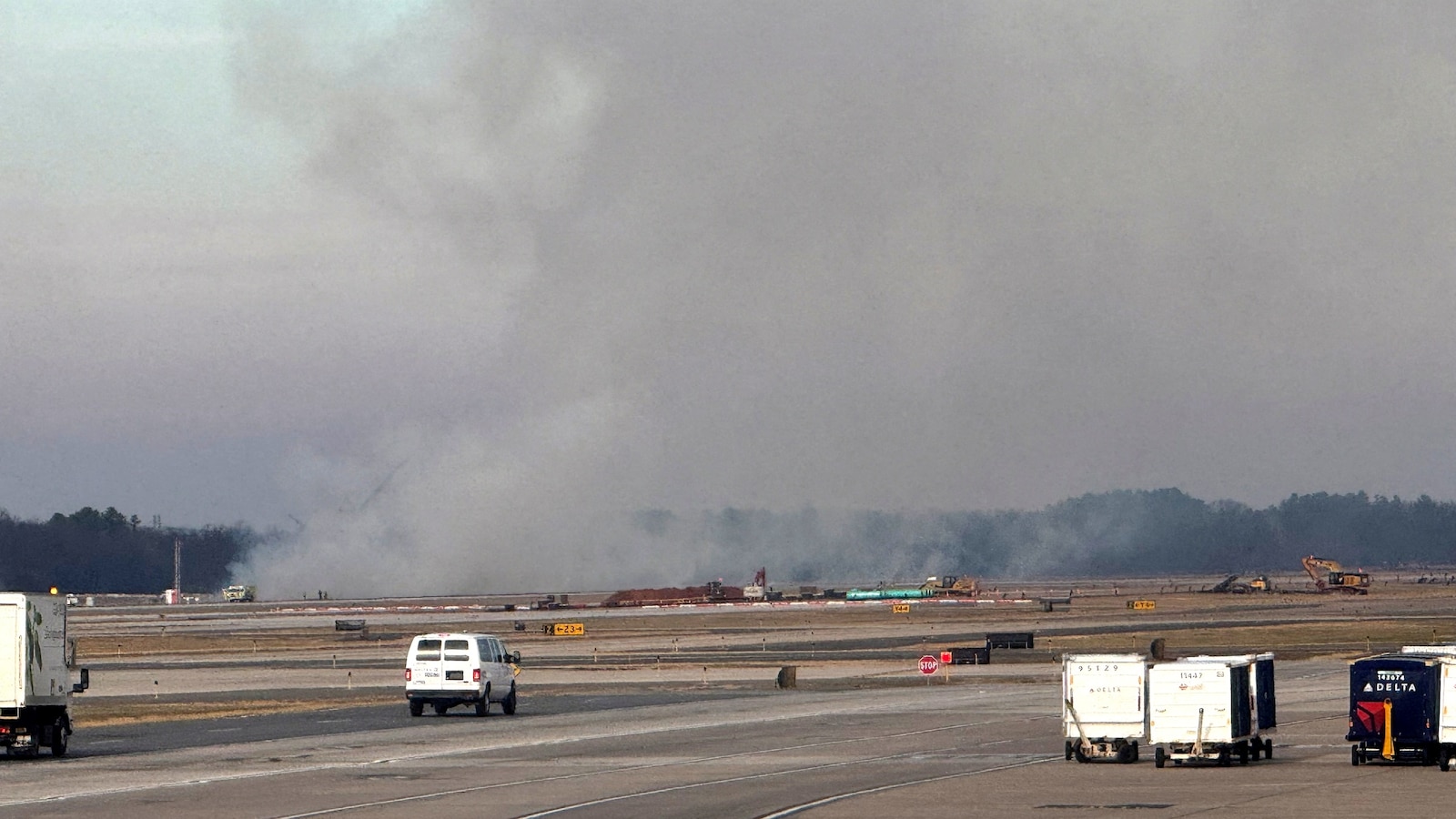
During takeoff from Washington Dulles International Airport on Saturday, United Flight 803, a Boeing 777-200ER with 275 passengers and 15 crew bound for Tokyo, experienced a left-engine failure around 12:20 p.m.; a piece of engine cowling separated and ignited a mulch fire near the runway, but no injuries were reported, U.S. Transportation Secretary Sean Duffy said. The aircraft dumped fuel over Virginia from 5,000 feet, returned to Dulles and landed safely about 1:30 p.m., and United said passengers would be accommodated on another flight later Saturday.
A Boeing 777-200ER operating as United Flight 803 experienced a left-engine failure during takeoff from Washington Dulles at about 12:20 p.m.; a piece of engine cowling separated and ignited a mulch fire near the runway. The aircraft, with 275 passengers and 15 crew and roughly 16 hours of fuel aboard, dumped fuel from 5,000 feet, returned to Dulles and landed safely at about 1:30 p.m., and U.S. Transportation Secretary Sean Duffy reported no injuries. United said passengers would be accommodated on another plane later Saturday, limiting immediate customer-impact disruption but creating an operational rebooking and equipment-repair workflow. Market signals show a mildly negative sentiment overall (sentiment_score -0.25) with per-ticker weakness focused on UAL (-0.35) while Boeing (BA) registers neutral sentiment (0.0); the market_impact_score of 0.25 suggests modest near-term volatility rather than systemic sector risk.
The presence of a separated cowling and subsequent fire implicates maintenance, inspection and potential repair costs for the airframe and engine assembly owners, with reputational and operational risk for United until root cause is determined. Comment from the Transportation Secretary increases the likelihood of formal regulatory attention and public scrutiny, which typically drives short-term share-price sensitivity and could prompt company disclosures on inspections, grounded equipment or insurance implications. Given that the report cites an engine/cowling failure rather than a fuselage or manufacturing-wide fault, immediate contagion to aircraft OEM financials appears limited absent further evidence, consistent with the neutral BA sentiment signal.
AI-powered research, real-time alerts, and portfolio analytics for institutional investors.
Request DemoOverall Sentiment
mildly negative
Sentiment Score
-0.25
Ticker Sentiment
