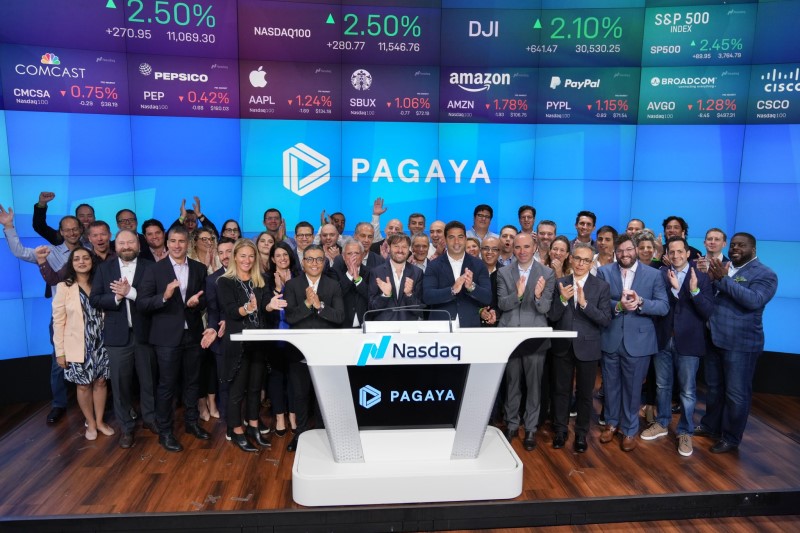
Pagaya reported network volume of $2.7B (down ~3.5% sequentially, +4% YoY) while revenue missed expectations and Q1 FY2026 guidance came in softer than anticipated. The stock has plunged 65.62% over six months and is down 43.01% YTD amid sector weakness, though Benchmark maintained a Buy and set a $33 price target (Canaccord cut to $32; Citizens reiterated Market Outperform at $22). Management highlighted four consecutive quarters of profitable growth and completed $450M and $400M auto ABS transactions, but near-term outlook and slower growth prompted a reduced price target and negative market sentiment.
Market pricing reflects a narrative that consumer-facing credit fintechs will suffer durable demand and funding deterioration; that narrative can overshoot short-term fundamentals because access to ABS investors remains the marginal source of capital for winners. Successful repeat resecuritizations and growing institutional participation are not just stopgaps — they are distribution and margin levers that can preserve origination economics even if retail volumes wobble.
Second-order competitive effects: firms that institutionalize ABS origination and retain the servicing/control rights will capture spreads that pure marketplace lenders cannot, creating a two-tier market among fintechs. Conversely, increased issuance frequency invites greater margin compression from competition and tranche arbitrage, so revenue durability depends on underwriting sophistication and claim-level performance, not just volume.
Timing and risk: expect knee-jerk moves in days around guidance/earnings, but the real fundamental re-rating plays out over 3–12 months as ABS taps, charge-offs, and vintage performance reveal themselves. Tail risks are binary — a macro credit shock or a 100–200bp widening in consumer ABS spreads would force mark-to-market losses quickly; upside reversal requires visible stabilization in credit metrics and renewed investor appetite in the ABS primary market.
For portfolio construction, treat this as a selective arbitrage between balance-sheet-light tech exposures (beneficiaries of continued AI/IT spend) and idiosyncratic credit risk in consumer lenders. If management execution on underwriting and distribution is believable, an asymmetric long with defined downside works; if not, prefer long technology beneficiaries that gain from reallocation of institutional risk budgets away from small fintech credits.
AI-powered research, real-time alerts, and portfolio analytics for institutional investors.
Request DemoOverall Sentiment
mildly negative
Sentiment Score
-0.25
Ticker Sentiment
