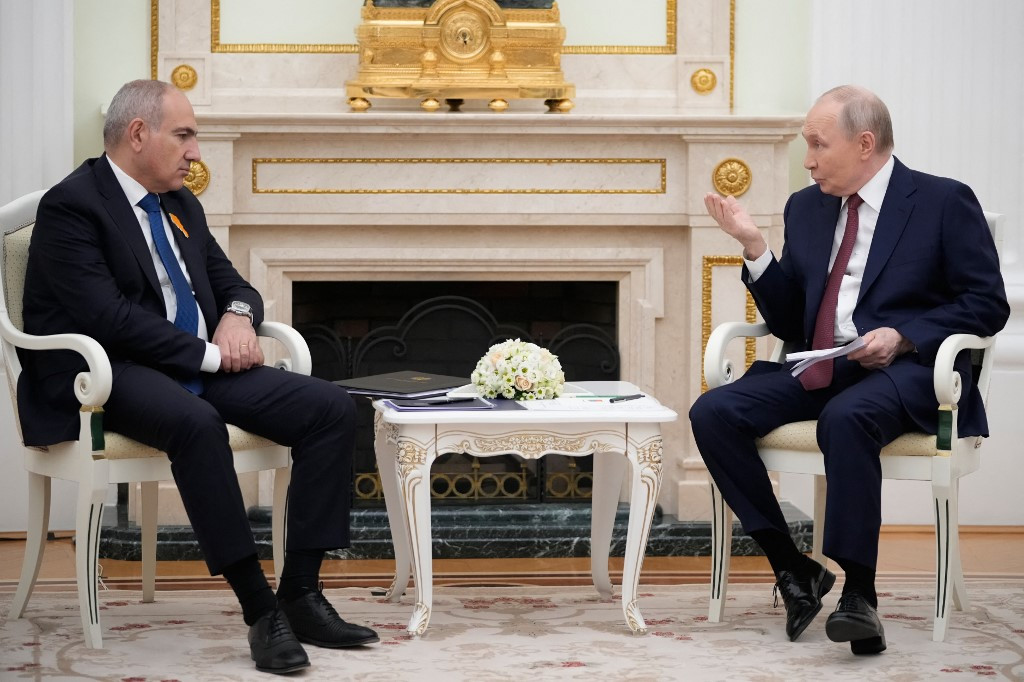
June 7 parliamentary election: Putin publicly pressed Armenian PM Nikol Pashinyan over restrictions that bar Russian passport holders and other pro‑Russian figures from office, highlighting a widening Russia‑Armenia rift ahead of the vote. The EU on March 16 announced a Hybrid Rapid Response Team deployment at Armenia's request, while Pashinyan defended Armenia's sole‑citizenship legal requirement for MPs/PM and emphasized that ties with Russia remain deep and economically important despite pursuing closer EU ties.
This interaction increases the probability of episodic, targeted Russian economic and administrative pressure rather than an immediate full political break — a pattern that tends to produce sharp local funding strains and shorter-term capital flight rather than prolonged trade embargoes. Expect two to four week windows of elevated operational risk around election milestones and diplomatic meetings where customs slowdowns, licensing frictions, or visa restrictions can be used as tactical levers; such disruptions typically knock 5-15% off near-term FX liquidity for small open economies.
Second-order winners are vendors of crowd-control, surveillance, and cybersecurity services used during contested elections and by external partners stepping into gaps; procurement cycles are lumpy, so vendors with existing regional footholds can see order uplifts concentrated in 6–18 month buckets. Conversely, real-estate, hospitality and consumer-exposed domestic banks that depend on cross-border Russian clientele face concentrated downside if dual-citizen participation rules tighten or if oligarch-linked capital is restrained — pressure most acute in the 0–3 month window around vote certification.
Tail risk centers on escalation to kinetic or financial sanctions that could freeze cross-border banking corridors; such an outcome would materially widen EM credit spreads for nearby sovereigns and push intraregional trade onto higher-cost routes, compressing margins for logistics and midstream firms exposed to the Caucasus for 3–12 months. A pragmatic reversal trigger is credible, enforceable guarantees around corporate and investor rights from a third-party guarantor — if delivered, the market re-rates conflict premia quickly, often within 2–6 weeks.
AI-powered research, real-time alerts, and portfolio analytics for institutional investors.
Request DemoOverall Sentiment
mixed
Sentiment Score
0.00
