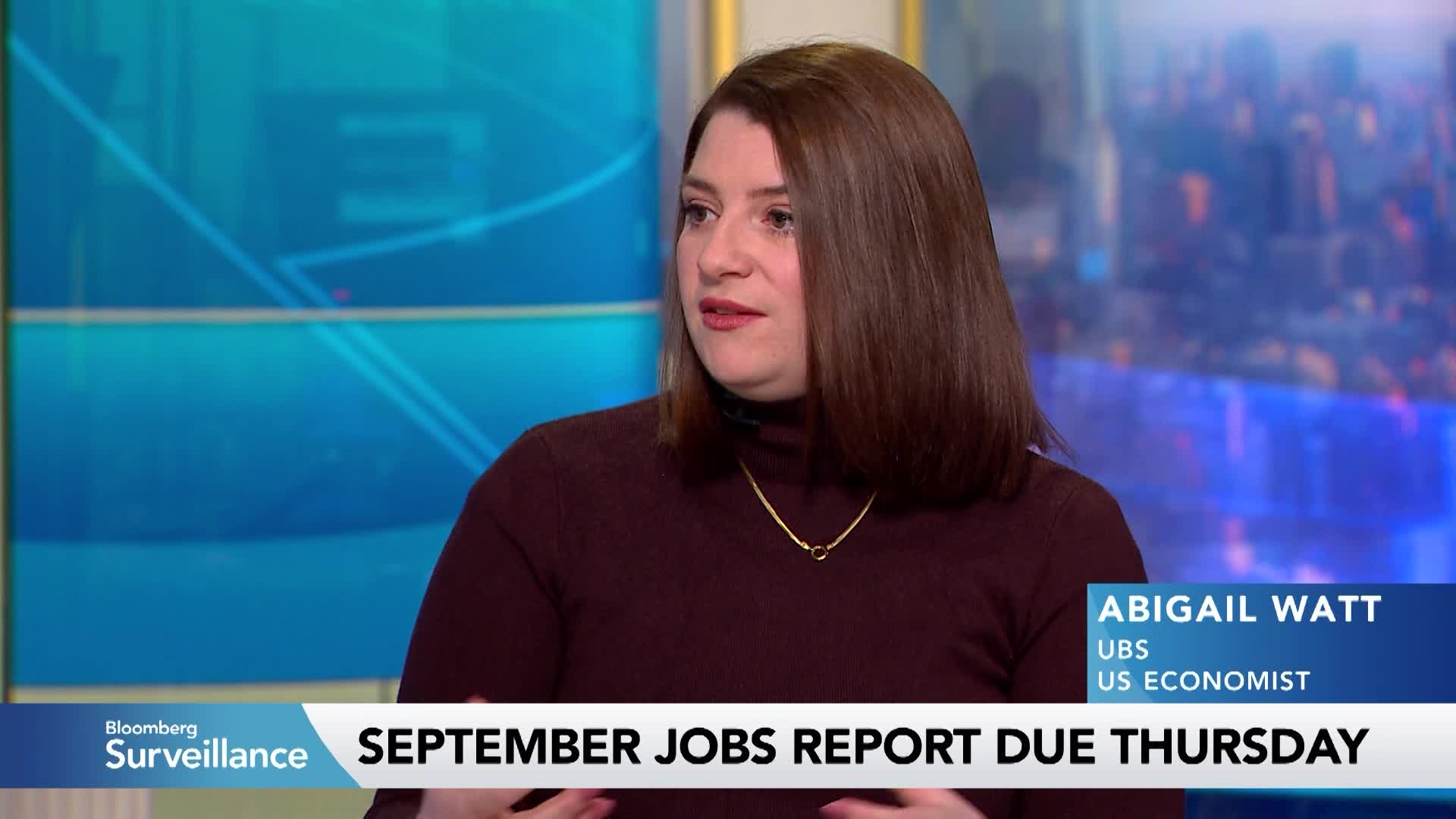
UBS US economist Abigail Watt told Bloomberg's 'Surveillance' she expects the Federal Reserve to begin cutting rates in December even though she anticipates a strong September payrolls report, speaking with Jonathan Ferro, Lisa Abramowicz and Annmarie Hordern. Her view highlights UBS's expectation that the Fed can move to easing later in the year despite near-term labor-market strength, a position that could influence market pricing of rate cuts as incoming data and Fed communications arrive.
UBS US economist Abigail Watt told Bloomberg's 'Surveillance' she expects the Federal Reserve to begin cutting rates in December despite anticipating a strong September payrolls report. She conveyed UBS's position in discussion with Jonathan Ferro, Lisa Abramowicz and Annmarie Hordern, framing the forecast as a later-year easing despite near-term labor-market strength.
The commentary is dovish and the supplied sentiment and market-impact scores are mildly positive (0.25), suggesting UBS's view could nudge market pricing toward earlier cuts but with only modest immediate market disruption. The key dynamic is conditional: a materially stronger September payrolls print would reduce the probability of a December cut, whereas softer incoming data or dovish Fed communications would validate UBS's timing.
Investors should treat the UBS call as a data-dependent signal that favors preparing for an easing path while retaining flexibility; interest-rate-sensitive assets would benefit if the December cut materializes, but positions are exposed if labor-market strength persists. Primary indicators to watch are the September payrolls release, upcoming inflation readings and any shifts in Fed messaging, which will expand or invalidate the UBS scenario.
AI-powered research, real-time alerts, and portfolio analytics for institutional investors.
Request DemoOverall Sentiment
mildly positive
Sentiment Score
0.25
Ticker Sentiment
