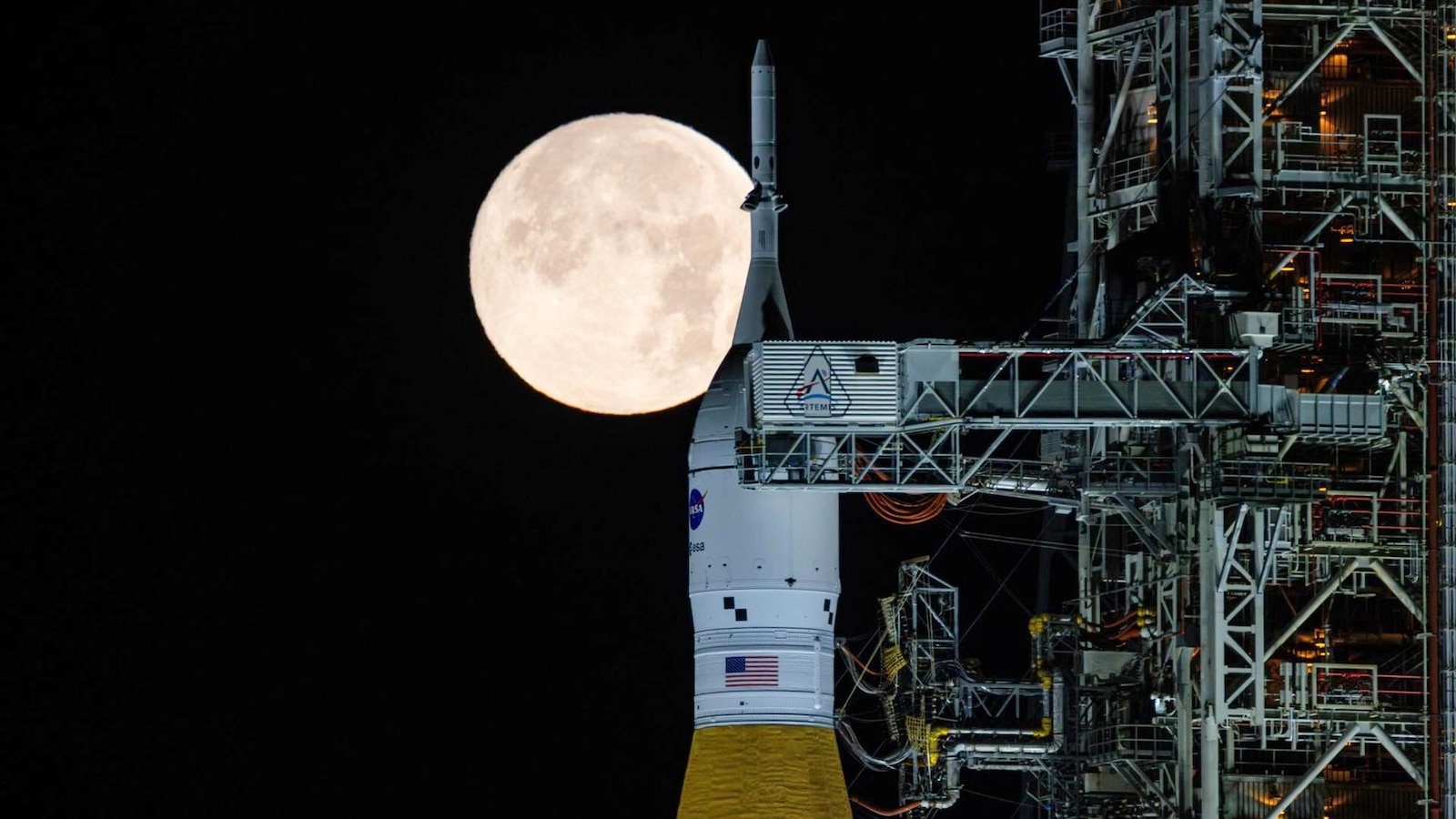
NASA conducted a full fueling dress rehearsal of its 322-foot (98-meter) Space Launch System, loading more than 700,000 gallons (2.6 million liters) of super-cold hydrogen and oxygen to simulate a final countdown and check for issues that delayed a 2022 launch. The outcome will determine whether commander Reid Wiseman and a three-person crew (including one Canadian) can launch on a roughly 10-day lunar fly-by as soon as this weekend; the vehicle must fly by Feb. 11 or the mission will be postponed until March, with a recent cold snap already trimming the February window. The test focuses on vehicle and capsule life‑support readiness rather than landing, and successful fueling would clear a key operational hurdle for future Artemis missions.
Market structure: A clean fueling test reduces tail-risk for prime NASA contractors (Lockheed Martin LMT, Northrop Grumman NOC, Aerojet Rocketdyne AJRD) by restoring schedule credibility and accelerating near-term revenue recognition; Boeing (BA) remains the most exposed to execution headlines given commercial aircraft exposure, so relative flows should favor pure-play defense/aero suppliers. Pricing power change is modest but real — successful demonstration can tighten bid-ask on contract repricing and support 1–3% upward revisions to FY revenue estimates for primes over the next 3–12 months.
Risk assessment: Tail risks include a failed test or hydrogen-leak repetition causing program pause to March (already an articulated trigger) which could produce 10–30% instant downside in small-cap suppliers and 5–15% for large primes; regulatory/budgetary pullback from Congress is a medium-tail (6–18 months). Immediate (days) effects are volatility spikes and sentiment trades; short-term (weeks–months) are contract timing and working-capital swings; long-term (years) is program TAM expansion if Artemis becomes sustained (multi-year uplift to gov't space spend).
Trade implications: Implement small, event-driven positions sized to limit binary risk: preference for 2–3% long positions in LMT/NOC for 3-month horizons, and tactical option structures on AJRD to capture binary upside around launch windows. Pair trades reduce idiosyncratic risk (long LMT vs short BA) while option collars/put spreads cap losses if the mission stalls; avoid large directional exposure to commercial aerospace until schedule durability is confirmed.
Contrarian angles: Consensus underweights the multi-year procurement follow-through — repeated successful tests could be underpriced, creating a 6–18 month alpha window for primes servicing lunar infrastructure. Conversely, markets may underprice the political/regulatory risk that a single high-profile failure would amplify, so asymmetric option structures (buy-limited-call or put spread) are more attractive than naked positions. Historical parallel: post-Apollo contract booms took years to materialize; expect slow, lumpy revenue realization rather than instant earnings jumps.
AI-powered research, real-time alerts, and portfolio analytics for institutional investors.
Request DemoOverall Sentiment
mildly positive
Sentiment Score
0.25
