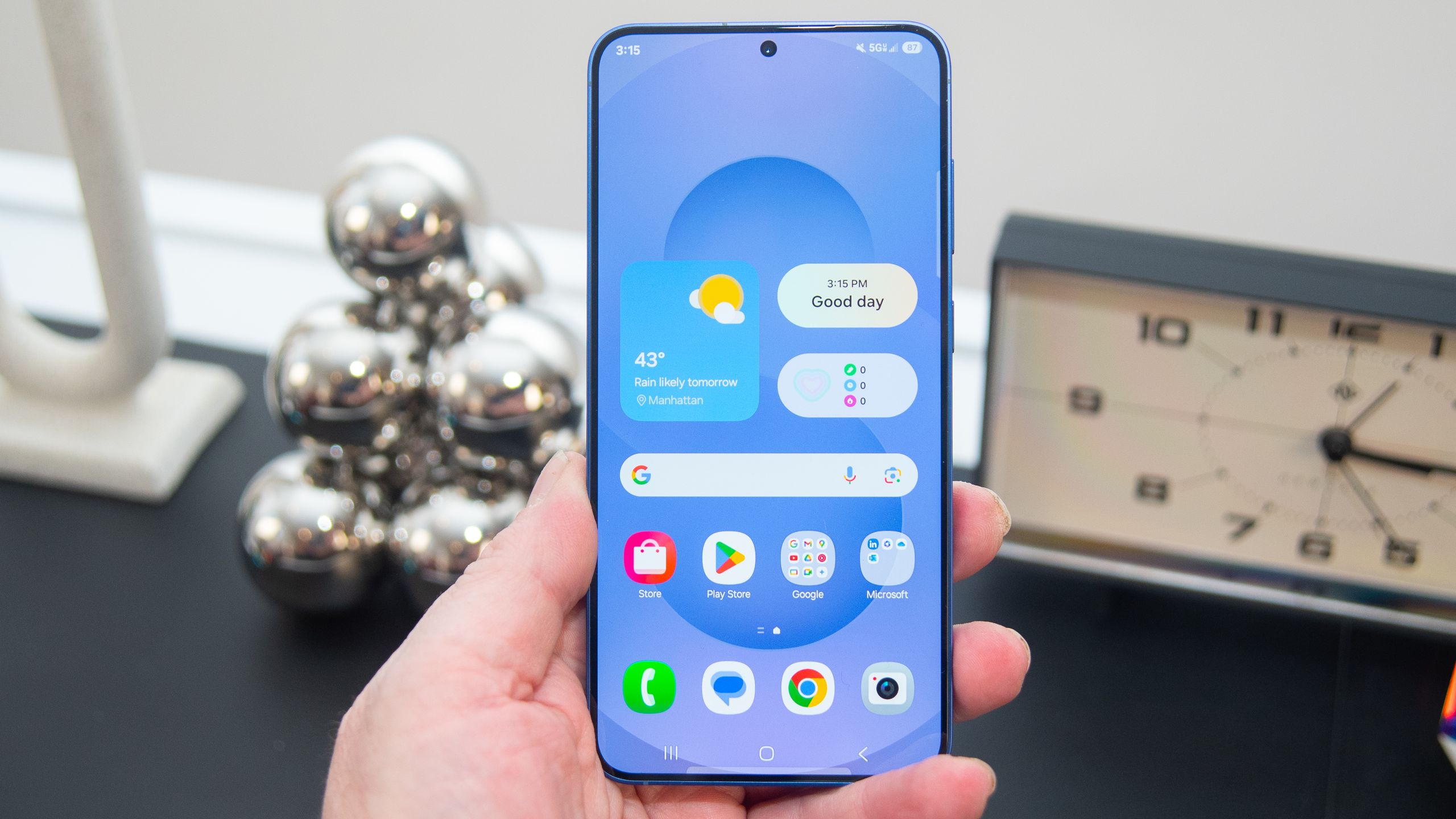
A leak from veteran tipster @UniverseIce indicates Samsung will unveil the Galaxy S26 series at a Galaxy Unpacked event in February with the handsets going on sale in March, creating a potential gap of up to ~28 days between announcement and availability. The schedule is later than the Galaxy S25 (debuted January 2025) and appears driven by internal lineup changes — notably the cancellation of an Edge model and reinstatement of a + model — with major hardware upgrades likely concentrated in the Ultra variant; the report implies operational and product‑planning uncertainty but no direct financial metrics.
Market structure: A Feb announcement + March sale window favors premium-component suppliers (camera sensors, battery cells, high-density DRAM) because upgrades are concentrated in the Ultra; tickers to watch: Samsung Electronics (005930.KS / ADR SSNLF) for finished-goods, Sony (6758.T) for image sensors, SK Hynix (000660.KS) and Micron (MU) for memory. Cancelling the Edge reduces demand for curved-display suppliers and niche form‑factor components by an expected single-digit percentage of S-series BOM volume, while reinstating a + model shifts unit mix toward mid-high price points and higher average selling price (ASP) per unit. Competitive dynamics: a delayed availability (2–4 weeks) risks short-term share loss to Apple (AAPL) in early-2026 upgrades, but could compress preorders and concentrate shipments in March, creating a lumpy revenue profile for Samsung in Q1–Q2 2026.
Risk assessment: Immediate risk (days–weeks) is event-driven volatility around Unpacked and guidance; short-term (weeks–months) is sales translation risk if consumer interest falls due to confusion over lineup; long-term (quarters) is product reception and margin mix if Ultra uptake disappoints. Tail risks: supply-chain disruption (Taiwan/China logistics, +5–20% lead-time shock), production yield issues for Ultra components, or regulatory export actions hitting components — each could swing Samsung EBIT by >200–300bps. Hidden dependency: changes to naming/variants materially change BOM volumes for suppliers (curved vs flat displays, battery size), so supplier revenue sensitivity can be +/-10–20% vs consensus across quarters.
Trade implications: Direct: establish a measured 2–3% long in 005930.KS or ADR SSNLF within 2 weeks pre-Unpacked to capture post-announcement volatility; set stop at -6% if sell-date slips past Mar 31, target +10–15% in 3 months. Options: buy a limited-risk call spread (size 0.5% of portfolio) that spans announcement-to-sale (buy 5% OTM, sell 15% OTM) to capture asymmetric upside while capping premium; unwind immediately after sales open or if implied vol rises >30% above 60-day average. Pair trade: go long Sony (6758.T) 0.75–1% weight (sensor exposure) and short SK Hynix (000660.KS) 0.5% to hedge memory-price cyclicality; rebalance after March sell-through data.
Contrarian angles: Consensus assumes delay is negative; but a concentrated March sell could produce a 10–25% sequential sales spike and stronger aftermarket ASPs if Ultra demand is under-anticipated — this would favor suppliers with scalable capacity (Sony, Samsung SDI). Conversely, the market may underprice the risk that lineup confusion cannibalizes S-series at the low end, amplifying mid-market weakness; look for handset pre-order conversion rates and carrier trade-in uptake within 7–14 days post-Unpacked as leading indicators. Historical parallel: Samsung product timing slips in 2019–2020 produced short-term share weakness but often produced a corrective alpha in 6–12 weeks once supply normalized; use that window for tactical entry/exit.
AI-powered research, real-time alerts, and portfolio analytics for institutional investors.
Request DemoOverall Sentiment
neutral
Sentiment Score
-0.10
