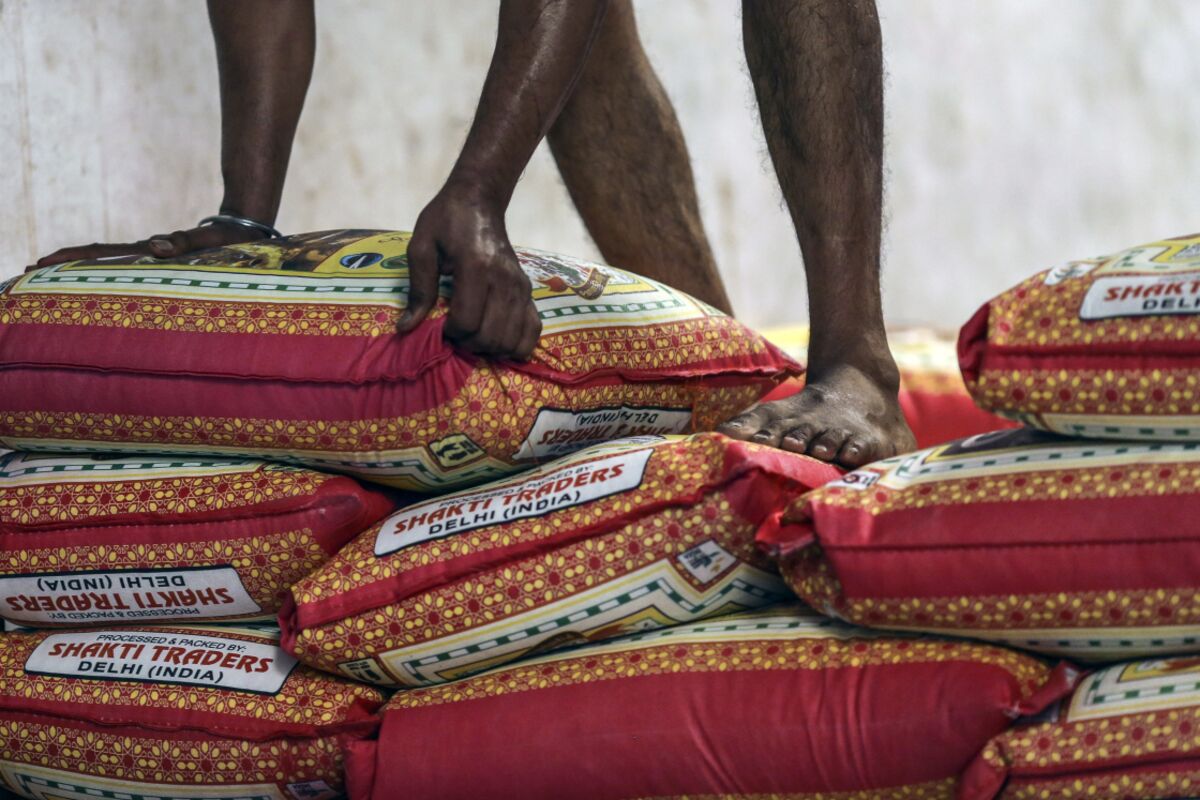
President Trump indicated he may impose new tariffs on Canadian fertilizer and Indian rice while announcing billions in new aid for U.S. farmers, citing pressure from cheaper imports that hurt domestic producers. The threat of tariffs and prolonged negotiations raises policy uncertainty for agricultural supply chains, fertilizer and grain markets and could influence importers, exporters and agribusiness pricing and trade flows if enacted.
Market structure: Tariffs on Canadian fertilizer and Indian rice would be a net positive for US domestic fertilizer producers (CF, MOS) via reduced import competition and raise pricing power for nitrogen/potash producers; Canadian exporters (NTR) and low-cost Indian rice exporters would be direct losers. Ag processors and food companies (ADM, BG, TSN) face margin compression if fertilizer-driven crop input costs lift 5-15% over a season; expect upstream price discovery in urea/ammonia and potash within 30-90 days.
Risk assessment: Tail risks include retaliatory tariffs, WTO disputes and energy-price-driven feedstock shocks (natural gas >+20% raises nitrogen costs materially). Immediate (days) volatility will hinge on formal tariff language; short-term (weeks–months) outcomes depend on implementation timelines (expect 30–90 days to formal notice) while medium-term (3–12 months) depends on ability of exporters to reroute supply. Hidden dependency: US producer capacity/utilization is the limiter — if domestic producers are already near full utilization, prices spike faster than volumes shift.
Trade implications: Favor long exposure to US fertilizer producers and cyclical chemicals via equity and call-spread options (3–9 month), hedge with modest short on Canadian-listed Nutrien or long USD/CAD FX. Pair trades: long MOS or CF vs short ADM/BG to capture margin squeeze differential. Timing: initiate small positions on confirmation (formal tariff proposal) and scale into implementation windows; cut if tariff not enacted in 90 days.
Contrarian angles: Market may underprice the ability of Canadian suppliers to reroute exports to Latin America/Asia, limiting US upside; conversely, domestic producers may lack spare capacity so prices could overshoot consensus by 10–25% before supply response. Historical parallel: 2018 tariff episodes caused sharp but often transient commodity moves—monitor fertilizer spot inventories and natural gas spreads as leading indicators.
AI-powered research, real-time alerts, and portfolio analytics for institutional investors.
Request DemoOverall Sentiment
mildly negative
Sentiment Score
-0.25
