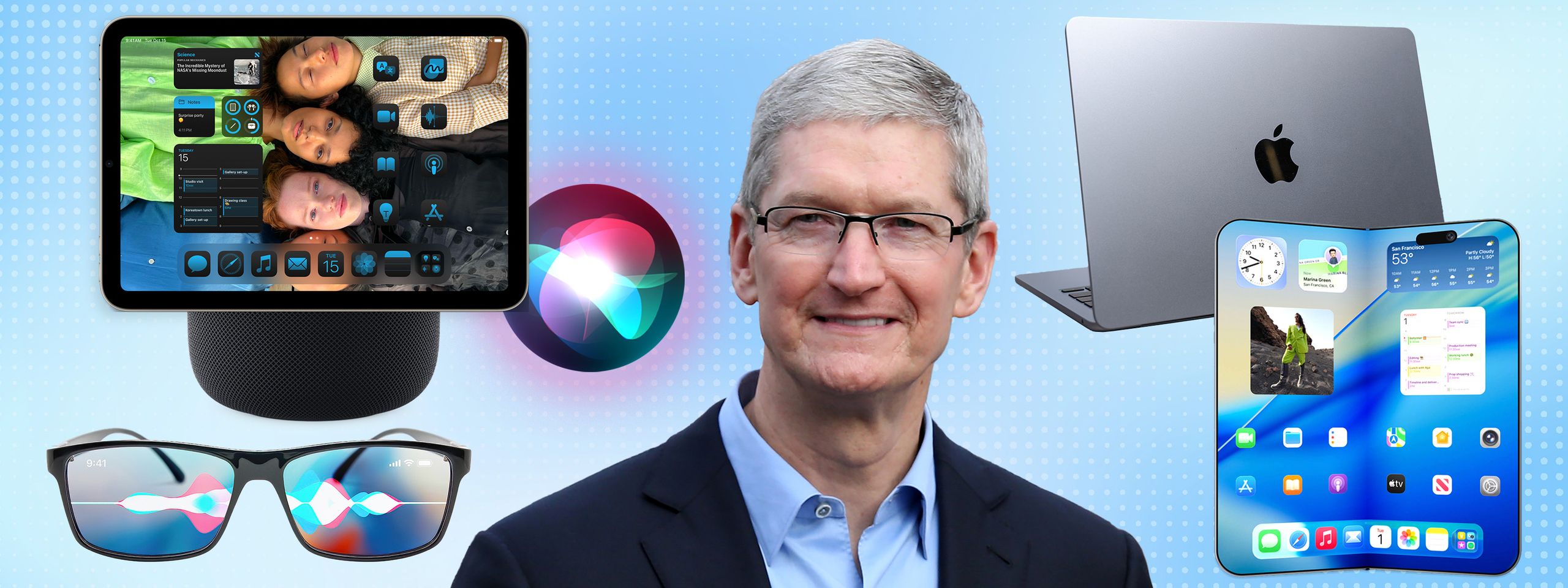
Apple is positioned for a pivotal 2026 product cycle with several high-profile launches that could influence demand and revenue: a rumored iPhone Fold (5.5" outer / 7.8" inner, ~5,400 mAh) reportedly priced near $2,400 with IDC predicting >20% market share in the category; a low-cost 13" MacBook at $599–$699 using an A‑series (A18 Pro); a HomePod Touch with a 7" display (~$350); and potentially AI-centric smart glasses late 2026. The company enters 2026 with strong iPhone demand, record services revenue and guidance pointing to its best December quarter, but key execution risks remain—notably the delayed Siri overhaul (now expected spring 2026), recent senior departures, and the commercial underperformance of Vision Pro—which could materially affect adoption of Siri-dependent devices.
Market structure: Apple (AAPL) stands to capture premium foldable share and defend ecosystem pricing power; a $2.4k iPhone Fold + cheap A13/A18-powered MacBook at $599–$699 creates a two-pronged up/downmarket squeeze that could raise AAPL FY26 revenue by 3–7% versus baseline if unit adoption of foldable hits 3–5M units. Winners: AAPL, META (AR hardware/software stack), GOOGL (Gemini tie-ins); losers: AMZN (Echo Show/assistant share), smaller AR pure-plays (WRBY spot volatility). Expect modest upward pressure on corporate credit spreads for suppliers with concentrated Foxconn/TSMC exposure if Apple volumes surge.
Risk assessment: Tail risks include a failed Siri (spring 2026) leading to measurable iPhone churn (2–4% share loss over 12–24 months) and regulatory scrutiny around AI/data partnerships (EU/US investigations) that could delay integrated services. Short-term (days–weeks) volatility will spike around Siri announcements and Fold pre-order windows; medium-term (months) depends on product reviews and sell-through; long-term (quarters) hinges on developer optimization for foldable UX and services ARPU retention. Hidden dependency: developer ecosystem adoption curve — if iPad apps don’t translate to strong UX, uptake will fall below breakeven economics.
Trade implications: Implement asymmetric exposure: core long AAPL (2–4% portfolio) targeted to product/news catalysts with a protective options overlay; opportunistic long META (1–3%) for AR upside; selective short AMZN (1–2%) vs AAPL on smart-home displacement risk into H2 2026. Options: buy 12-month AAPL 10% OTM call, sell 25% OTM call to fund (~1–2% notional). Rotate capital from cyclic consumer hardware to AI-infra (GOOGL, NVDA proxies) if Siri materially underperforms.
Contrarian angles: Consensus assumes iPhone Fold = instant best-seller; risk is price elasticity — at $2.4k adoption could be <2% of iPhone buyers, undermining revenue math. The market underestimates execution risk from Apple’s AI leadership departures; conversely, Apple’s vertical integration (on-package memory, silicon) may give durable margin advantage on cheap MacBooks, an underdiscussed margin lever. Historical parallel: iPad mini/Pro segmented pricing shows Apple can create new tiers, but only if software fits — watch developer engagement metrics closely as an early signal.
AI-powered research, real-time alerts, and portfolio analytics for institutional investors.
Request DemoOverall Sentiment
mildly positive
Sentiment Score
0.25
Ticker Sentiment
