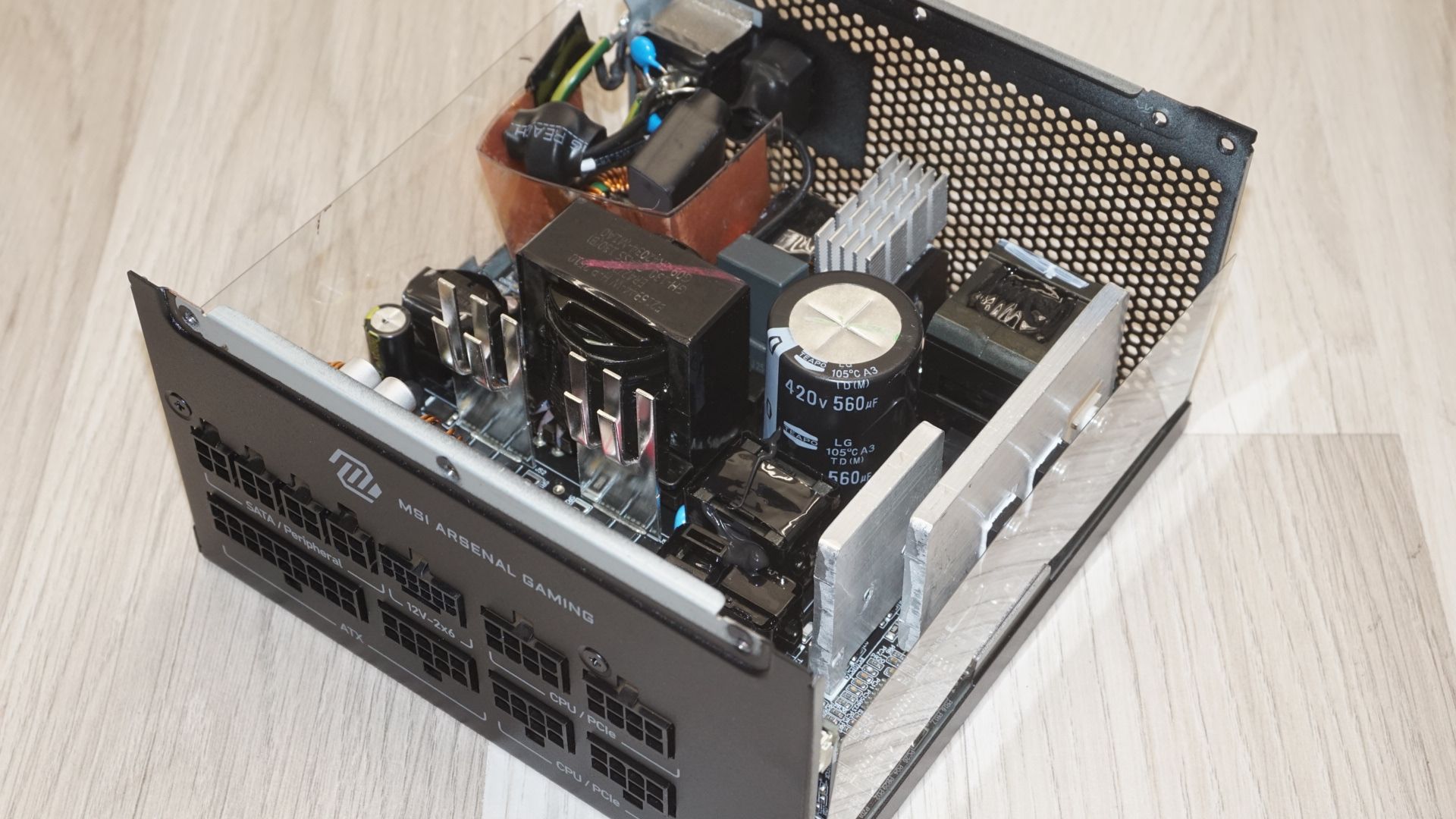
MSI teased two flagship power supplies, the MPG Ai1300TS (1300W) and Ai1600TS (1600W), that it says implement "proactive and instant protection" by actively monitoring individual pins/wires on the 12V-2x6/12VHPWR connector to trip the PSU on poor contact and prevent melting incidents that have afflicted high-power GPUs (e.g., RTX 5090 and some AMD RX 9070 XT variants). The units also appear to include a rear USB-C link for potential motherboard/software integration and real-time monitoring, positioning MSI to offer a hardware-level safety solution for high-end GPU builds. While this could reduce reputational and warranty risk across GPU/PSU ecosystems and support MSI's premium PSU positioning, the announcement is a teaser with limited technical or commercial detail and is unlikely to move broad markets until product specifications, pricing, and adoption are disclosed.
Market structure: The immediate winners are premium PSU and motherboard vendors (MSI/2377.TW, Corsair/CRSR) and niche cable/monitoring makers able to sell ATX 3.1 / 1300–1600W upgrades; losers are reputationally-exposed GPU suppliers (NVDA, AMD) and low-cost PSU brands that skimp on per-pin quality. Expect a short-term pricing premium for “monitored” PSUs of roughly +5–15% ASPs for flagship units and accelerated share gains for suppliers who ship proactive protection features at CES 2026.
Risk assessment: Tail risks include regulatory/standards intervention (PCI-SIG mandates redesign), high-profile recalls or class-action suits that could depress high-end GPU sell-through by 5–15% in a quarter, and liability exposures for system builders. Timewise: days (headline-driven 5–15% swings), weeks/months (PSU sales reallocation and inventory churn), quarters/years (connector redesigns raising BOMs by $50–$150 per high-end system); hidden dependency is cable quality across third-party PSUs and retailer warranty practices.
Trade implications: Tactical trades favor long exposure to listed PSU suppliers and MSI ahead of CES with 3–6 month horizons, hedged by short-dated NVDA downside protection; implied volatility on NVDA will spike on incidents, creating cheap put-buying opportunities. Pair trades: long CRSR or 2377.TW vs short NVDA for 1–3 months to capture re-rating; if selling premium, use defined-risk iron condors on NVDA around 2–4 week earnings/headline windows.
Contrarian angles: The market may overstate structural harm to NVDA — GPU demand elasticity is low and a temporary reputational hit is unlikely to dislodge data-center/workstation budgets; PSU ASP gains may be transitory as standards evolve. Historical parallels (adapter/charger scares) show hardware scares accelerate quality upgrades without long-term demand destruction; however, higher PSU costs could meaningfully delay only the marginal buyer over 3–6 months.
AI-powered research, real-time alerts, and portfolio analytics for institutional investors.
Request DemoOverall Sentiment
neutral
Sentiment Score
0.12
Ticker Sentiment
