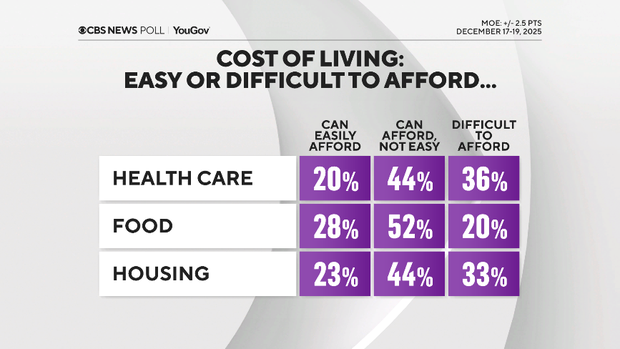
A national CBS News/YouGov poll of 2,300 U.S. adults (Dec. 17–19, 2025; ±2.5 points) finds broad public dissatisfaction with the economy: fewer than one in five say President Trump’s policies made them financially better in 2025, about two-thirds say he favors the wealthy, and most grade the economy a C, D or worse. Respondents cite affordability pressure on basics (notably housing and health care), a majority saying administration policies are driving up health-insurance costs, and a majority expecting AI to decrease American jobs; Trump’s handling of the economy and inflation ticked up modestly after his address. These perceptions could influence policy risk and political positioning ahead of 2026 even if they are not immediate market-moving catalysts.
Market structure: Political and consumer sentiment is skewing toward defensives and domestic-facing businesses. Expect outsized demand for low-price retailers and health insurers (enrollment-linked cashflows) while discretionary, import-dependent retailers and homebuilders face margin compression; timeline: visible rotation over 3–9 months as legislation and earnings reveal real impacts.
Risk assessment: Tail risks include aggressive new tariffs, binding AI regulation, or a headline drug-pricing law — each could depress specific sectors by 15–30% in days. Near-term (days–weeks) volatility spikes likely around policy announcements; medium-term (months) earnings revisions will re-price cyclicals; hidden dependency: middle-income consumption drives ~60% of retail sales and can flip quickly with small wage or tax moves.
Trade implications: Favor long positions in insurers and discount retailers, short U.S. homebuilders and import-reliant specialty retailers, and buy event hedges for AI/ election risk. Use options to size asymmetric protection (3–6 month puts on high-flyers, 30–90 day VIX calls); rebalance after CPI prints or congressional votes (check thresholds below).
Contrarian angles: Consensus fears of ‘‘favours wealthy’’ plus anti-AI sentiment may be overpricing regulatory outcomes — a narrowly framed AI safety rule could slow capex but still leave secular demand for chips intact. If ACA tax credits are extended (probability >60 based on polling), insurers could rerate higher; conversely, large-scale deportations could tighten low-skill labor and push unexpected wage inflation, benefiting wage-sensitive equities (grocers, logistics).
AI-powered research, real-time alerts, and portfolio analytics for institutional investors.
Request DemoOverall Sentiment
moderately negative
Sentiment Score
-0.52
