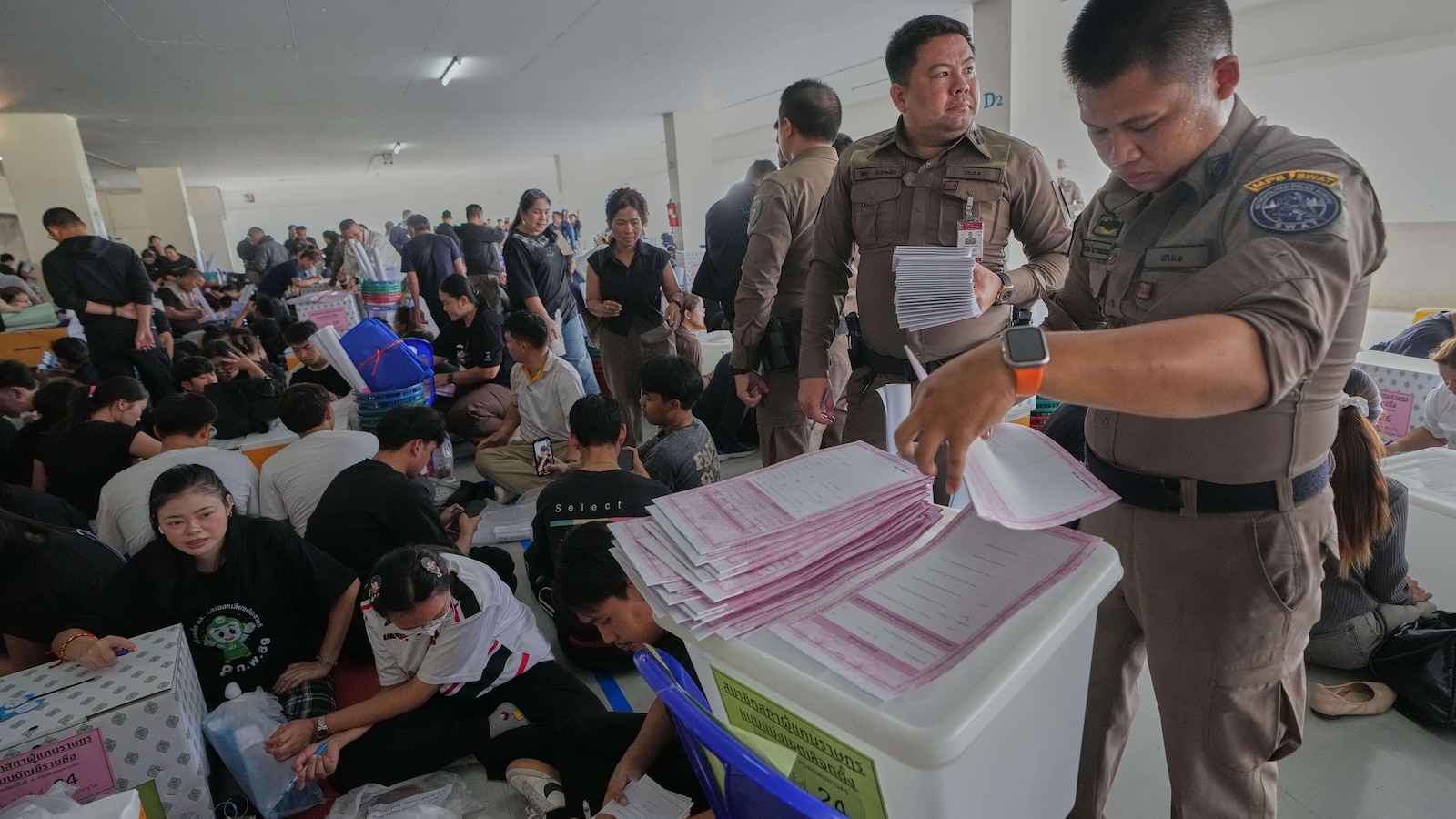
Thailand held an early general election with 53 million registered voters contesting a three-way race among the progressive People’s Party, incumbent-aligned Bhumjaithai, and the populist Pheu Thai; local polls indicate no single party is likely to win a majority, making a coalition government probable. The vote occurs against slow economic growth, heightened nationalism after recent border clashes with Cambodia, and a simultaneous referendum on whether to authorize drafting a new military-drafted constitution — developments that increase policy uncertainty for investors given competing agendas on military/judicial reform, national security, and populist economic stimulus.
Market structure: A likely coalition (Bhumjaithai or Pheu Thai leading) favors incumbency, grassroots patronage and incremental fiscal stimulus (we model 0.5–2.0% of GDP over 12 months), which benefits Thai consumer staples, construction/state contractors and domestic banks (KBANK.BK, SCB.BK). Progressive reformers (Move Forward successor) are the political underdog; defense suppliers and any reforms that reduce military/judicial rents are tail-risk losers. Expect immediate FX and equity sensitivity: USD/THB swings of 3–7% and SET index moves of ±5–15% around results and coalition announcements.
Risk assessment: Tail risks include court disqualifications of leaders, renewed Cambodia border clashes, or a military intervention — low-to-medium probability but could move USD/THB 7–15% and widen Thai CDS 100–300bps. Timeframes: days—volatility spikes; 2–6 weeks—coalition formation and policy signals; 3–12 months—fiscal impact and bank loan growth. Hidden dependencies: tourism seasonality, remittance flows and external funding windows (rollover risk) could amplify moves if foreign investor sentiment flips.
Trade implications: Tactical plays are volatility-sensitive. Prefer a 2–3% tactical long in iShares MSCI Thailand ETF (THD) on a >3% post-election pullback or immediately if a pro-stimulus coalition is signaled; overweight KBANK.BK and SCB.BK (relative +200–300bps) for 6–12 months to capture credit growth from cash-handouts. Hedge political tail risk with 3‑month USD/THB call spreads (strike ~3–6% OTM) sized to cover ~50% of Thai equity exposure; buy 1–3 month ATM straddles on SET50 futures into coalition confirmation to monetize event volatility.
Contrarian angles: Consensus prices prolonged paralysis; we view the market as underpricing the chance of a stable, conservative-populist coalition that could deliver orderly stimulus and a strong THB (20–30% upside bias to bank/staples over 12 months if realized). The referendum outcome is a structural catalyst: a “yes” narrows long-term policy risk and should compress yields and risk premia; conversely, court actions are the largest single downside trigger — keep tight stops (8–10%) and FX hedges in place.
AI-powered research, real-time alerts, and portfolio analytics for institutional investors.
Request DemoOverall Sentiment
mildly negative
Sentiment Score
-0.25
