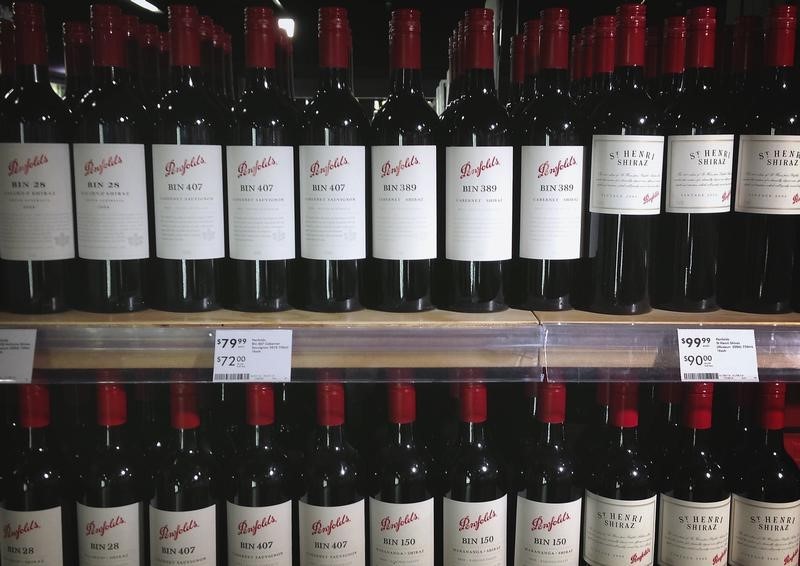
Treasury Wine Estates said it expects to recognise a non-cash impairment of A$687.4 million (~US$450m) on its U.S. assets, with the final charge to be confirmed in its 2026 interim results. The company cited weaker long-term U.S. wine category trends that have reduced long-term earnings growth expectations and carrying values in its Treasury Americas and Treasury Collective – Americas CGUs; shares fell as much as 6.3% to A$5.45, their lowest level since August 2015. Major owned brands (DAOU, Frank Family Vineyards, Matua) continue to outperform the market, but the revised outlook has materially impacted reported fundamentals and investor positioning.
Market structure: The A$687.4m non‑cash impairment report materially reduces Treasury Wine Estates' (ASX:TWE) U.S. carrying values and signals weaker long‑run pricing power in the Americas; losers are asset‑heavy, premium wine portfolios and distributors dependent on off‑premise U.S. growth while competitors with diversified spirits/beer exposure (e.g., STZ, LVMH) benefit. On supply/demand, this flags secular moderation in U.S. wine demand—not a short grape supply issue—so expect margin compression and slower inventory turns for 12–24 months. Cross‑asset impacts: TWE credit spreads/CDS should widen; AUD may see small negative pressure on RHD consumer names; options IV on TWE will spike ahead of interim results, presenting hedging opportunities.
Risk assessment: Tail risks include a larger-than‑announced impairment (>A$900m), debt covenant stress, or a contagion to other premium wine names; probability low‑medium but impact high. Immediate (days) — share volatility and IV shocks; short‑term (weeks–months) — trading down as FY26 interim finalises; long‑term (2–3 years) — brand recovery possible if DAOU/Frank Family sustain premium pricing. Hidden dependencies: USD/AUD FX moves, U.S. retail inventory destocking, and ageing inventory carrying finance costs. Key catalysts: FY26 interim (within ~3 months), U.S. off‑premise sales data, competitor FY results.
Trade implications: Direct play — short 1–2% of portfolio TWE vs long 1–2% STZ for 6–12 months to capture relative resilience; target TWE downside to A$4.75 with stop at A$6.80. Options — buy a 6–12 month TWE put spread (buy A$5 / sell A$4) to cap cost and profit from further downside ahead of interim results. Sector rotation — reduce premium wine exposure by 2–4% and reallocate to spirits/consumer staples (STZ, BF.B) for 6–18 months.
Contrarian angles: Consensus may be over‑pessimistic about permanent brand impairment—DAOU and Frank Family have shown outperformance and could drive recovery if management refocuses DTC and pricing; downside may be overdone by 15–25% post‑impairment given non‑cash nature. Historical parallels (craft beer consolidation, 2010s wine cycles) show impairments are often followed by 12–36 month recoveries if distribution and marketing are maintained. A buy trigger: consider entry if TWE trades below A$4.75 or if interim shows stabilised US EBIT margins and FX‑adjusted organic growth within 6–12 months.
AI-powered research, real-time alerts, and portfolio analytics for institutional investors.
Request DemoOverall Sentiment
strongly negative
Sentiment Score
-0.60
Ticker Sentiment
