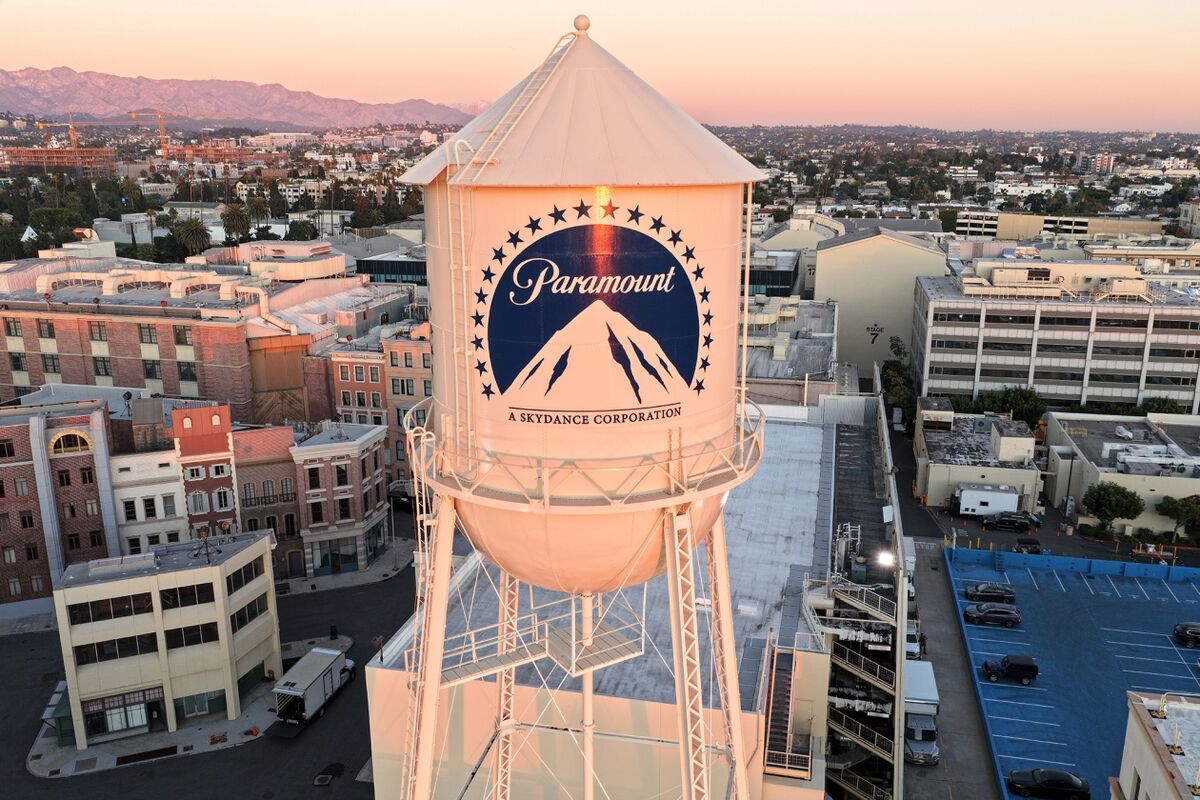
EU regulators are examining the Gulf state-backed financing behind Paramount’s $110 billion takeover of Warner Bros. Discovery under foreign-subsidy rules. The probe adds regulatory uncertainty to a major media M&A deal, but the article does not report any decision, fines, or transaction changes yet. Impact is mainly on deal timing and approval risk rather than immediate fundamentals.
This introduces a non-trivial financing overhang into an already execution-heavy media deal: the more the capital stack depends on politically sensitive foreign money, the more the transaction shifts from a pure antitrust/M&A review into a broader national-security and state-aid style process. That tends to lengthen timelines disproportionately, because regulators can ask for information on ownership, governance, side agreements, and control rights that are far more burdensome to unwind than standard competition remedies. For WBD, the key market implication is not just lower closing probability; it is a higher probability of value leakage through prolonged deal-duration risk and repeated repricing of break fees, financing certainty, and termination optionality. The second-order loser is likely the media ecosystem around the deal, not just the target: rival bidders and strategic partners face a higher bar to transact with any sponsor touchpoint that can be construed as sovereign-backed capital. That could chill near-term M&A in media/entertainment and raise the discount rate on cash-rich but politically exposed buyers, especially where cross-border capital sources are opaque. In practice, this can preserve standalone scarcity value for assets that might otherwise be folded into larger combos, but it also increases the chance that financing gets restructured toward more expensive domestic debt or equity, squeezing returns for the sponsor and making a winning bid harder to preserve. The market is likely underpricing the asymmetry between a headline-friendly deal announcement and a months-long regulatory grind. If scrutiny intensifies, the stock response can be more muted on the way down than classic deal-break risk because investors may still assign some probability to eventual clearance, but the path dependency worsens: every incremental delay destroys optionality and pushes out any synergy realization. The biggest reversal catalyst would be a clean disclosure that the Gulf capital is passive, fully ring-fenced, and devoid of governance influence; absent that, the process can drag for quarters and become a referendum on foreign influence rather than competition. Contrarian angle: the investigation could actually improve the odds of a better package for minority holders if it forces Paramount to simplify financing and offer more cash certainty, or if it discourages weak competing structures and leaves WBD with more leverage to renegotiate. In other words, the near-term headline is negative for WBD, but the medium-term outcome may be less about deal failure and more about deal dilution—lower synergies, higher funding costs, and a more conservative valuation bridge. That means the trade is not necessarily to bet on collapse, but on prolonged uncertainty and compressed upside from the current headline spread.
AI-powered research, real-time alerts, and portfolio analytics for institutional investors.
Request DemoOverall Sentiment
neutral
Sentiment Score
-0.10
Ticker Sentiment
