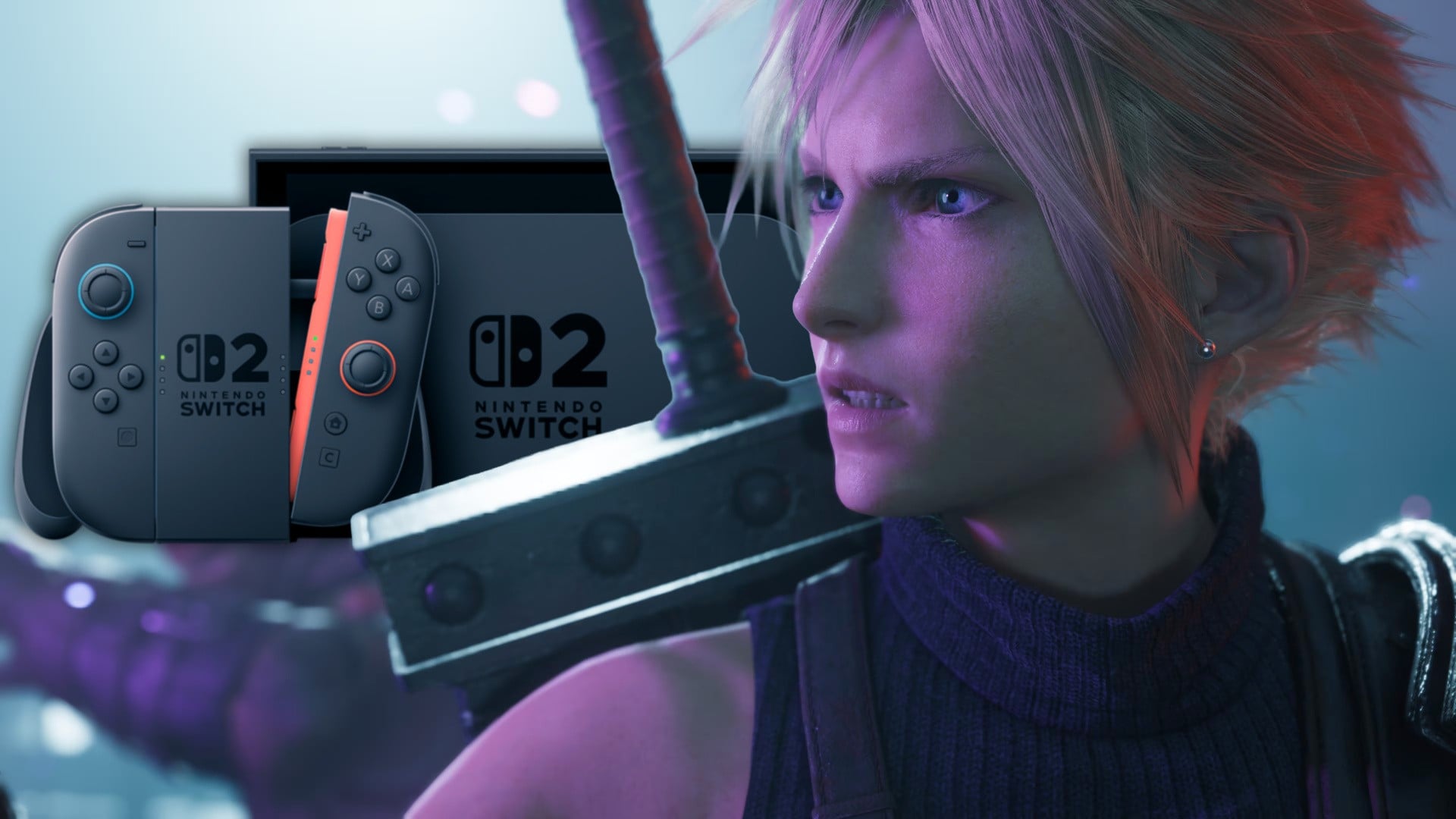
Square Enix's Final Fantasy 7 Rebirth Switch 2 port shown in the recent Nintendo Direct appears to be a technically pared-back but recognizable version of the PS5 title, running at a native 720p upscaled to 1080p (likely via a DLSS-lite approach) with a 30fps target and visible reductions in foliage, shadows and texture fidelity. Development comments and footage suggest a Switch 2 install footprint of roughly 100GB versus a 150GB dual-disc PS5 release, implying lower-quality texture assets; the game remains scheduled for release on June 3, 2026. For investors, the demo signals pragmatic multi-platform strategy that could broaden audience reach but is unlikely to materially change near-term revenues given technical compromises and remaining development time.
Market structure: A successful Rebirth Switch 2 port signals third-party current‑gen titles can be profitably scaled to Nintendo hardware, boosting Nintendo’s software and hardware TAM and licensing leverage. Winners: Nintendo (NTDOY/7974.T) and multi‑platform publishers who expand sell‑through; potential modest upside for middleware/upscaling tech licensors (NVDA conditional). Losers: pure‑play high‑end GPU differentiation (PS5 premium edge narrowed) and smaller developers unable to absorb extra optimisation costs.
Risk assessment: Tail risk centers on launch‑week technical reviews — a consensus negative review cycle (consistent sub‑30fps or major pop‑in) could compress Switch 2 hardware momentum and reduce projected attach‑rates by >20% over 12 months. Immediate (days): sentiment swings around hands‑on previews; short (weeks/months): pre‑order and review aggregation; long (12–24 months): install base growth and third‑party revenue share. Hidden dependencies: developer toolchain maturity, patch cadence, and storage/asset pipeline (100GB vs 150GB hints at texture compression tradeoffs).
Trade implications: Tactical long small caps into the hardware cycle and software tail while hedging technical risk. Consider modest long NTDOY exposure ahead of June 3, 2026 if pre‑order momentum appears; buy NVDA exposure only on confirmation of third‑party DLSS adoption for Switch 2. Volatility should rise into launch — use options to define risk economically (see decisions).
Contrarian angles: The market may underweight cumulative long‑term upside from broader third‑party support; each successful port lowers barriers for AAA titles and can raise lifetime revenue per console by 10–25% vs conservative forecasts. Conversely, repeated visible downgrades could create consumer goodwill erosion for Nintendo; historical parallel: early Switch Remake hiccups that were patched before launch suggest execution risk but not inevitability of failure.
AI-powered research, real-time alerts, and portfolio analytics for institutional investors.
Request DemoOverall Sentiment
mildly positive
Sentiment Score
0.25
Ticker Sentiment
